About This Guide
This guide is written for importers, distributors, and private label brand owners who are evaluating sanitary pads for sensitive skin as a product development direction. It covers the key material options available, what makes a pad suitable for sensitive skin positioning, sourcing checklist considerations, and how to approach OEM development for this product category. It is a B2B sourcing guide, not a consumer product recommendation.
Why Sanitary Pads for Sensitive Skin Are Growing in Demand
The sensitive skin feminine hygiene segment has expanded across multiple markets in recent years. Several factors are driving this growth:
- Consumer awareness of materials — more consumers are reading ingredient and material information before purchasing feminine hygiene products, especially for daily-use items with extended skin contact
- Premiumization trends — growing willingness to pay more for products positioned around skin comfort, natural materials, and gentler formulations, even in everyday hygiene categories
- E-commerce brand growth — online channels allow niche feminine hygiene brands to reach consumers seeking alternatives to mainstream products, making sensitive skin positioning viable for smaller brand launches
For importers and distributors evaluating product lines, sanitary pads for sensitive skin represent a segment with clear differentiation potential and strong B2B sourcing demand from brand owners building premium or wellness-oriented product lines.
Key Material Options for Sensitive Skin Sanitary Pads
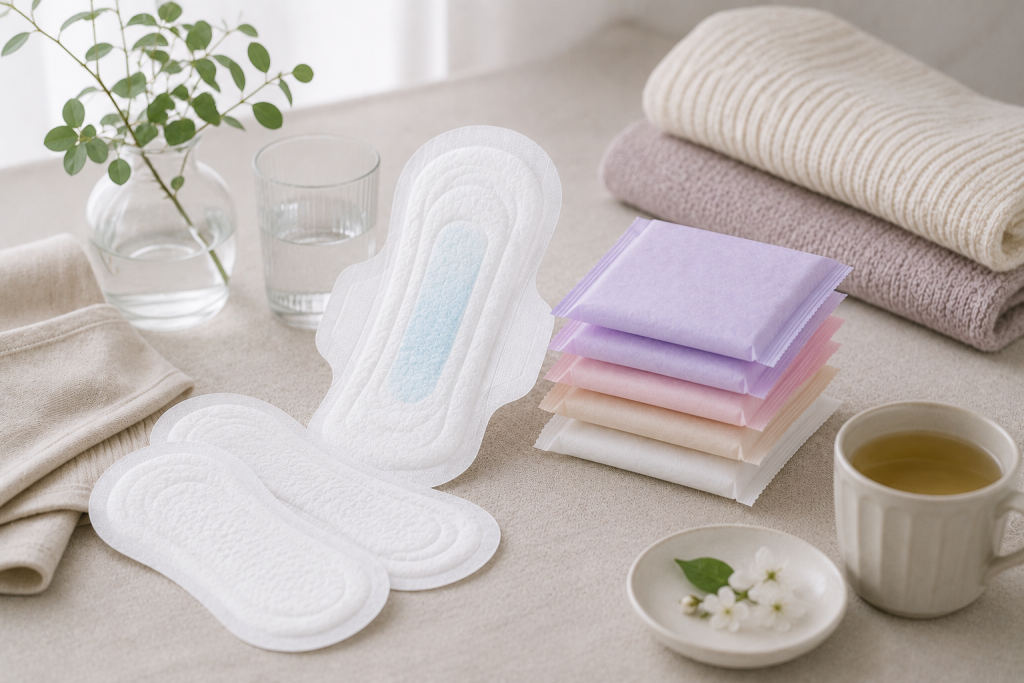
The topsheet material is the most important construction choice for sensitive skin positioning — it is the layer in direct contact with the skin throughout the wear period. The following table compares the main material options available for private label sourcing.
| Material Direction | Key Characteristics | Best Suited For | Price Positioning |
|---|---|---|---|
| Organic cotton topsheet | Certified organic cotton; grown without synthetic pesticides; softer surface feel; fragrance-free; FBA-free | Premium retail and e-commerce; wellness-oriented brands; markets where natural materials resonate | Mid to premium |
| Soft cotton-feel nonwoven | Gentle, comfortable surface without organic classification; communicates softness at a more accessible cost | Mid-range product lines; first-entry private label; mass market distribution | Mass market to mid |
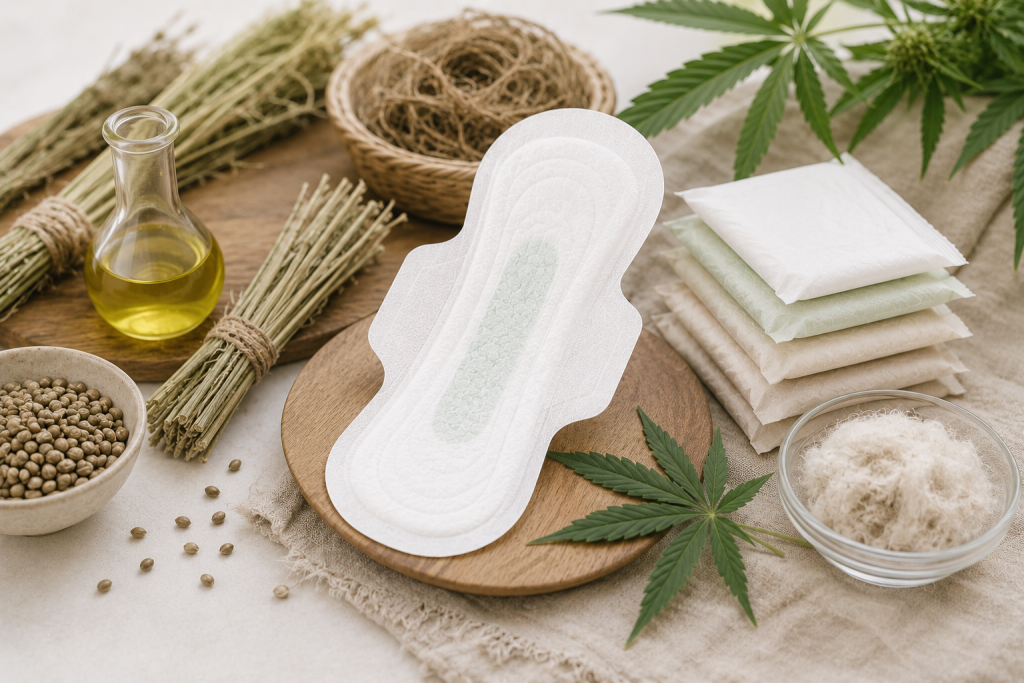
| Herbal-inspired concept | Herbal chip infusion in core; botanical ingredient direction; differentiated comfort care positioning | Asian and Middle Eastern markets; differentiated brand concepts; comfort-care positioning | Mid to premium |
| Breathable backsheet | Reduces heat and moisture buildup during wear; supports overall comfort for sensitive skin users | Active lifestyle positioning; warm climate markets; combined with any topsheet material direction | Complementary feature across tiers |
Breathable backsheet is typically used in combination with one of the topsheet directions above rather than as a standalone positioning element. Most complete sensitive skin product concepts combine organic or soft cotton topsheet with fragrance-free, FBA-free construction and a breathable backsheet.
Product Series Available for OEM Development
| Series | Product Direction | Suitable For |
|---|---|---|
| Pure Comfort Series | Soft surface and breathable construction for comfort-focused positioning; available in standard and organic cotton surface options | Brands targeting skin comfort and daily softness; suitable for most markets |
| Herbal Wellness Series | Herbal-inspired product concept with botanical ingredient direction; differentiated comfort care positioning | Markets receptive to herbal product narratives; Middle East, Southeast Asia, and selected Asian markets |
| Custom Material Options | Organic cotton, bamboo fiber, soft cotton-feel surface, and breathable backsheet — configurable based on brand positioning and target market | Brands requiring a fully specified custom product rather than an existing series direction |
Note: All product claims in private label projects should reflect commercially appropriate positioning. Sensitive skin and comfort-oriented positioning is maintained within product design and material language. Medical or therapeutic claims are not made for any product direction.
Sourcing Checklist for Sensitive Skin Sanitary Pads
Before committing to a manufacturer for sensitive skin sanitary pad development, review the following:
- Confirm topsheet material specification before sampling — ask for the specific material: organic cotton, soft cotton-feel nonwoven, bamboo, or other. Marketing descriptions should be supported by actual product specification documentation.
- Request third-party testing reports — ask for SGS, Intertek, or equivalent testing covering raw material safety, FBA absence, and other relevant attributes. These documents support market-entry compliance and packaging claim credibility.
- Align packaging claims with actual material direction — claims such as "organic cotton" or "hypoallergenic" should be supported by verified material specifications and test reports. Avoid positioning language that overpromises clinical or therapeutic outcomes.
- Evaluate physical samples before bulk commitment — surface softness, absorbency performance, and wearing comfort cannot be accurately assessed from product descriptions alone. Always request samples before confirming bulk production.
- Confirm batch-to-batch material consistency — sensitive skin product consumers have higher expectations for product feel and performance consistency. Ask the manufacturer how they maintain material specifications across repeat production runs.
- Check certification validity — if the product requires GOTS, OCS, or FBA-free certification, request current original documents. Verify the issuing body and expiry date before using certifications in packaging or marketing materials.
Frequently Asked Questions
What materials are used in sanitary pads for sensitive skin?
The most common material directions for sensitive skin sanitary pads are organic cotton topsheets, soft cotton-feel nonwoven topsheets, and fragrance-free, FBA-free construction across all layers. Organic cotton is the strongest material signal for sensitive skin positioning. Soft cotton-feel nonwoven is a more cost-accessible option that still communicates comfort. Both can be combined with breathable backsheet construction for a complete sensitive skin product concept.
Are organic cotton sanitary pads better for sensitive skin?
For users who experience irritation from conventional pads — particularly those caused by synthetic fragrances, fluorescent brightening agents, or chlorine-bleached materials — organic cotton pads are generally a better option. The organic cotton topsheet is softer and more breathable than synthetic nonwoven alternatives. When combined with fragrance-free and FBA-free construction, the product removes the most common chemical irritants found in conventional pads. For a detailed consumer guide, see our article on organic pads for sensitive skin.
Can I source organic cotton sanitary pads for private label?
Yes — organic cotton sanitary pads are available for OEM and private label development. Key requirements are confirming the manufacturer holds current GOTS or OCS certification, can produce FBA-free with supporting third-party test reports, and can support custom packaging with appropriate certification claim language. At Niceday, we support full private label customization for organic cotton pad projects including topsheet, core, backsheet, wrapper, and packaging design. Standard MOQ is 300,000 pieces per SKU.
What is the difference between organic cotton and regular cotton topsheets?
Organic cotton is grown without synthetic pesticides or fertilizers and processed without harsh chemical treatments. Regular cotton topsheets may use conventionally grown cotton processed with more chemical inputs. For sensitive skin positioning, organic cotton is the stronger material claim because it is verifiable through GOTS or OCS certification. Regular cotton-feel nonwoven can still offer a soft, comfortable surface but does not carry the organic verification that supports premium or clean-ingredient brand claims.
How do I market sanitary pads for sensitive skin without making medical claims?
Focus on material attributes and product design rather than health outcomes. Safe and effective positioning directions include: organic cotton topsheet for softer contact, fragrance-free for a cleaner product profile, FBA-free for chemical transparency, breathable construction for comfort during extended wear, and skin-comfort positioning for the overall product experience. Avoid language implying the product treats, prevents, or cures skin conditions — this crosses into medical claim territory that requires regulatory support. For a full overview of compliant claim directions, see our guide on what certifications matter for feminine hygiene OEM.
Sourcing Sensitive Skin Sanitary Pads for Your Brand?
Niceday supports private label brand owners and importers developing organic cotton, herbal-inspired, and comfort-focused feminine hygiene product lines. We provide material options, OEM customization across topsheet, core, backsheet, wrapper, and packaging, and third-party tested raw materials as standard. Our facility in Foshan, China operates 14 intelligent production lines with daily capacity of 9.8 million pieces, supplying brands and distributors in 54+ countries.
Tell us your target market, material direction, and certification requirements — our OEM team will respond with relevant product options and next steps.
Contact Our OEM Team View OEM Service Details