Why Industrial Hemp for Sanitary Pads?
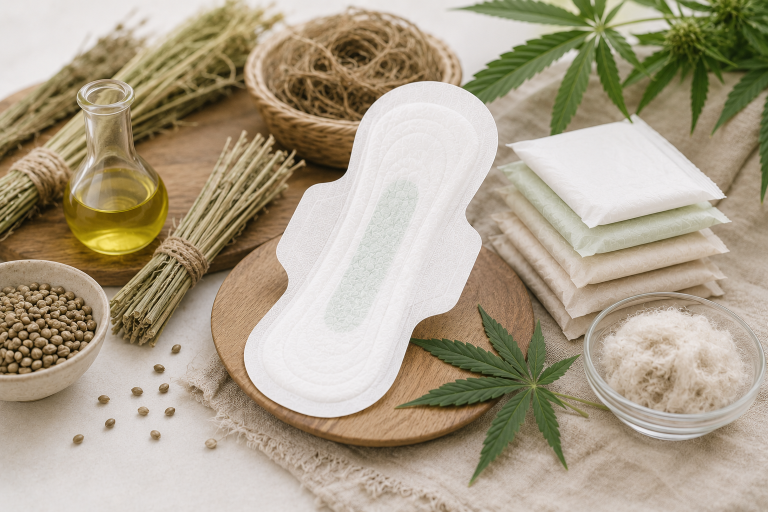
Industrial hemp is gaining attention in personal care, textiles, packaging and hygiene products because it offers a natural-fiber story with strong sustainability appeal. For sanitary pad brands, hemp can be used as part of a product concept focused on breathable comfort, plant-based materials, and eco-conscious differentiation.
However, hemp claims must be handled carefully. Industrial hemp sanitary pads should be communicated as hemp fiber or hemp-based material products, not as CBD, cannabis extract, mood support, pain relief, or drug-related products.
Industrial Hemp Is Not Marijuana
Industrial hemp and marijuana both come from the Cannabis plant family, but they are not the same in legal and commercial use. Industrial hemp is grown for fiber, seed, textile, paper, packaging, personal care and other industrial applications. It is not used to create a psychoactive effect.
In many markets, industrial hemp is defined by a low THC threshold. In the United States and the European Union, a common reference point is hemp with THC below 0.3%, but buyers should always check the exact rules in their target market before making packaging claims.
| Point of Comparison | Industrial Hemp | Marijuana / High-THC Cannabis | B2B Meaning |
|---|---|---|---|
| Main use | Fiber, seed, textiles, paper, packaging, hygiene materials | Psychoactive or regulated cannabis products | Keep sanitary pad positioning focused on fiber material |
| THC level | Low-THC varieties, often below 0.3% depending on market rules | Higher THC content | Request material documentation and market compliance review |
| Product story | Natural fiber, breathable comfort, sustainability | Drug, recreational or medical-use associations | Avoid cannabis extract or CBD-style wording |
| Best sanitary pad use | Hemp fiber topsheet, hemp-blend surface, packaging or eco line concept | Not suitable for standard sanitary pad positioning | Use clear “hemp fiber” wording |
Top 3 Reasons B2B Buyers Consider Industrial Hemp
1. Clear Natural-Fiber Differentiation
Sanitary pad shelves are often crowded with similar claims: soft, absorbent, breathable and leak-proof. Hemp fiber gives brands a more distinctive material story. It can support a natural-care or eco-conscious product line when paired with the right pad structure and packaging.
For private label buyers, hemp sanitary pads can sit alongside organic cotton pads, herbal pads and biodegradable packaging concepts as part of a premium material upgrade strategy.
2. Sustainability-Focused Brand Value
Industrial hemp is widely used in textiles, paper, packaging and other industrial applications. For sanitary product brands, the appeal is the plant-based and sustainability-oriented story. It gives distributors and retailers a product direction that fits the growing interest in lower-impact materials and eco-conscious personal care.
Buyers should still avoid vague claims such as “100% eco-friendly” unless the full product structure, packaging, disposal pathway and supporting documents justify the claim. A sanitary pad includes multiple layers, so the sustainability claim should be specific to the material or component being used.
3. Flexible OEM Product Concepts
Industrial hemp can be developed into different sanitary pad concepts depending on the target market. A buyer may use hemp fiber in a topsheet concept, combine hemp with breathable comfort positioning, or use hemp-related materials in packaging or product storytelling.
| OEM Concept | Recommended Positioning | Buyer Checkpoint |
|---|---|---|
| Hemp fiber sanitary pad | Natural fiber comfort and breathable daily care | Confirm hemp material specification and skin-contact suitability |
| Hemp-blend topsheet pad | Plant-based surface story with soft comfort | Define hemp content, blend ratio and claim wording |
| Hemp + organic cotton line | Premium natural-material product range | Separate organic cotton claims from hemp fiber claims |
| Hemp packaging concept | Eco-conscious packaging or paper-based material story | Check paper, fiber or packaging documentation |
| Hemp daily liner | Light, breathable, daily-use positioning | Test comfort, surface feel and breathability |
What Buyers Should Verify Before Launch
Because hemp can be misunderstood, B2B buyers should verify material documentation and claim language before printing packaging. The goal is to make the product attractive without creating regulatory confusion.
- Confirm whether the material is hemp fiber, hemp-blend nonwoven, hemp pulp, hemp paper or packaging material.
- Request material specifications and supplier documents.
- Check whether THC-related documents are needed for the target market.
- Define whether hemp is used in the topsheet, surface blend, packaging or another component.
- Do not use CBD, cannabis extract, mood, pain relief or psychoactive-related wording unless the product is legally classified and documented for that claim.
- Test skin-contact comfort, absorption, rewet, pH, microbiology and chemical safety where applicable.
Safe Packaging Language for Hemp Sanitary Pads
Packaging should help consumers understand the difference between industrial hemp fiber and psychoactive cannabis products. The safest approach is to keep wording specific, material-based and benefit-led.
| Avoid This Wording | Use Safer Wording Instead | Reason |
|---|---|---|
| Hemp extracts for mood support | Hemp fiber surface for natural comfort | Avoids CBD or drug-like associations |
| Relieves pain or cramps | Designed for breathable period comfort | Pain relief is a medical-style claim |
| Natural antibacterial and anti-itch | Fresh-feel, breathable hemp fiber concept | Antibacterial claims need testing and approval |
| 100% eco-friendly | Hemp fiber material option for eco-conscious brands | Full product impact depends on all layers and packaging |
| Drug-free cannabis pad | Industrial hemp fiber sanitary pad | Keeps the product in hygiene and textile-material language |
How Hemp Pads Fit into a Private Label Range
Hemp sanitary pads are best used as a differentiated material line rather than the only product in a range. Buyers can combine hemp concepts with core sanitary pads, organic cotton pads, overnight pads and panty liners to create a clear product ladder.
| Range Role | Recommended Product | Purpose |
|---|---|---|
| Core volume SKU | Regular or maxi sanitary pads | Builds baseline repeat purchase |
| Premium material SKU | Hemp fiber or organic cotton pads | Creates natural-material differentiation |
| Functional protection SKU | 3D guard pads or overnight pads | Solves leakage and heavy-flow needs |
| Daily care SKU | Panty liners with breathable surface options | Extends usage beyond period days |
| Eco-conscious packaging SKU | Hemp paper or lower-impact packaging concept where feasible | Supports sustainability storytelling |
Buyers can review Niceday’s broader disposable sanitary napkin product range when planning hemp, organic cotton, herbal, cooling or premium material lines.
Niceday OEM/ODM Support for Hemp Sanitary Pads
Niceday supports private label and OEM/ODM development for buyers seeking natural-fiber, comfort-focused and eco-conscious sanitary pad concepts. We help partners evaluate topsheet material, absorbent core, pad length, SAP ratio, packaging claims, test documents and market positioning.
Niceday manufactures feminine hygiene products on 14 intelligent production lines at a 50,000 m2 facility, with about 9.8 million pieces of daily capacity. Products are free of fluorescent brightening agents and can be supported with ISO 9001, FDA, CE, Intertek, SGS eco and GOTS-related documentation depending on project and market requirements.
For private label projects, the typical MOQ is 300,000 pieces per SKU, with a 35-40 day lead time after order confirmation. Buyers can discuss hemp fiber concepts, material options and localized custom packaging through our OEM/ODM service.
Frequently Asked Questions
What is industrial hemp?
Industrial hemp is a low-THC Cannabis plant grown for uses such as fiber, seed, textiles, paper, packaging and industrial materials. It should not be confused with marijuana or psychoactive cannabis products.
Can industrial hemp sanitary pads get users high?
No. Industrial hemp fiber sanitary pads are not designed to create psychoactive effects. For sanitary pad use, the focus should be hemp fiber or hemp-based material positioning, not cannabis extracts or drug-related claims.
Is hemp legal for sanitary pad products?
Industrial hemp legality depends on the target market and product scope. In the United States and European Union, low-THC hemp thresholds commonly reference 0.3%, but buyers should confirm local rules and required documents before launch.
What are the benefits of hemp fiber in sanitary pads?
Hemp fiber can support natural-material positioning, breathable comfort storytelling, eco-conscious brand value and premium differentiation. Any antibacterial, anti-itch or health-related claim should be supported by proper testing and compliance review.
What should buyers request before developing hemp sanitary pads?
Buyers should request material specifications, hemp fiber or blend details, supplier documents, skin-contact safety tests, absorption and rewet data, packaging claim review and target-market compliance checks.
What is the MOQ for private label hemp sanitary pads?
For Niceday private label projects, the typical MOQ is 300,000 pieces per SKU. Each size, material structure, absorbency level or packaging version counts as a separate SKU, with a typical lead time of 35-40 days after order confirmation.
Develop a Hemp Fiber Sanitary Pad Line
Discuss hemp fiber materials, pad structure, absorbency, packaging claims, MOQ and OEM/ODM production planning with Niceday.
Explore OEM/ODM Service Chat on WhatsApp Email NicedayReference notes: Industrial hemp and THC threshold references were checked against USDA hemp FAQ, European Commission hemp information, and FDA cannabis-derived products information. Advertising claim caution follows the FTC principle that objective product claims should be substantiated: FTC advertising substantiation policy.