Functional Sanitary Pads for Private Label Brands: OEM Product Concepts and Sourcing Guide
What Are Functional Sanitary Pads?
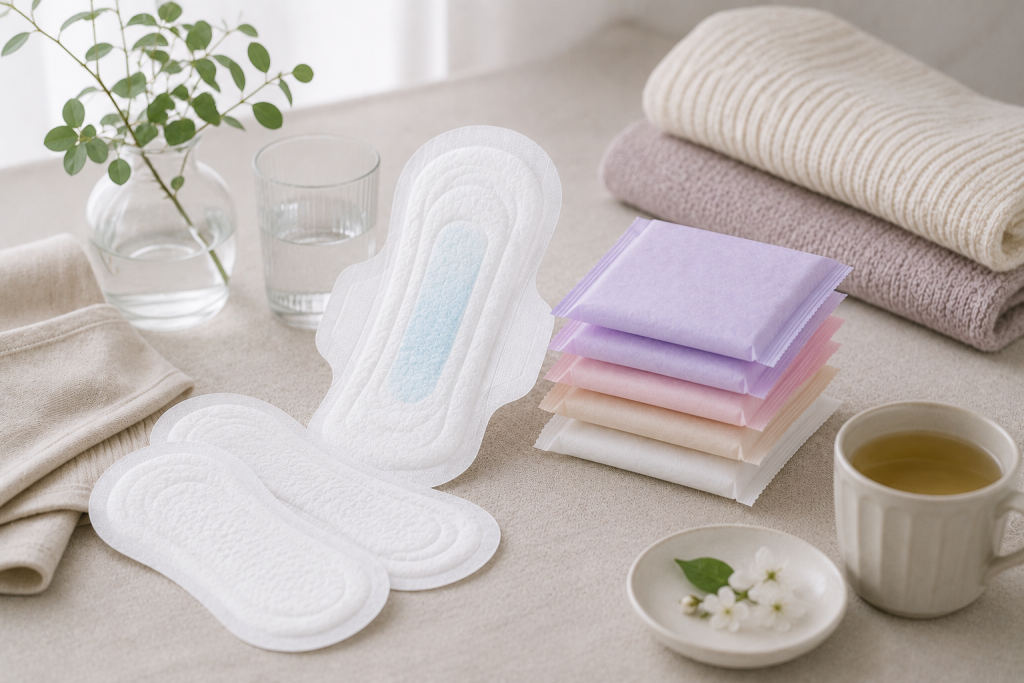
Functional sanitary pads are products designed around a specific product concept — such as herbal care, freshness positioning, breathability, organic materials, or active lifestyle use — that gives the product a distinct identity in the market.
For private label brand owners and OEM buyers, functional pads are not just about product features. They are about building a product line with a clear positioning that connects with a specific consumer need or brand direction.
This guide explains the main functional sanitary pad concepts available for OEM development, what buyers should consider when sourcing them, and how customization works.
Why Functional Pads Matter for Private Label Brands
Standard sanitary pads are a commodity. Many manufacturers can produce basic day-use or night-use pads with similar performance at similar price points.
Functional pads help private label brands create clearer product positioning in a market where basic sanitary pads are often highly similar.
When a brand launches with a clear positioning — herbal comfort, organic materials, freshness support, or sports-use design — it gives buyers a reason to choose it over generic alternatives. This is especially relevant for brands entering markets where basic pads are already widely available and price competition is intense.
From a manufacturing perspective, functional pads are also a practical direction for OEM customization. The core production structure remains the same as standard pads, but material choices, surface treatments, and product concepts can be adjusted to support different brand directions.
Common Functional Sanitary Pad Concepts
The table below provides an overview of the main functional pad directions and key OEM considerations.
| Functional concept | Product positioning | OEM notes |
|---|---|---|
| Herbal-inspired pads | Botanical comfort concept | Check ingredient wording and claim safety |
| Anion / freshness pads | Freshness-oriented product line | Avoid medical or antibacterial claims |
| Cooling pads | Warm-weather comfort positioning | Suitable for selected regional markets |
| Organic cotton top sheet | Premium natural-material direction | Confirm material sourcing and surface options |
| Breathable / ultra-thin pads | Daily comfort and discreet wear | Balance thinness with absorbency |
| Overnight / high-absorbency pads | Night-use or heavier-flow positioning | Confirm length, core design, and leak-guard structure |
| Sports pads | Active-lifestyle positioning | Focus on fit, breathability, and movement support |
Herbal-inspired sanitary pads
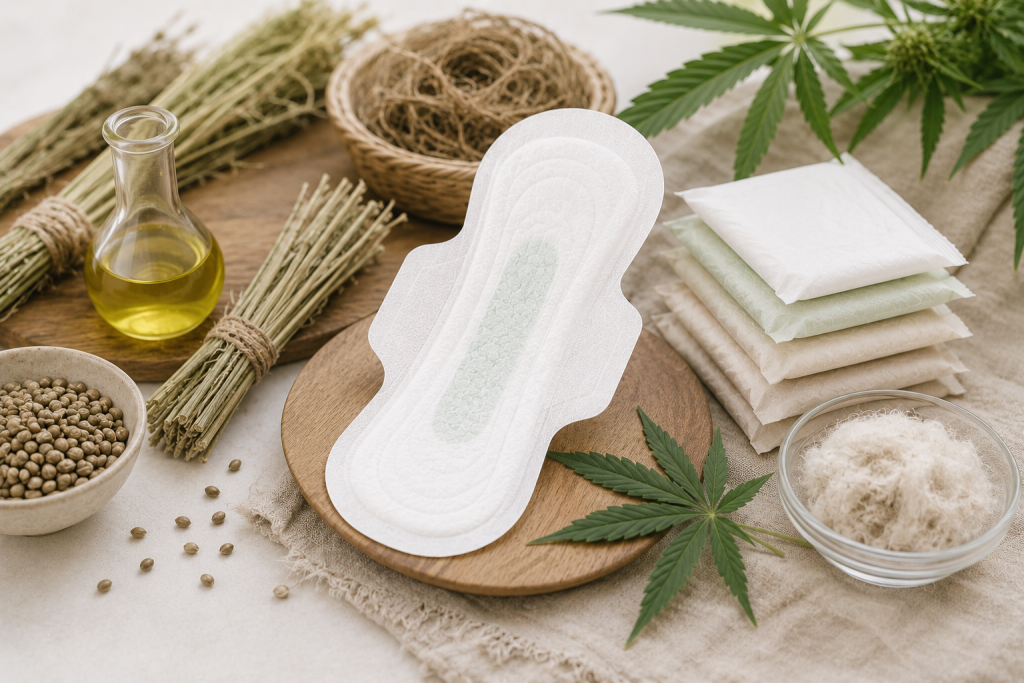
Herbal sanitary pads use botanical ingredients — typically applied to the surface layer or embedded in the pad structure — to create a differentiated product concept focused on comfort and care.
This direction is popular in markets where consumers associate natural or plant-based ingredients with gentle, skin-friendly products.
Herbal-related wording should stay within comfort and care positioning. Suitable examples: herbal-inspired care, botanical comfort concept, plant-based product direction. Claims around pain relief, therapeutic effect, or gynecological improvement are not appropriate.
Anion / freshness-oriented sanitary pads
Anion sanitary pads usually refer to products positioned around a freshness-oriented concept, often using a dedicated layer or chip depending on the product design. This positioning is widely recognized in Asian markets and is growing in relevance for brands targeting health-conscious or differentiated hygiene categories.
Anion and freshness positioning should focus on the user experience — comfort, freshness, and a cleaner feeling. Claims about killing bacteria, sterilizing, or preventing infection are not appropriate.
Cooling sanitary pads
Cooling sanitary pads use materials or ingredients that create a mild cooling sensation during use. This is a specific functional concept suited for warm-weather markets or brands targeting comfort-focused consumers.
The cooling effect comes from material or ingredient choices, not from any medical or therapeutic mechanism.
Organic cotton top sheet options
Organic cotton sanitary pads use an organic cotton top layer, positioned for consumers who prefer natural or less-processed materials in contact with skin.
This is one of the clearest and most commercially safe functional directions, as it focuses on material sourcing and surface texture rather than product health claims. Private label brands targeting premium, natural, or eco-conscious positioning often build around organic cotton as a core product value.
Breathable and ultra-thin pads
Breathable pads use backsheet or structural design choices intended to support better airflow and a more comfortable wearing experience. Ultra-thin pads combine high absorbency with minimal pad thickness.
Both directions appeal to buyers who want everyday comfort and discreet wearability — practical product values that are easy to communicate in product copy without compliance risk.
Overnight and high-absorbency pads
Overnight pads are designed for extended, uninterrupted use — typically longer in length, wider at the back, and built for higher absorbency.
High-absorbency pads may be considered for heavier-flow positioning, depending on product design, size, and local market expectations. For private label brands, overnight pads are often one of the first SKUs added to a product range because they serve a clear, specific consumer need.
Sports sanitary pads
Sports or active-lifestyle sanitary pads are designed for movement — with a secure fit, leak-resistant construction, and breathable materials to support active use. This direction appeals to brands targeting younger consumers, fitness audiences, or markets where active lifestyle positioning has commercial appeal.
What Buyers Should Check Before Sourcing Functional Pads
-
✓
Product concept and material options — Confirm which functional directions the factory can support. Ask about available surface materials, inner structures, and functional layers.
-
✓
Compliance and claim safety — Functional positioning must stay within commercially safe language. Confirm that the product cannot be described with medical or therapeutic claims in your target market without regulatory support.
-
✓
MOQ and lead time — Functional pad varieties — especially those with specialty materials or ingredients — may have different MOQ or lead time requirements compared to standard pads. Confirm these before starting specification discussions.
-
✓
Packaging and labeling — Functional positioning only works if the packaging communicates it clearly. Discuss packaging design, material choices, and label copy as part of the product development process.
-
✓
Testing and quality control — Ask about testing procedures for functional materials — especially surface softness, absorbency, and any ingredient-related safety testing.
OEM and ODM Customization Options
For private label buyers, functional sanitary pads can typically be customized across several dimensions:
-
—
Product concept direction: herbal, anion, organic cotton, cooling, breathable, overnight, sports
-
—
Surface material: organic cotton, soft cotton, embossed nonwoven, natural fiber options
-
—
Functional layer: anion layer, herbal chip, cooling ingredient, freshness material
-
—
Size and shape: day, overnight, extended coverage, wing or no-wing design
-
—
Absorbency level: light, regular, heavy, ultra-heavy
-
—
Packaging: full brand packaging, label design, box type, pouch, individual wrapper
-
—
Private label branding: brand name, logo, brand message on packaging and wrapper
The level of customization available will depend on the factory's production setup, the order quantity, and the product complexity.
Compliance and Claim Caution
Functional sanitary pads are a commercially attractive direction, but product wording must be handled carefully.
The following claim types are not appropriate for standard product marketing without regulatory validation:
- ✗ Relieves menstrual pain or cramps
- ✗ Treats gynecological conditions
- ✗ Prevents infection
- ✗ Clinically proven antibacterial effect
- ✗ Medically approved skin protection
- ✗ Guaranteed hypoallergenic result
These apply across English, Chinese, Russian, and other language versions of any marketing material. Functional pads should be positioned around product concept, user experience, and comfort — not around health outcomes.
Why Work with Niceday for Functional Sanitary Pads
Niceday is a B2B OEM/ODM manufacturer based in Foshan, China, with production capacity supporting multiple functional sanitary pad directions.
Niceday supports product directions including herbal, anion, organic cotton, breathable, overnight, and sports sanitary pads, and can discuss specifications, materials, MOQ, lead time, and packaging customization with qualified buyers.
Interested in developing a functional sanitary pad line for your brand?
Niceday supports OEM and ODM projects for herbal, anion, organic cotton, breathable, overnight, and sports sanitary pads. Contact our team to discuss product specifications, MOQ, lead time, and packaging customization.
FAQ
A functional sanitary pad is a product designed with a specific material, ingredient, or performance concept beyond basic absorbency — such as herbal-inspired care, anion freshness, organic cotton materials, cooling sensation, breathability, or sports-use design. These concepts give private label brands a clearer product story.
Yes. Most functional sanitary pad concepts can be produced under OEM or private label arrangements. The specific customization options depend on the factory's production setup and the product direction chosen.
Yes, when positioned correctly. Herbal and anion pads should be described using comfort, freshness, and care language — not medical or therapeutic claims. Product wording should be reviewed for the target market before launch.
MOQ depends on the product type, customization level, and factory structure. For reference, OEM sanitary pad projects at Niceday typically start around 300,000 pieces per SKU, though this varies by project. Contact our team to discuss your specific requirements.
Lead times are typically around 35 to 40 days after specification confirmation and sample approval, though this varies by order size and product complexity.
It helps to have a clear product concept direction, target market, estimated order quantity, packaging ideas, and any specific material or ingredient requirements. A manufacturer like Niceday can work through the details from there.