About This Guide
This guide is written for private label brand owners, importers, and distributors who are deciding whether to launch a panty liner line, a sanitary pad line, or both — and want to understand the key differences in product construction, OEM requirements, MOQ, customization options, and market positioning before approaching a manufacturer. It is a B2B sourcing decision guide, not a consumer product comparison.
Panty Liners and Sanitary Pads: What They Are and How They Differ
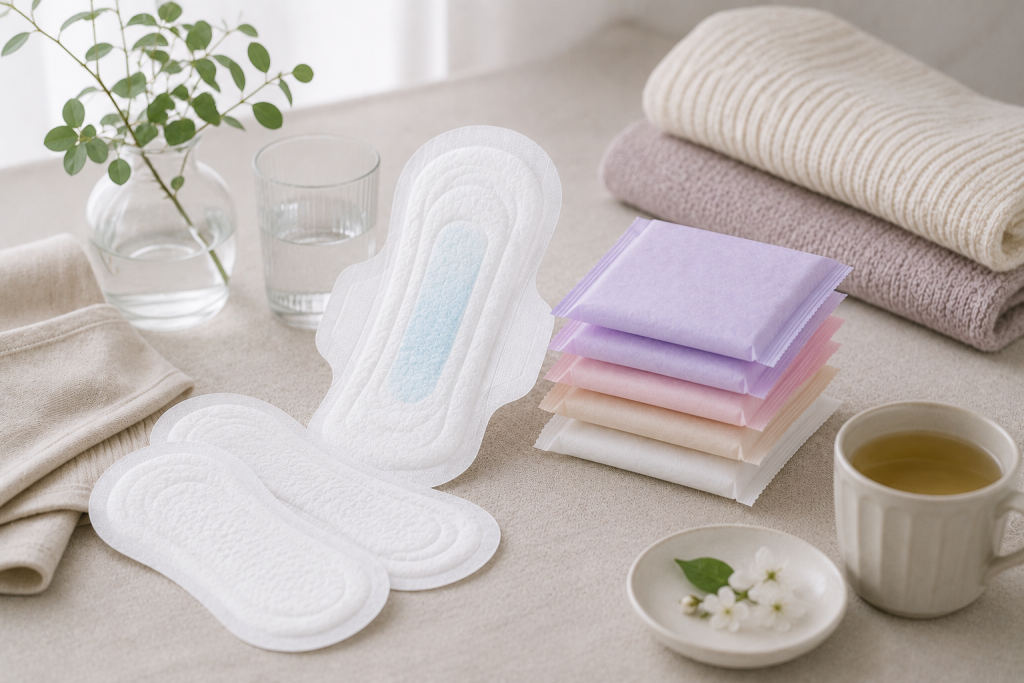
Panty liners and sanitary pads are both absorbent feminine hygiene products, but they serve different consumer needs, have different product construction, and carry different implications for OEM projects. Understanding these differences is the starting point for making the right private label product decision.
| Factor | Panty Liner | Sanitary Pad |
|---|---|---|
| Primary use | Daily freshness, light discharge, light flow days, backup protection | Menstrual flow absorption during period days |
| Absorbency level | Light — designed for daily wear without heavy flow | Light to heavy — available across a wide absorbency range |
| Product thickness | Thin — typically 2–3mm, designed for comfortable everyday wear | Varies — from ultra-thin to thick/overnight depending on absorbency |
| Core construction | Thinner absorbent core, lighter SAP content | Thicker absorbent core with higher SAP content for flow management |
| Wings | Usually wingless — most panty liners do not have side wings | Available with or without wings depending on product variant |
| Size range | Standard, long, and thong variants | Day, night, overnight, and ultra-long variants |
| Typical usage frequency | Daily — often used every day regardless of menstrual cycle | Periodic — used primarily during menstruation |
| Consumer purchase frequency | High — daily use creates consistent repurchase demand | Regular — monthly repurchase cycle tied to menstruation |
OEM Production Differences: What Changes Between the Two Categories
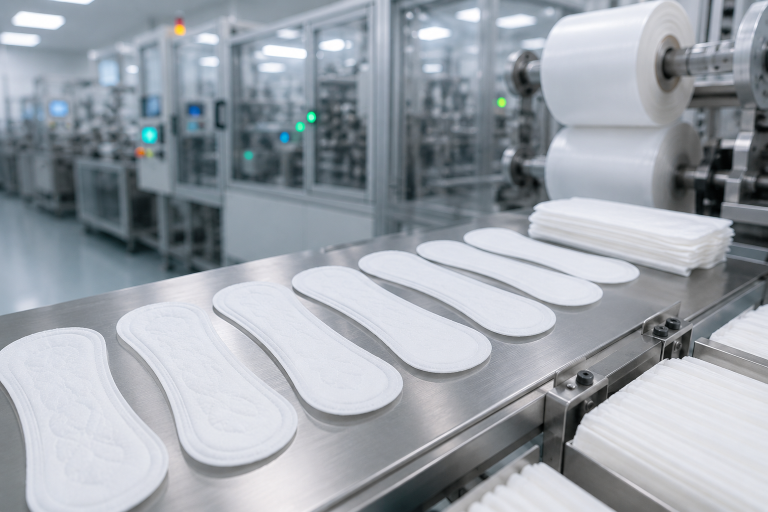
From a manufacturing perspective, panty liners and sanitary pads are produced using similar equipment and production line logic — which is why many sanitary pad manufacturers also produce panty liners. However, there are meaningful differences in how each is specified, customized, and produced at OEM level.
Core and Material Specification
Sanitary pads require a more complex absorbency specification than panty liners, with more variation in core weight, SAP concentration, and backsheet construction depending on the absorbency level being targeted. Panty liners have a more standardized core construction but offer more variation in surface material, width, and shape — particularly across standard, long, and thong formats.
Brand owners specifying OEM panty liners should focus customization discussion on surface material, shape, and freshness-oriented product direction. Brand owners specifying OEM sanitary pads should focus on absorbency level, core structure, wing configuration, and day-versus-night product variants.
SKU Structure and Variant Planning
Sanitary pad product lines typically require more SKUs to cover the full range of consumer needs — at minimum, a day pad and a night pad, with additional variants for light days, heavy flow, or ultra-long overnight use. Each SKU carries its own MOQ, which means a more complete sanitary pad range requires a higher total order volume commitment.
Panty liner product lines can be launched with fewer SKUs — a standard size and a long size cover most market requirements — which makes the initial investment more contained. Thong liners are a niche addition suitable for specific market positioning rather than a launch priority for most new brands.
Packaging Complexity
Because sanitary pad lines typically involve more variants, packaging development is more complex — each absorbency level or size variant usually requires distinct packaging to communicate the product difference to the consumer. Panty liner packaging tends to be simpler, with fewer variants to differentiate on pack.
Market Positioning: How the Two Categories Are Used Differently by Brands
Understanding how panty liners and sanitary pads are positioned in the market helps brand owners make a more informed product line decision.
Panty Liner Positioning
Panty liners are a high-frequency daily-use product. For private label brands, this means:
- consistent repurchase demand once a consumer adopts the product
- strong opportunity for freshness, comfort, and skin-friendly positioning
- thong liner variants can serve a specific fashion-conscious consumer segment
- organic cotton and ultra-thin positioning are effective differentiation angles in developed markets
- daily use means consumers are more likely to notice and form opinions about material quality and comfort
Sanitary Pad Positioning
Sanitary pads are the core feminine hygiene product category globally. For private label brands, this means:
- larger addressable market and wider distribution opportunity
- more established consumer purchase behavior and category familiarity
- more competitive in most markets — differentiation requires clear positioning
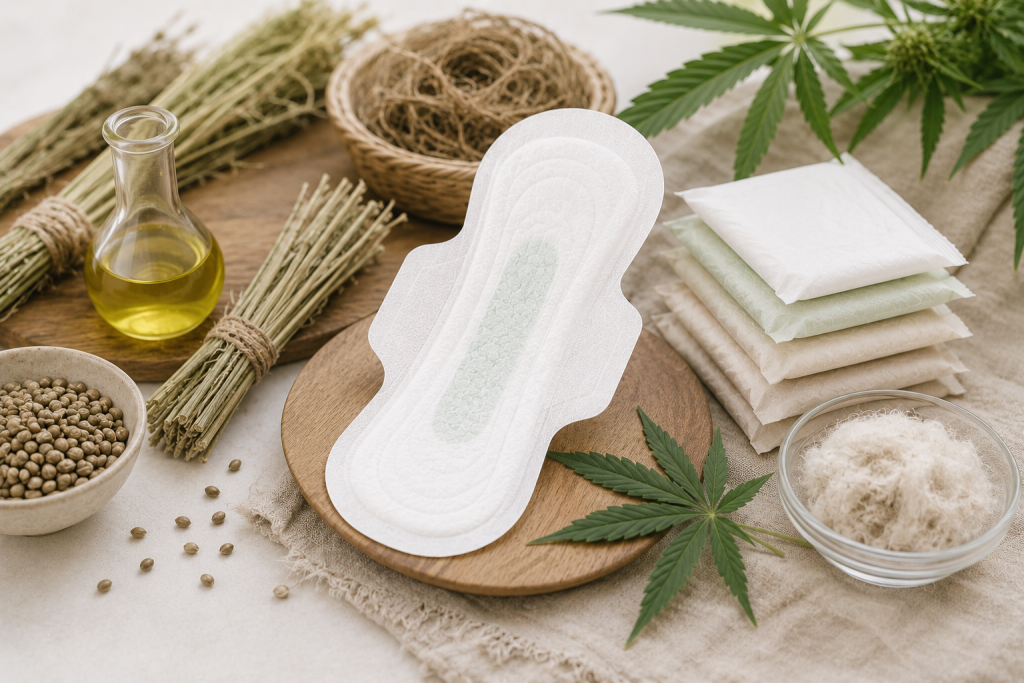
- organic cotton, herbal-inspired, and functional freshness directions offer effective differentiation angles
- night and overnight variants often have less competition and can anchor a product line
Which Should a New Private Label Brand Launch First?
This is one of the most common questions brand owners ask when planning their first feminine hygiene product line. There is no single correct answer, but the following framework helps guide the decision.
| If your situation is… | Consider starting with… | Reason |
|---|---|---|
| Limited initial budget, want to test the market | Panty liners | Fewer SKUs needed, lower total MOQ commitment, simpler packaging |
| Building a complete feminine hygiene brand from launch | Sanitary pads as anchor + panty liners as complement | Sanitary pads are the core category; panty liners expand daily use coverage |
| Entering a market where sanitary pads are already established | Panty liners with differentiated positioning | Less direct competition in panty liners, easier to establish brand presence |
| Distributor adding a house brand to existing portfolio | Sanitary pads — day and night variants | Higher volume per SKU, fits existing distribution logic, faster inventory turnover |
| Targeting a sustainability or organic-focused consumer segment | Both — organic cotton panty liners and organic cotton sanitary pads | Organic positioning works across both categories and supports a cohesive brand story |
Can the Same Manufacturer Produce Both?
Yes — most feminine hygiene OEM manufacturers who produce sanitary pads also produce panty liners, as the core production technology and equipment are closely related. Working with a single manufacturer for both categories simplifies communication, reduces supplier management complexity, and can improve consistency across packaging and brand presentation.
Brand owners planning a multi-category launch should discuss both product lines with the manufacturer from the start, even if production is phased. This allows the manufacturer to advise on the most practical SKU structure, MOQ configuration, and development timeline across both categories.
For more detail on panty liner types and OEM customization options, see our guide on private label panty liners: OEM sourcing guide for brand owners. For sanitary pad OEM details including MOQ and lead time, see OEM sanitary pads: MOQ, packaging, and lead time explained.
MOQ Implications: Planning Your Order Volume Across Both Categories
MOQ is a critical planning factor when deciding whether to launch one category or both. At Niceday, our standard MOQ is 300,000 pieces per SKU for OEM projects. This applies per SKU — meaning each product variant (size, absorbency level, or packaging format) counts as a separate SKU with its own MOQ requirement.
A practical example of how MOQ applies across a two-category launch:
- Sanitary pad day variant — 300,000 pieces
- Sanitary pad night variant — 300,000 pieces
- Panty liner standard size — 300,000 pieces
Total minimum commitment for a three-SKU launch: 900,000 pieces across the two categories. Brand owners should factor this into cash flow and warehousing planning before committing to a multi-category launch structure.
Phased launching — starting with one or two SKUs and adding variants in subsequent orders — is a practical approach for brands that want to manage initial investment while building toward a complete product range.
Frequently Asked Questions
What is the difference between a panty liner and a pantyliner?
"Panty liner" and "pantyliner" refer to the same product — the spelling varies by market and brand preference. In trade and OEM sourcing contexts, both spellings are used interchangeably. Some manufacturers and buyers use "pantyliner" as one word; others write it as two words. Either is acceptable.
Are panty liners regulated the same way as sanitary pads?
In most markets, panty liners and sanitary pads fall under the same regulatory category as feminine hygiene products or absorbent hygiene products. Specific certification and labeling requirements depend on the target market. Brand owners should confirm the applicable regulatory framework for their target country before finalizing product claims or packaging content.
Can I use the same packaging design for panty liners and sanitary pads?
A consistent visual identity — shared color system, typography, and brand elements — can and should carry across both categories to build brand recognition. However, the packaging for each product variant needs to clearly communicate its specific use, absorbency level, and size to avoid consumer confusion. The design system is shared; the product information on each pack is unique.
Which category has higher consumer repurchase frequency?
Panty liners typically have higher repurchase frequency because they are used daily regardless of menstrual cycle, while sanitary pads are used primarily during menstruation — approximately 5–7 days per month for most consumers. For brands focused on building consistent repeat purchase volume, panty liners offer a higher usage frequency advantage. For brands focused on volume per order cycle, sanitary pads typically have higher pieces-per-purchase.
Is it more cost-effective to launch both categories together or separately?
Launching both categories with the same manufacturer in the same production cycle can reduce per-unit costs in areas like packaging development coordination and export documentation. However, the higher total MOQ commitment requires more upfront capital. A phased approach — launching one category first and adding the second in the next order cycle — is more capital-efficient for new brands, though it delays the full product range reaching market.
Planning a Panty Liner or Sanitary Pad OEM Project?
Niceday produces both sanitary pads and panty liners across a range of formats, absorbency levels, and material directions — including organic cotton, herbal-inspired, and functional freshness product concepts. Our facility in Foshan, China operates 14 intelligent production lines with daily capacity of 9.8 million pieces, and we export to 54+ countries.
Tell us your target market, product category, and brand direction — our OEM team will respond with relevant capability information, SKU structure suggestions, and next steps.
Contact Our OEM Team View OEM Service Details