About This Guide
This guide covers what organic sanitary pads are, how they differ from conventional pads, what materials and certifications matter, and how brand owners and distributors can source organic pads through OEM manufacturing. It is useful for consumers evaluating organic pad options and for private label buyers planning an organic feminine hygiene product line.
What Are Organic Pads?
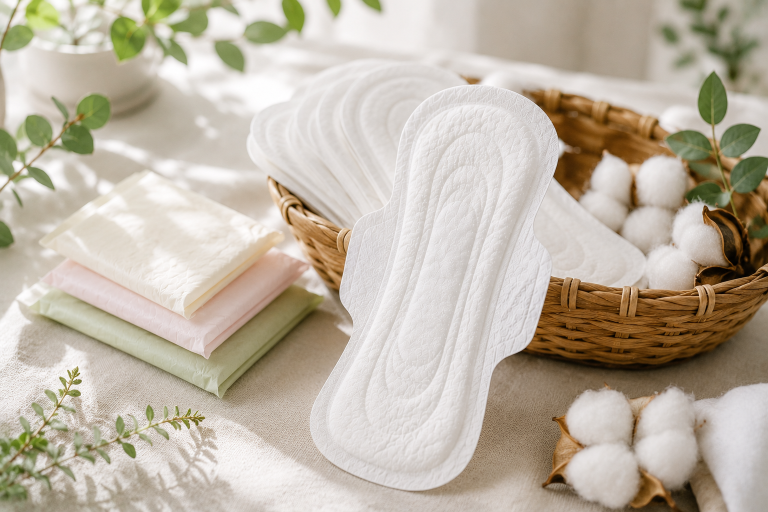
Organic pads are feminine hygiene products made primarily from certified organic cotton and other natural materials. Unlike conventional pads that may contain synthetic fibers, chlorine bleach, artificial fragrances, and fluorescent brightening agents, organic pads are designed to minimize chemical exposure to the skin during wear.
In most cases, the term "organic" refers specifically to the cotton used in the topsheet — the layer in direct contact with the skin. This cotton is grown without synthetic pesticides or fertilizers and is processed without harsh chemical treatments. The absorbent core and backsheet construction may vary depending on the product's eco and sustainability positioning.
Organic Pads vs. Regular Pads: Key Differences
| Feature | Organic Pads | Conventional Pads |
|---|---|---|
| Topsheet material | Certified organic cotton | Synthetic nonwoven, rayon, or blended fiber |
| Bleaching process | Chlorine-free | May use chlorine bleaching |
| Fragrance | Fragrance-free | Often scented with synthetic fragrance |
| Chemical additives | No fluorescent brightening agents | May contain FBAs and other additives |
| Skin feel | Softer, more breathable | Varies; synthetic surfaces may cause friction |
| Biodegradability | Often biodegradable or compostable options available | Usually not biodegradable |
| Price positioning | Mid to premium segment | Mass market to mid segment |
For consumers with sensitive skin, organic pads can significantly reduce irritation and allergic reactions. For brand owners, organic pads support higher retail price points and stronger brand differentiation in competitive markets. For more on sensitive-skin product positioning, see our guide on organic pads for sensitive skin: what to look for and why it matters.
Why Consumers Choose Organic Pads
Understanding consumer motivation is important for both personal product decisions and private label product development:
- Skin safety and reduced irritation — many users experience fewer rashes and allergic reactions after switching from conventional pads, particularly those with sensitive skin, eczema, or vulvar conditions
- Chemical transparency — consumers increasingly demand clear, simple ingredient information; organic pads offer verifiable material claims without hidden additives
- Environmental responsibility — organic cotton is grown without synthetic pesticides; many organic pad formats include biodegradable or compostable materials
- Comfort — organic cotton is naturally softer and more breathable than synthetic alternatives, improving comfort during extended wear
- Brand alignment — organic pad brands often align with sustainability, clean ingredients, and ethical sourcing values that resonate with a growing consumer segment
Materials Used in Organic Pads
Not all organic pads are built the same. Material structure determines both performance and market positioning.
Topsheet (Skin Contact Layer)
Certified organic cotton is the standard choice for organic pad topsheets. Some premium products also use bamboo fiber or lyocell (Tencel) for additional softness. The topsheet material is the most visible organic claim and the primary driver of skin-comfort positioning.
Absorbent Core
The core typically uses a combination of fluff pulp and superabsorbent polymer (SAP) for reliable absorption across all flow levels. Some eco-positioned products use wood pulp-only cores to avoid synthetic polymers entirely, though this reduces per-gram absorbency capacity. Core construction determines absorbency performance — the topsheet material does not affect it.
Backsheet
Breathable PE film is the standard backsheet for most organic pads. For fully biodegradable products, PLA (polylactic acid) backsheets derived from plant starch are available — increasingly popular with eco-premium brands seeking a full sustainable positioning across all layers.
Wrapper and Packaging
For brands pursuing a full organic or eco positioning, PLA individual wrappers and recyclable outer packaging are available. Packaging material choices affect both the sustainability story and shelf presence — and are a meaningful part of the brand's environmental claims.
Certification Standards for Organic Pads
For brands selling organic pads, certification is both a regulatory requirement in some markets and a critical consumer trust signal. The main certification standards relevant to organic feminine hygiene products:
| Certification | What It Covers | Required For |
|---|---|---|
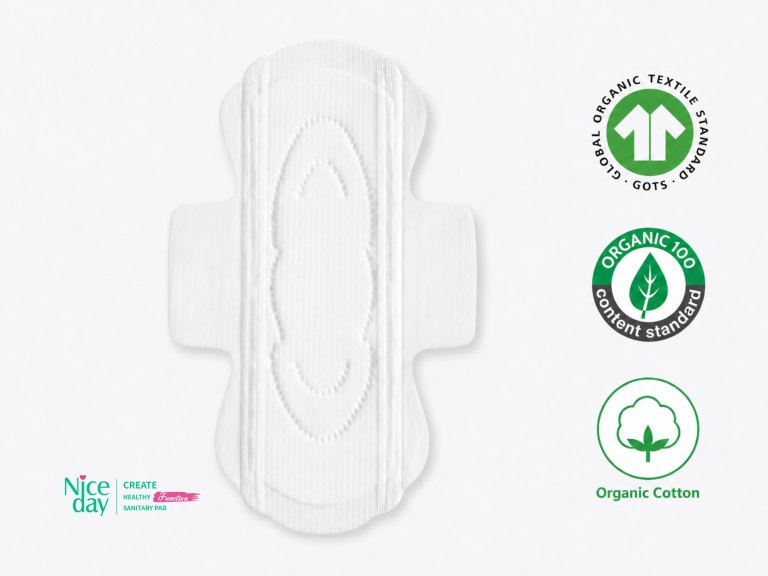
| GOTS | Full supply chain organic verification — from cotton farming to finished product manufacturing | Most comprehensive organic claim; required for GOTS-labeled products |
| OCS | Verifies organic cotton content; does not cover the full production process | Organic cotton content claims where full GOTS is not required |
| FDA registration | Manufacturer registered with the US Food and Drug Administration | Products entering the US market |
| CE marking | Compliance with applicable European product standards | Products entering EU markets |
| FBA-free | No fluorescent brightening agents — verified through third-party testing | Skin-safety claims and chemical transparency positioning |
| SGS / Intertek testing | Third-party testing of raw materials and finished product safety | Market entry verification and buyer quality approval |
For a full overview of certifications relevant to feminine hygiene OEM projects, see our guide on what certifications matter for feminine hygiene OEM.
How to Source Organic Pads for Your Brand
For brand owners, distributors, and retailers evaluating organic pad OEM, the following factors are most important when selecting a manufacturing partner:
- Material sourcing capability — can the manufacturer source certified organic cotton and provide full material traceability documentation? GOTS or OCS certification should be current and verifiable.
- Customization depth — can you customize topsheet, core, backsheet, wrapper, and packaging design independently? A capable OEM partner supports full private label customization rather than offering only pre-set SKUs.
- Product range coverage — does the manufacturer offer organic options across day pads, overnight pads, and panty liners? A complete organic range requires at minimum these three formats.
- MOQ and lead time — confirm MOQ per SKU and realistic production lead time before committing to a development timeline. At Niceday, standard MOQ for organic pads is 300,000 pieces per SKU, with production lead time of 35–40 days from order confirmation.
- Documentation support — can the manufacturer provide certification documents, test reports, and material traceability records suitable for your target market's import and retail requirements?
For a full overview of the OEM sourcing process for organic cotton pads, see our guide on organic cotton sanitary pads: OEM sourcing guide for brand owners.
Organic Pad Specifications Available at Niceday
| Specification | Options Available |
|---|---|
| Length | 155mm / 180mm / 190mm / 210mm / 245mm / 260mm / 285mm / 330mm / 360mm / 420mm / custom |
| Topsheet | Certified organic cotton (GOTS / OCS) |
| Absorbent core | Wood pulp / Fluff pulp + SAP / Airlaid paper / Cotton core |
| Backsheet | Breathable PE film / PLA biodegradable film |
| Wings | Winged / Wingless |
| Individual wrapper | Standard PE / PLA biodegradable / Nonwoven / Paper |
| Fragrance | Fragrance-free (standard for organic positioning) |
| Certifications | FDA registered / CE compliant / FBA-free / GOTS / OCS / SGS test reports available on request |
| MOQ | 300,000 pieces per SKU |
| Sample lead time | 7–15 business days |
| Production lead time | 35–40 days from order confirmation |
Frequently Asked Questions
Are organic pads better for sensitive skin?
Yes — for users who experience irritation from conventional pads, organic cotton pads are generally a better option. The combination of organic cotton topsheet, fragrance-free production, FBA-free materials, and chlorine-free processing removes the most common chemical irritants found in conventional pads. Absorbency performance is not affected — it is determined by the core construction, not the topsheet material. For a detailed guide on sensitive skin and organic pads, see our article on organic pads for sensitive skin.
Are organic pads as absorbent as regular pads?
Yes — absorbency is determined by the core construction, specifically the weight and SAP concentration of the absorbent core. The organic cotton topsheet does not affect absorbency capacity. A well-constructed organic pad performs at the same absorbency level as a conventional pad of equivalent core specification.
Are organic pads biodegradable?
It depends on the specific product construction. Organic cotton topsheets are biodegradable; however, most conventional pad cores use SAP which is not fully biodegradable, and standard PE film backsheets are not biodegradable. Fully biodegradable organic pad options use PLA backsheets and PLA individual wrappers in addition to the organic cotton topsheet — but these represent a premium product tier rather than the standard organic pad. Confirm the specific construction with the manufacturer before making biodegradability claims on packaging.
What certifications should organic pads have?
For verified organic cotton claims, GOTS certification covers the full production chain and is the most comprehensive standard. OCS certification confirms organic cotton content without covering the full process. For skin safety claims, FBA-free verification through SGS or Intertek third-party testing is important. For market access, FDA registration is relevant for the US market and CE marking for European markets. The specific certifications required depend on the target market and the claims the brand intends to make on packaging.
Can I create a private label organic pad line?
Yes — organic pads are well-suited to OEM and private label development. The key requirements are confirming the manufacturer holds current GOTS or OCS certification, can produce FBA-free with supporting test reports, and can support custom packaging with appropriate certification claim language. At Niceday, we support full private label customization across topsheet, core, backsheet, wrapper, and packaging design for organic pad projects.
How much do organic pads cost to source?
OEM unit costs for organic pads vary depending on product specifications, certification requirements, packaging complexity, and order volume. Organic cotton and certification costs mean organic pads typically carry a higher unit cost than equivalent conventional pads — which is reflected in their premium retail positioning. For accurate pricing, contact our team with your target specifications, estimated order volume, and target market. We respond with specific cost information rather than general ranges.
Ready to Add Organic Pads to Your Product Line?
Niceday manufactures certified organic cotton sanitary pads — GOTS and OCS certified, FBA-free and fragrance-free as standard — with full OEM and private label customization support across day pads, overnight pads, and panty liners. We supply brand owners and distributors in 54+ countries from our facility in Foshan, China, with 14 intelligent production lines and daily capacity of 9.8 million pieces.
Tell us your target market, product direction, and certification requirements — our OEM team will respond with relevant options, specifications, and next steps.
Contact Our OEM Team View OEM Service Details