Tampons are one of the most widely used menstrual products worldwide — yet many women still have questions about how they work, what they are made of, and how to choose the right one. Whether you are a consumer exploring your options or a brand owner looking to add tampons to your product line, this guide covers everything you need to know.
In this article, we explain what tampons are, how they work, the different types available, key quality and safety standards, and — for brands and distributors — how to source private label tampons through OEM manufacturing.
What Are Tampons and How Do They Work?
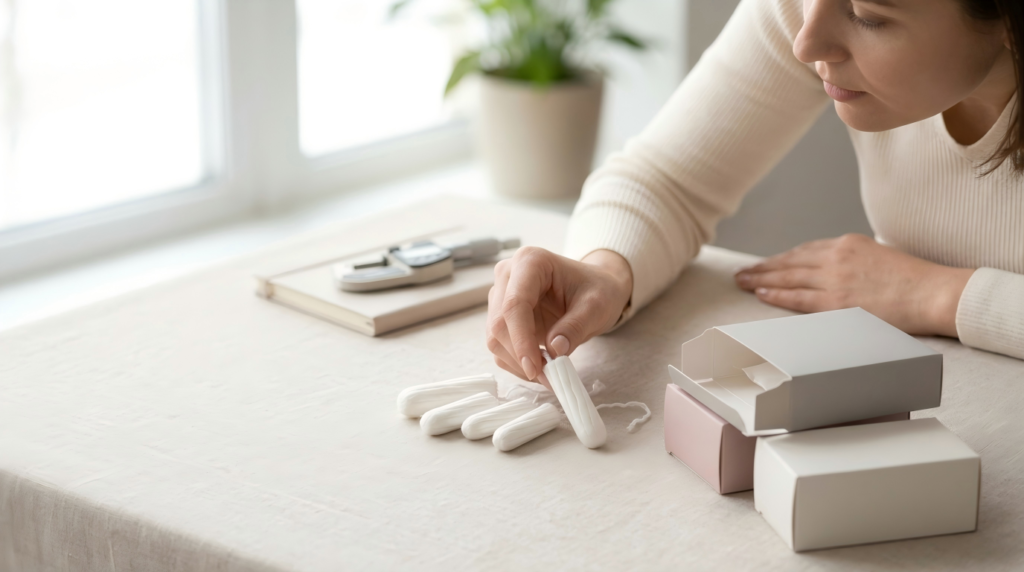
A tampon is a small, cylindrical absorbent product designed to be inserted into the vaginal canal to absorb menstrual blood before it leaves the body. This is the key difference between tampons and pads — pads absorb flow externally, while tampons work internally.
Most tampons are made from compressed cotton, rayon, or a blend of both. They come with a removal string attached at the base. Some tampons include a plastic or cardboard applicator for easier insertion, while others are designed for finger insertion (non-applicator or digital tampons).
Once inserted, the tampon expands as it absorbs fluid. When saturated, it is removed by pulling the string and replaced with a new one. Most tampons should be changed every 4 to 8 hours to maintain hygiene and reduce the risk of infection.
Types of Tampons
Tampons come in several formats, each designed for different preferences, flow levels, and market positions.
By Absorbency Level
- Light: For light flow days or the beginning/end of a period.
- Regular: The most common size, suitable for moderate flow.
- Super: For heavy flow days, offering higher absorption capacity.
- Super Plus: Maximum absorbency for very heavy flow.
By Applicator Type
- Plastic applicator: Smooth insertion, most popular in North American markets.
- Cardboard applicator: Eco-friendly alternative, biodegradable.
- Non-applicator (digital): Compact, minimal packaging, popular in European markets. Inserted using the finger.
By Material
- Conventional cotton/rayon blend: Standard option, widely available.
- Organic cotton: Chemical-free, chlorine-free processing. Growing demand from health-conscious consumers. See also: Best Organic Pads Guide →
Tampons vs. Pads vs. Menstrual Pants: How They Compare
| Feature | Tampons | Pads | Menstrual Pants |
|---|---|---|---|
| Worn | Internally | Externally (in underwear) | As underwear |
| Discretion | Very discreet | Visible outline possible | Very discreet |
| Swimming | Yes | No | With special designs |
| Change frequency | Every 4–8 hours | Every 3–6 hours | Every 8–12 hours |
| Comfort level | Not felt when inserted correctly | Can feel bulky | Feels like regular underwear |
| Best for | Active lifestyle, sports, swimming | Overnight, postpartum, beginners | Sleep, light days, backup |
For a detailed comparison of tampons and period underwear: Period Underwear vs. Tampons →
Tampon Quality and Safety Standards
Tampon quality is not just about absorbency — it also involves material safety, manufacturing hygiene, and regulatory compliance. Here are the key quality factors:
Material Safety
High-quality tampons should be free from chlorine bleach, fluorescent brightening agents (FBAs), artificial fragrances, and dioxins. All Niceday tampons are manufactured without these substances. The cotton or rayon used should be medical-grade and tested for skin safety.
Absorbency Design
Advanced tampons use features like 8-groove expansion design to improve fluid distribution and minimize leakage. This technology allows the tampon to expand evenly in all directions, providing better protection than flat-compressed designs.
Regulatory Compliance
- FDA (United States): Tampons are classified as medical devices and must meet FDA regulations for materials, labeling, and manufacturing.
- CE (European Union): Required for tampons sold in EU markets.
- GOST (Russia): Required for the Russian market, where tampon demand is significant.
- SGS / Intertek testing: Third-party test reports available on request. View Certificates →
For a comprehensive guide: What Certifications Matter for Feminine Hygiene OEM →
How to Source Private Label Tampons
For brand owners and distributors looking to add tampons to their product line, here is what to evaluate when choosing an OEM partner:
Product range: Does the manufacturer offer multiple absorbency levels, applicator types, and material options? A strong partner should support both conventional and organic cotton tampons.
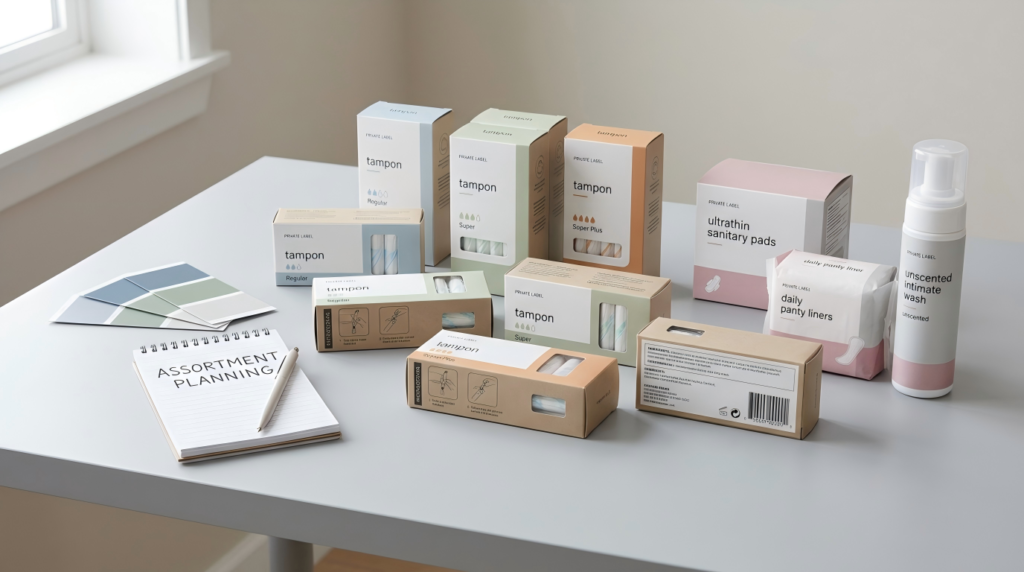
Customization: Can you customize the absorbency, wrapper design, applicator type, box packaging, and language-specific labeling? Full private label customization is essential for market differentiation.
Quality control: Tampons require strict manufacturing hygiene. Look for manufacturers with clean-room production environments, automated quality inspection, and third-party testing capabilities.
Regulatory experience: Your manufacturer should understand FDA, CE, and GOST requirements and be able to provide the necessary documentation for your target market.
MOQ and lead time: At Niceday, our standard tampon MOQ is 100,000 pieces per SKU. Sampling takes 7–15 business days. Mass production takes 35–40 days from order confirmation.
Trade terms: We support FOB Foshan, CIF, and CNF. We currently export to 50+ countries across all major regions.
Full OEM workflow details: OEM & ODM Service Overview →
→ Ready to source private label tampons? Request a sample on WhatsApp
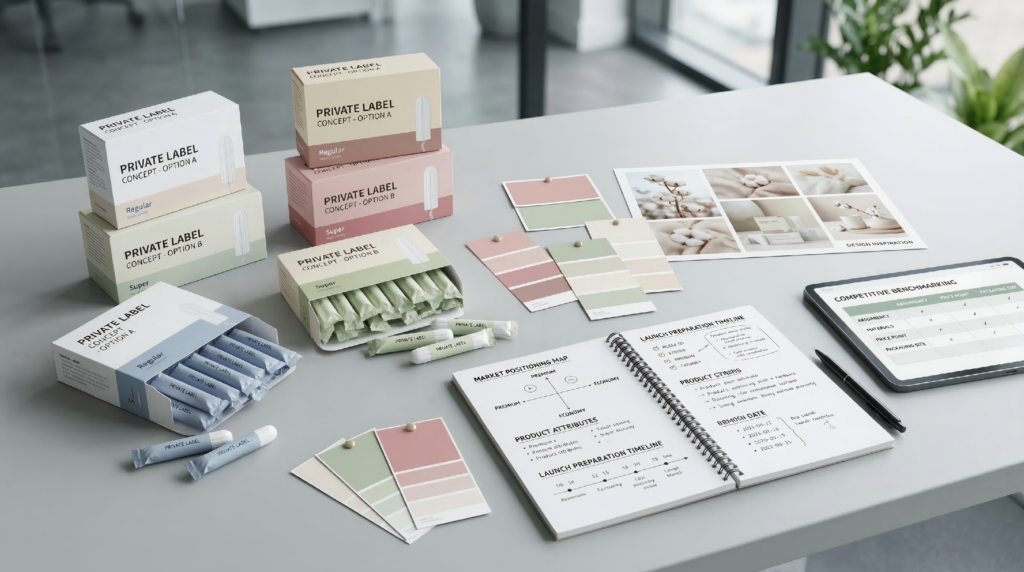
Tampon Specifications at Niceday
| Specification | Options Available |
|---|---|
| Absorbency levels | Light / Regular / Super / Super Plus |
| Applicator type | Plastic applicator / Cardboard applicator / Non-applicator (digital) |
| Material | Cotton / Rayon / Cotton-rayon blend / Organic cotton |
| Expansion design | 8-groove expansion technology (standard) |
| String | Securely attached removal string (customizable color) |
| Wrapper | Individual PE wrapper / Biodegradable wrapper |
| Packaging | Custom private label — count, box design, language |
| Certifications | FDA / CE compliant, FBA-free, SGS reports available |
| MOQ | From 100,000 pieces per SKU |
| Sample lead time | 7–15 business days |
| Production lead time | 35–40 days |
Frequently Asked Questions About Tampons
Tampons are inserted into the vaginal canal where they absorb menstrual blood internally. They expand as they absorb fluid. When full, they are removed by pulling the attached string and replaced with a new one. Most tampons should be changed every 4 to 8 hours.
Yes. Tampons are the most common menstrual product used for swimming because they work internally and do not absorb water when inserted properly. This makes them a preferred choice for athletes and active consumers.
Yes, when used as directed. Modern tampons from reputable manufacturers are made from medical-grade materials and are tested for safety. It is important to choose the correct absorbency level for your flow and to change tampons every 4–8 hours. All Niceday tampons are free from chlorine, fluorescent agents, and artificial fragrances.
Applicator tampons come with a plastic or cardboard tube that helps guide the tampon into position. Non-applicator (digital) tampons are inserted using the finger. Applicator tampons are more popular in North America, while non-applicator tampons are widely preferred in Europe. Both types are available for private label customization at Niceday.
Yes. Niceday offers full OEM / ODM customization for tampons — including absorbency levels, applicator type, material, wrapper design, and box packaging. MOQ starts from 100,000 pieces per SKU. Contact us to discuss your project →
Tampons offer maximum discretion and are ideal for active lifestyles and swimming. Pads are easier for beginners and better for overnight use. Menstrual pants offer a reusable option with high comfort. Many brands offer all three as a complete product line. See: Period Underwear vs. Tampons →
Ready to Add Tampons to Your Product Line?
Whether you are a consumer looking for the right tampon or a brand owner planning to launch a tampon line, quality and safety should always come first. Niceday supports private label tampon projects from material selection and sampling through to full-scale production and global export.
→ Request a Free Sample or Quote on WhatsApp
Explore our tampon product range: Tampons Catalog →
Published by the Niceday Product Team | Foshan Niceday Sanitary Products Co., Ltd.
Last updated: March 2026