About This Guide
This guide explains the main types of sanitary pads — formats, absorbency levels, materials, sizes, and use occasions. It is useful for consumers choosing the right pad for their needs, and for distributors, retailers, and private label buyers who want to understand category differences before building or expanding a product range.
Types of Sanitary Pads: A Complete Overview
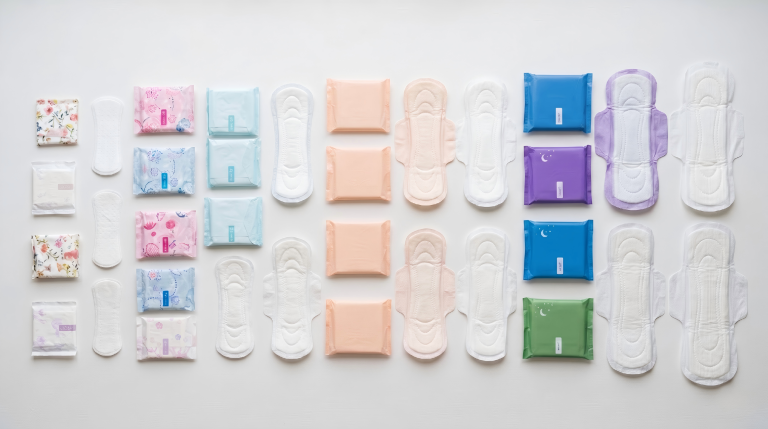
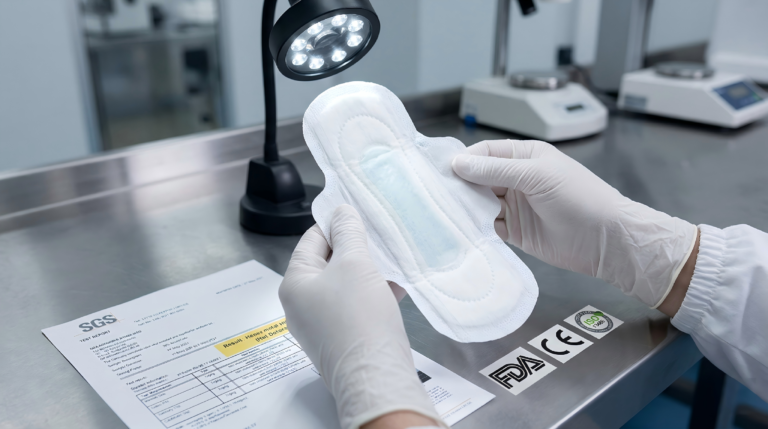
Sanitary pads are available in different formats to match different flow levels, comfort needs, and usage occasions. The table below covers the main product types available in the market.
| Pad Type | Primary Use | Key Characteristics | Typical Positioning |
|---|---|---|---|
| Ultra-thin pads | Light to moderate flow, daytime | Slim profile, compressed core, discreet under clothing | Everyday comfort, active wear |
| Regular pads | Moderate flow, everyday use | Balanced absorbency, comfort, and coverage | Most widely used format globally |
| Maxi pads | Heavy flow days | Thicker core, wider coverage, stronger leak barriers | Heavy flow, longer wear |
| Overnight pads | Sleep protection | Extended length, wider back panel, high SAP concentration | Heavy flow, 8-hour wear |
| Winged pads | Active use, movement stability | Side flaps fold around underwear gusset to prevent shifting | Available across all absorbency levels |
| Organic cotton pads | Skin-comfort, natural material preference | Certified organic cotton topsheet, fragrance-free, FBA-free | Premium, sensitive skin, natural positioning |
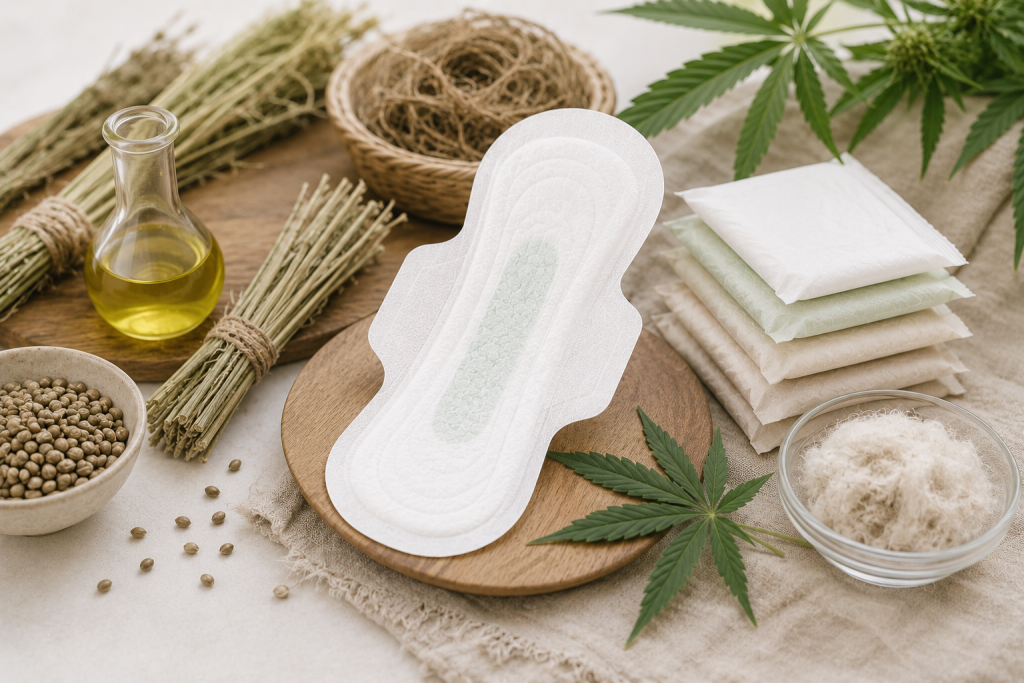
| Herbal / functional pads | Differentiated comfort or freshness positioning | Herbal chip or anion chip embedded in core; comfort and freshness concept | Premium line extension, Middle East, Southeast Asia |
| Biodegradable pads | Eco-conscious positioning | PLA backsheet, plant-based components, reduced plastic packaging | Sustainability-focused brands |
| Sports pads | Active lifestyle use | Stable fit design, movement-friendly structure, drier surface feel | Fitness, outdoor, active-lifestyle brands |
| Teens pads | Younger users, lighter flow | Smaller size, lighter weight, more flexible construction | Teen-focused or first-use product lines |
| Reusable cloth pads | Sustainable, cost-saving preference | Fabric construction (cotton or bamboo), washed after use | Eco-conscious, reusable product lines |
How to Choose the Right Sanitary Pad
Choosing the right sanitary pad comes down to five practical factors: absorbency, materials, size, comfort, and use occasion.
1. Match Absorbency to Flow Level
Using the correct absorbency level is the most important product decision — a pad that is too low in absorbency for the current flow will leak regardless of other product quality factors.
| Flow Level | Approximate Volume | Recommended Pad Type |
|---|---|---|
| Liner / Spotting | 5–15ml | Panty liner or ultra-thin daily pad |
| Light | 30–60ml | Ultra-thin regular pad |
| Moderate | 60–100ml | Regular pad with wings |
| Heavy | 100–150ml | Maxi pad or long pad |
| Very heavy | 150–200ml | Overnight maxi pad |
| Super / Overnight | 200–300ml | Super overnight pad (330mm–420mm) |
2. Choose Materials Based on Comfort Needs
- Organic cotton topsheet — softer surface feel, natural material positioning, preferred for sensitive skin
- Standard soft nonwoven — widely used for dry-touch everyday comfort across all price points
- Fragrance-free construction — preferred by users who want a simpler product profile without contact allergen risk
- Biodegradable materials — PLA backsheet and wrappers for eco-conscious product positioning
3. Match Size to Use Occasion
| Length | Typical Use Occasion | Flow Level |
|---|---|---|
| 155mm | Daily liner / very light flow | Liner |
| 180mm | Light daily use | Light |
| 245mm | Regular daily use | Moderate |
| 285mm | Heavier daily use | Moderate to heavy |
| 330mm | Overnight | Heavy |
| 360mm | Extra-long overnight | Heavy to super |
| 420mm | Super overnight / postpartum | Super+ |
4. Match the Pad to the Situation
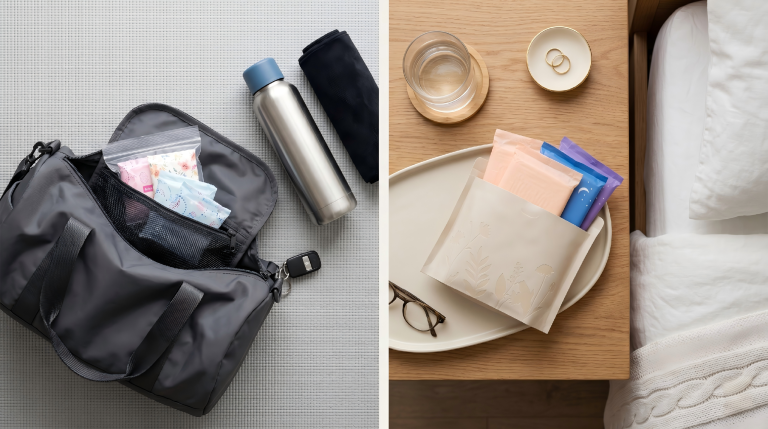
- Office or school — ultra-thin or regular pads
- Sports or active use — stable-fit pads with movement-friendly design
- Night use — longer overnight pads with wider back panel
- Travel — individually wrapped pads in compact packs
- Heavy flow days — longer pads with stronger absorbency and secure fit
For Distributors and Private Label Buyers: Building a Sanitary Pad Product Range
Understanding pad type differences is essential for product planning and market fit when building a private label range. The right product mix depends on the target market's preferences, the distribution channel, and the brand's positioning strategy.
Key planning questions:
- Which formats are most relevant? Most markets require at minimum a regular day pad and an overnight pad to cover core consumer needs. Adding ultra-thin and heavy variants expands coverage.
- Which material direction fits the market? Organic cotton positioning performs strongest in developed markets with ingredient-aware consumers. Herbal and functional concepts perform well in Middle East and Southeast Asia markets. Standard nonwoven with competitive pricing works for volume-focused distribution.
- How many SKUs to start with? Starting with two to three SKUs and expanding based on market feedback is more capital-efficient than launching a full range immediately. Each SKU carries its own MOQ requirement.
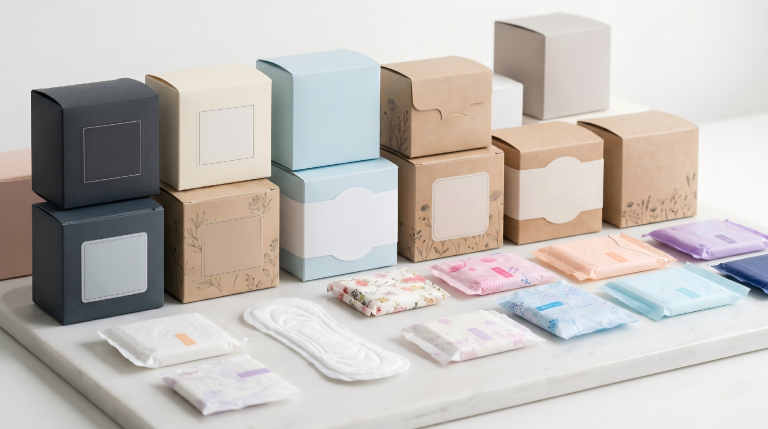
- What customization is needed? Material direction, pack count, packaging design, and labeling all need to be confirmed before production. A capable OEM manufacturer supports all of these independently.
For a full overview of how to plan and launch a private label sanitary pad line, see our guide on how to start a private label feminine hygiene brand. For a comparison of sanitary pad and panty liner OEM requirements, see our guide on panty liner vs sanitary pad OEM: key differences for brand owners.
Frequently Asked Questions
What is the best sanitary pad for heavy flow?
For heavy flow, overnight or maxi pads in the 285mm–330mm range with high SAP concentration cores and reinforced side leak barriers are the most suitable options. Wing design also helps prevent side leakage during movement. The right choice depends on whether the heavy flow occurs during the day or overnight — daytime heavy flow is best managed with a maxi pad that allows frequent changing, while overnight heavy flow requires a longer pad designed for extended wear without changing.
Are organic cotton pads better than regular pads?
Organic cotton pads offer a softer surface feel and are free from synthetic fragrances and fluorescent brightening agents — making them a better option for users with sensitive skin or those seeking cleaner product formulations. Absorbency is not affected by topsheet material; it is determined by the core construction. Whether organic is "better" depends on the individual user's priorities — skin comfort and material preference versus price point.
How often should sanitary pads be changed?
Every 3–6 hours during regular flow, every 2–3 hours during heavy flow, and within 8 hours for overnight use. Regular changing is the most important hygiene practice regardless of pad type or material — prolonged moisture contact increases the risk of skin irritation and bacterial growth.
What is the difference between a sanitary pad and a panty liner?
Panty liners are a thinner, lower-absorbency version of sanitary pads designed for light discharge, spotting, or everyday freshness rather than menstrual flow management. They use a lighter core with minimal SAP content and are typically shorter and thinner. For a detailed B2B comparison of both categories, see our guide on panty liner vs sanitary pad OEM: key differences for brand owners.
How do I choose the right pad size?
Match pad length to use occasion — shorter pads (155mm–245mm) for daily and light use, longer pads (285mm–330mm) for heavier flow and daytime heavy flow, and extra-long pads (360mm–420mm) for overnight protection. Size preferences also vary by market — confirm the most common sizing conventions in your target market before finalizing product specifications.
Can sanitary pads cause skin irritation?
Yes — sanitary pad materials are a common cause of period-related skin irritation. The most frequent triggers are synthetic fragrances, fluorescent brightening agents (FBAs), chlorine-bleached materials, and synthetic topsheet surfaces that restrict airflow. Switching to fragrance-free, FBA-free pads with organic cotton or soft nonwoven topsheets resolves irritation for many users. For a detailed guide, see our article on organic pads for sensitive skin.
Looking for a Sanitary Pad OEM Manufacturer?
Niceday manufactures sanitary pads across all major types — ultra-thin, regular, maxi, overnight, organic cotton, herbal-inspired, sports, and teens formats — with full OEM and private label customization support. Our facility in Foshan, China operates 14 intelligent production lines with daily capacity of 9.8 million pieces, supplying brand owners and distributors in 54+ countries.
Tell us your target market, product type, and brand direction — our OEM team will respond with relevant options and next steps.
Contact Our OEM Team View OEM Service Details