
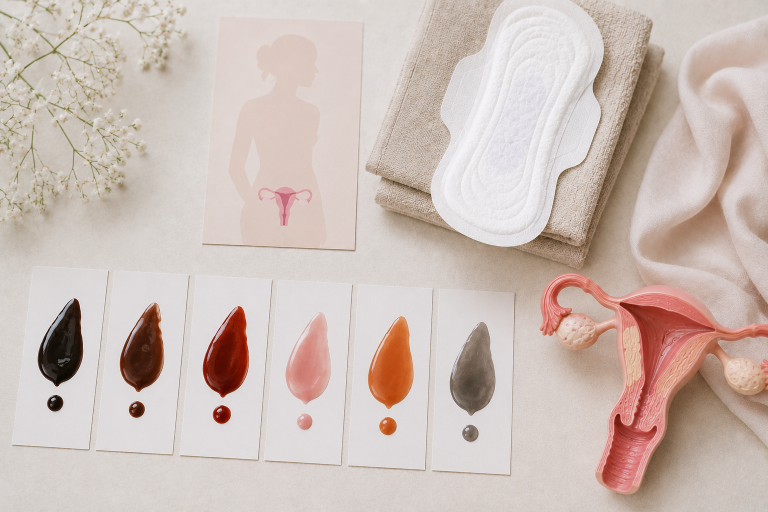
Why Period Blood Color Changes
Period blood color can look different from day to day. It may be bright red on heavier flow days, dark red or brown near the beginning or end of the period, or pink when the flow is light and mixed with cervical fluid.
The main reason color changes is oxidation. When blood stays in the uterus or vagina longer before leaving the body, it has more time to react with oxygen and become darker. This is why brown or black period blood is often seen at the start or end of a period.
Period Blood Color Chart
| Color | Common Meaning | When to Pay Attention |
|---|---|---|
| Bright red | Fresh blood, often seen during heavier flow days | If bleeding is very heavy or you soak a pad every 1-2 hours |
| Dark red | Blood that has stayed in the uterus a little longer | If it comes with severe pain, large clots or unusual bleeding |
| Brown | Older blood, common at the start or end of a period | If it appears frequently outside your period or with odor or pain |
| Black | Usually very old blood that has oxidized | If it comes with foul smell, fever, pelvic pain or abnormal discharge |
| Pink | Light flow mixed with cervical fluid, spotting or hormonal changes | If it happens often outside your period, after sex, during pregnancy or after menopause |
| Orange | May be blood mixed with discharge, but can also suggest infection | If it comes with odor, itching, burning, pelvic pain or unusual discharge |
| Gray or greenish | May suggest infection or abnormal discharge | Seek medical advice, especially with odor, pain, fever or pregnancy possibility |
Is Black Period Blood Normal?
Black period blood can feel alarming, but it is often not dangerous by itself. It usually means the blood is older and has taken longer to leave the body. This can happen at the beginning or end of a period when the flow is slower.
However, black blood should be checked if it comes with a strong unpleasant smell, fever, pelvic pain, itching, burning, unusual discharge, or if you feel something is very different from your normal pattern.
Brown or Dark Red Period Blood
Brown or dark red period blood is usually older blood. It is common near the start or end of menstruation. It can also appear after a slower flow day because the blood had more time to oxidize before leaving the body.
Small clots may also appear during heavier days. Large clots, frequent clots, or very heavy bleeding should be discussed with a healthcare provider.
Bright Red Period Blood
Bright red period blood usually means fresher blood and a faster flow. Many people notice bright red blood on the second or third day of the period, when bleeding is heavier.
Bright red blood is not usually a problem by itself. The more important signs are flow amount, pain level, timing, odor and whether the bleeding matches your usual cycle.
Pink Period Blood or Spotting
Pink period blood can happen when a small amount of blood mixes with cervical fluid. It may appear at the very start or end of a period, during light spotting, or with hormonal changes.
Pink spotting should be checked if it happens often outside your period, after sex, during pregnancy, after menopause, or together with pain, unusual discharge or a strong odor.
Orange, Gray or Greenish Discharge
Orange, gray or greenish discharge is more likely to need attention than normal red-brown period color changes. These colors may happen when blood mixes with vaginal discharge, but they can also be linked with infection, especially if there is itching, burning, pelvic pain or a fishy or unpleasant smell.
If the discharge is gray, green, yellow-green, frothy, foul-smelling, thick, or comes with pain or bleeding outside your period, seek medical advice instead of self-diagnosing.
Period Blood Clots: When Are They Normal?
Small blood clots can be normal during the heaviest days of your period. They may look dark red, brown or almost black because the blood is thicker and has taken longer to leave the body.
You should seek medical advice if clots are large, frequent, or come with very heavy bleeding, dizziness, fatigue, shortness of breath, severe pain, or bleeding that affects daily life.
When Should You See a Doctor?
Contact a healthcare professional if you notice any of the following:
- Bleeding so heavy that you soak through a pad or tampon every 1-2 hours.
- Large or frequent blood clots.
- Bleeding between periods or after sex.
- Any bleeding after menopause.
- Gray, greenish or orange discharge with odor, itching, burning or pelvic pain.
- Severe period pain that stops normal activities.
- Fever, dizziness, unusual weakness or shortness of breath.
- Bleeding during pregnancy or possible pregnancy.
- A sudden change in your usual period pattern that continues for more than one cycle.
How to Track Period Blood Color
Tracking your period can help you understand what is normal for your body. You can record the first day of bleeding, color changes, flow amount, clots, cramps, mood, discharge, odor and how often you need to change pads.
This information is useful if you ever need to speak with a healthcare provider. It also helps you choose the right period care product for light, normal, heavy or overnight flow.
Choosing Pads for Different Flow Days
Different period colors often appear at different flow stages. Light pink or brown spotting may need only a liner or thin pad, while bright red heavier flow may require a regular or long sanitary pad. For night use or heavy flow, overnight pads provide more coverage.
Niceday supports period comfort with sanitary pads designed for soft skin contact, absorbency and breathable protection. Many people change sanitary pads every 4-8 hours, or sooner if the pad feels full, damp or uncomfortable.
Frequently Asked Questions
Is black period blood normal?
Black period blood can be normal, especially at the start or end of a period. It usually means older blood has taken longer to leave the body and has oxidized. Check with a doctor if it comes with odor, pain, fever or unusual discharge.
What does brown period blood mean?
Brown period blood usually means older blood. It is common near the beginning or end of menstruation. If brown bleeding happens often between periods or with pain, odor or unusual discharge, seek medical advice.
Why is my period blood bright red?
Bright red period blood usually means fresh blood and a faster flow. It is common during heavier days of menstruation. Very heavy bleeding or soaking pads quickly should be checked.
What does pink period blood mean?
Pink period blood may happen when light bleeding mixes with cervical fluid. It can be normal at the start or end of a period, but frequent spotting, bleeding after sex, pregnancy-related bleeding or postmenopausal bleeding should be evaluated.
Is orange period blood normal?
Orange blood or discharge may be blood mixed with vaginal discharge, but it can also suggest infection. If it comes with odor, itching, burning, pelvic pain or unusual discharge, speak with a healthcare professional.
What does gray discharge during a period mean?
Gray discharge may be a sign of infection or another health issue. It should be checked, especially if there is odor, pain, fever, itching, pregnancy possibility or tissue-like discharge.
Feel More Confident During Your Period
Understand your cycle, track changes, and choose period care products that match your flow and comfort needs.
Explore Sanitary Pads OEM/ODM ServiceReference notes: General period color and vaginal discharge guidance was checked against Cleveland Clinic, NHS, Mayo Clinic, and Mayo Clinic heavy bleeding guidance.