About This Guide
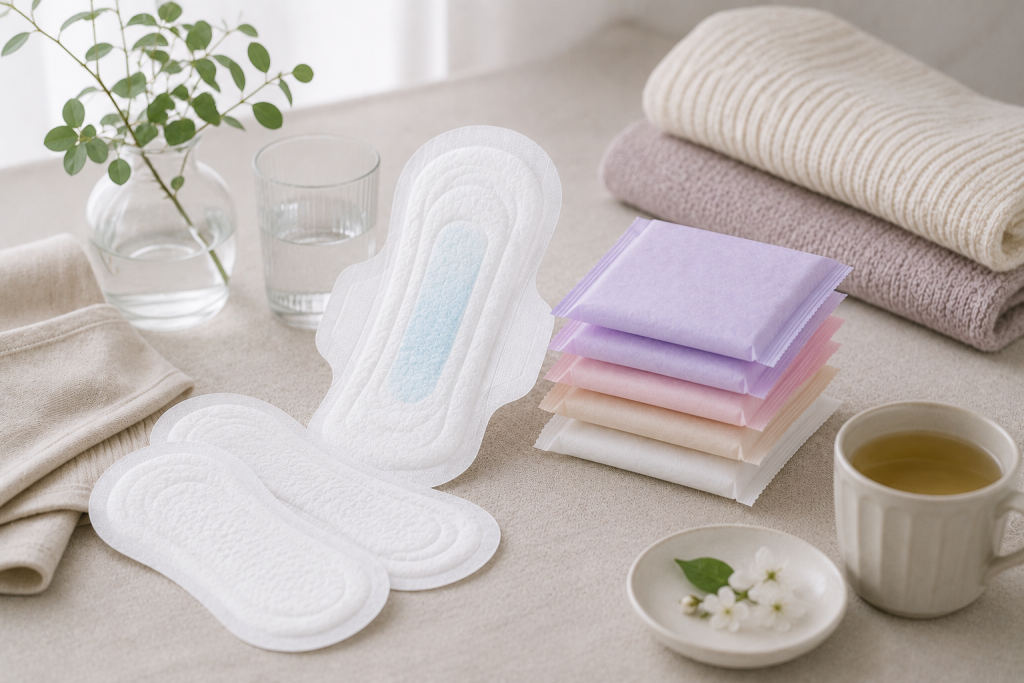
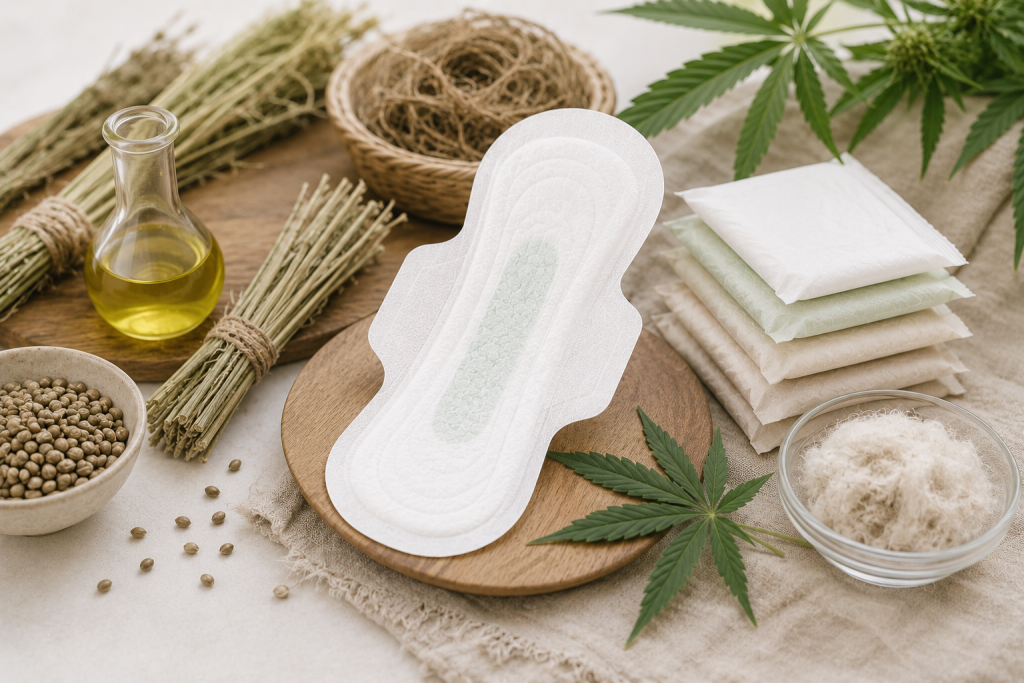
This guide covers the practical side of using organic sanitary pads — what makes them different from conventional pads, how to choose the right absorbency, how to apply and change them correctly, and how to read organic certification labels. It is written for first-time users switching from conventional pads, regular users looking for clearer product guidance, and brand owners evaluating organic pad product lines for private label development.
What Makes Organic Pads Different to Use?
From a usage perspective, organic pads work exactly the same as conventional pads — you open, peel, stick, and wear. The difference is not in how you use them but in what they are made of and how they feel during wear.
Most users who switch to organic pads notice:
- Softer surface contact — organic cotton topsheets tend to feel softer and less plasticky than synthetic nonwoven alternatives
- More breathable feel — organic cotton allows better air circulation, which reduces heat and dampness during extended wear
- No synthetic scent — organic pads are fragrance-free, so there is no added chemical smell
- Slightly different visual appearance — organic cotton often has a more natural off-white or textured look compared to the bright white of bleached synthetic pads
These differences are most noticeable when switching from a heavily processed conventional pad. Absorbency performance and leakage protection are determined by the core construction — not the topsheet material — so a well-constructed organic pad performs at the same protection level as a conventional pad of equivalent specification.
How to Use Organic Pads: Step by Step
Step 1 — Choose the Right Absorbency
Organic pads are available across the same absorbency levels as conventional pads. Match the pad to your current flow level:
- Daily liner (approx. 5–15ml) — light spotting, everyday freshness, or end-of-period days
- Regular (approx. 30–60ml) — light to moderate flow
- Maxi / Heavy (approx. 100–150ml) — heavier flow days
- Overnight (approx. 200–300ml) — sleep protection, typically 330mm–420mm in length
Using the correct absorbency level matters more than any other product choice — a pad that is too thin for the current flow will leak regardless of material quality.
Step 2 — Apply the Pad
Peel the release paper from the adhesive strip on the back of the pad. Place the pad centered in your underwear, adhesive side down. If the pad has wings, fold them around the gusset of your underwear to secure position and reduce side movement.
Step 3 — Change Regularly
Change your organic pad every 4–6 hours during regular flow. On heavier days, change every 2–3 hours. Overnight pads can typically be worn for up to 8 hours. Do not leave any pad — organic or conventional — on longer than 8 hours, as prolonged wear increases the risk of skin irritation.
Step 4 — Dispose Correctly
Wrap the used pad in the wrapper from the new pad or in toilet paper before placing in a bin. Do not flush pads — even biodegradable organic pads should not be flushed, as they can block drainage systems.
What to Expect When Switching to Organic Pads
During the first few cycles
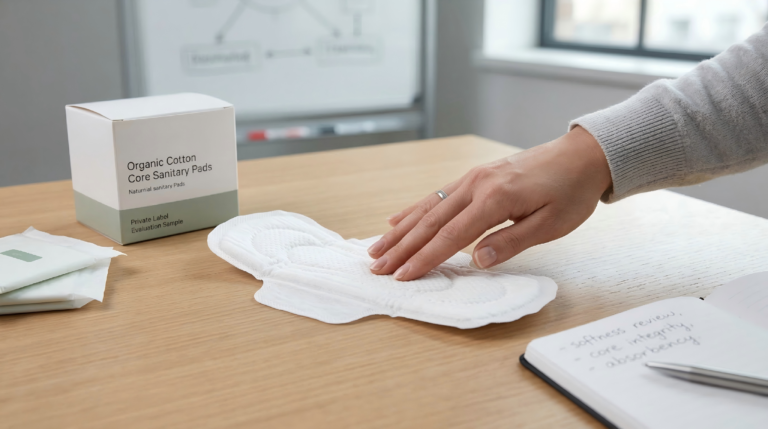
- No scent — this is expected. Conventional pads often use synthetic fragrances that mask odor. Organic pads rely on frequent changing and clean cotton to manage freshness naturally.
- Natural cotton texture — the topsheet may feel slightly different from smooth synthetic surfaces. Most users adjust within one or two cycles.
- Reduced irritation — users who previously experienced itching, redness, or rashes from conventional pads often notice improvement after switching to fragrance-free organic cotton within one to two periods.
What organic pads do not change
- Absorbency level — organic cotton topsheets do not absorb more or less than synthetic alternatives. Absorbency is determined by the core structure, not the topsheet material.
- Leakage protection — leak guards and wings function the same way regardless of topsheet material.
- Change frequency — organic pads require the same change intervals as conventional pads.
Choosing the Right Organic Pad for Your Needs
For sensitive skin
Look for pads that are fragrance-free, FBA-free (no fluorescent brightening agents), and chlorine-free. Organic cotton topsheets are gentler than synthetic alternatives for most skin types. These three characteristics — fragrance-free, FBA-free, chlorine-free — are more meaningful indicators of skin-friendliness than general "natural" or "gentle" marketing language without supporting certification.
For heavy flow
Choose a maxi or overnight organic pad with a strong SAP (superabsorbent polymer) core. Organic topsheets are available across all absorbency levels — you do not need to compromise on protection to use natural materials.
For eco-conscious use
For the most sustainable option, look for pads with a PLA (biodegradable) backsheet and individually wrapped in biodegradable packaging in addition to the organic cotton topsheet. These break down significantly faster than standard plastic-backed pads.
For everyday freshness
Organic cotton panty liners are a practical daily option. Thinner than menstrual pads, they provide light absorption during everyday wear while being gentle on skin during prolonged daily use.
How to Read Organic Pad Certification Labels
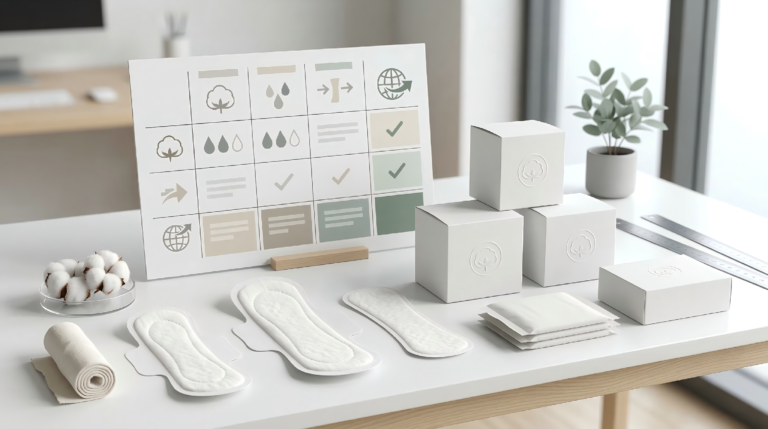
Not all products labeled "natural," "organic," or "gentle" are verified. Understanding what each certification actually covers helps consumers and brand owners make more informed product decisions.
| Label | What It Covers | Strength of Verification |
|---|---|---|
| GOTS certified | Entire production chain verified organic — from raw fiber to finished product | Highest — full supply chain audit |
| OCS certified | Confirms organic cotton content; does not cover the full production process | Medium — material origin only |
| FBA-free | No fluorescent brightening agents — relevant for skin safety | Specific claim — verify with test report |
| Chlorine-free | No chlorine bleaching used in production | Specific claim — verify with documentation |
| Fragrance-free | No synthetic or natural added scents | Label claim — check for third-party confirmation |
| PLA backsheet | Biodegradable bottom layer derived from plant starch | Material specification — confirm with manufacturer |
A pad labeled "natural" or "gentle" without supporting certification is not verified organic. Look for specific certification logos and request supporting documentation when evaluating products for purchase or private label sourcing.
Frequently Asked Questions
Do organic pads feel different from regular pads?
Yes, slightly. The organic cotton surface typically feels softer and more breathable than synthetic nonwoven alternatives. The overall experience depends on the specific product construction. Most users find the feel more comfortable after a few uses, particularly those switching from conventional pads with synthetic fragrances or plastic-feel surfaces.
Are organic pads better for heavy flow?
Yes — organic pads are available in heavy and overnight absorbency levels with the same core construction as conventional heavy-flow pads. The organic cotton topsheet does not reduce absorbency capacity. Heavy-flow organic pads use the same SAP-based core technology as conventional equivalents, just with a natural cotton surface layer.
Can organic pads cause irritation?
Organic cotton pads are generally less likely to cause irritation than conventional pads for users who are sensitive to synthetic fragrances, fluorescent brightening agents, or chlorine-bleached materials. However, any product can cause a reaction in individual users. If irritation occurs, discontinue use and consult a healthcare provider.
How long can you wear an organic pad?
The same guidelines apply as for conventional pads — change every 4–6 hours during regular flow, every 2–3 hours during heavy flow, and within 8 hours for overnight use. Organic material does not extend safe wear time. Regular changing is the most important factor in maintaining comfort and hygiene regardless of pad material.
Are organic pads more expensive than conventional pads?
Organic pads typically carry a higher retail price than standard conventional pads, reflecting the cost of certified organic materials and often more careful production processes. The price difference varies significantly by brand and market. For consumers, the decision usually comes down to whether the material difference — softer feel, no synthetic fragrances, skin-friendly positioning — is worth the price premium for their specific needs.
For Brand Owners and Importers: Organic Pads as a Private Label Product Direction
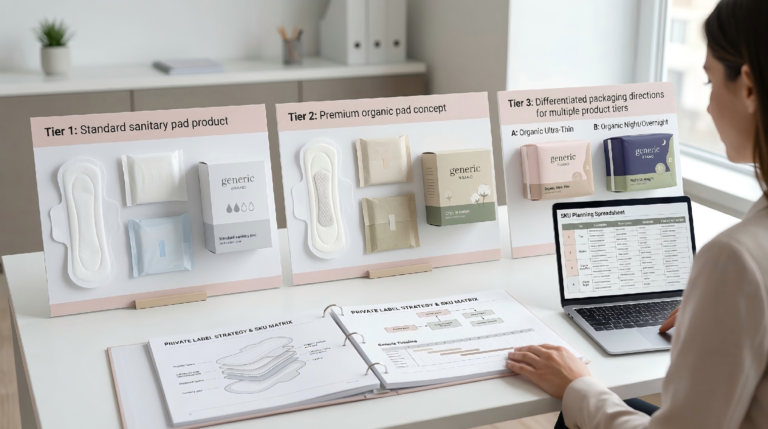
For private label brands and importers, organic cotton sanitary pads represent one of the strongest product differentiation directions in the feminine hygiene category. Consumer demand for cleaner, more transparent product formulations has grown consistently across developed markets — particularly in Europe, North America, and parts of Asia — creating a clear commercial opportunity for brands that can position effectively in this space.
Key considerations when evaluating organic pad OEM:
- Certification depth — the organic claim your brand can make depends on the certifications the manufacturer holds. GOTS certification covers the full production chain; OCS covers material origin only. Confirm what documentation is available before making product claims.
- FBA-free and fragrance-free as baseline — even without full organic certification, FBA-free and fragrance-free are meaningful product attributes that support skin-friendly positioning and are verifiable through third-party test reports.
- Absorbency range — a complete organic pad line typically requires at minimum a daily liner, a regular day pad, and an overnight pad. Each is a separate SKU with its own MOQ requirement.
- Packaging claims — certification logos and material claims on packaging must be supported by current, valid documentation. This is the brand owner's compliance responsibility in their target market.
- Market fit — organic cotton positioning performs strongest in markets where consumers are actively seeking cleaner product options and are willing to pay a modest premium. Confirm whether your target market has this consumer profile before committing to the organic direction.
For a full overview of organic cotton pad OEM options, material specifications, and sourcing considerations, see our guide on organic cotton sanitary pads: OEM sourcing guide for brand owners. For information on how certification requirements affect private label projects more broadly, see our guide on what certifications matter for feminine hygiene OEM.
Interested in Organic Pad OEM for Your Private Label Brand?
Niceday manufactures organic cotton sanitary pads across day, overnight, and liner formats with OEM and ODM customization support. Our products are FBA-free and fragrance-free as standard. We supply private label brands and distributors in 54+ countries from our facility in Foshan, China, with 14 intelligent production lines and daily capacity of 9.8 million pieces.
Tell us your target market, product direction, and certification requirements — our OEM team will respond with relevant options and next steps.
Contact Our OEM Team View OEM Service Details