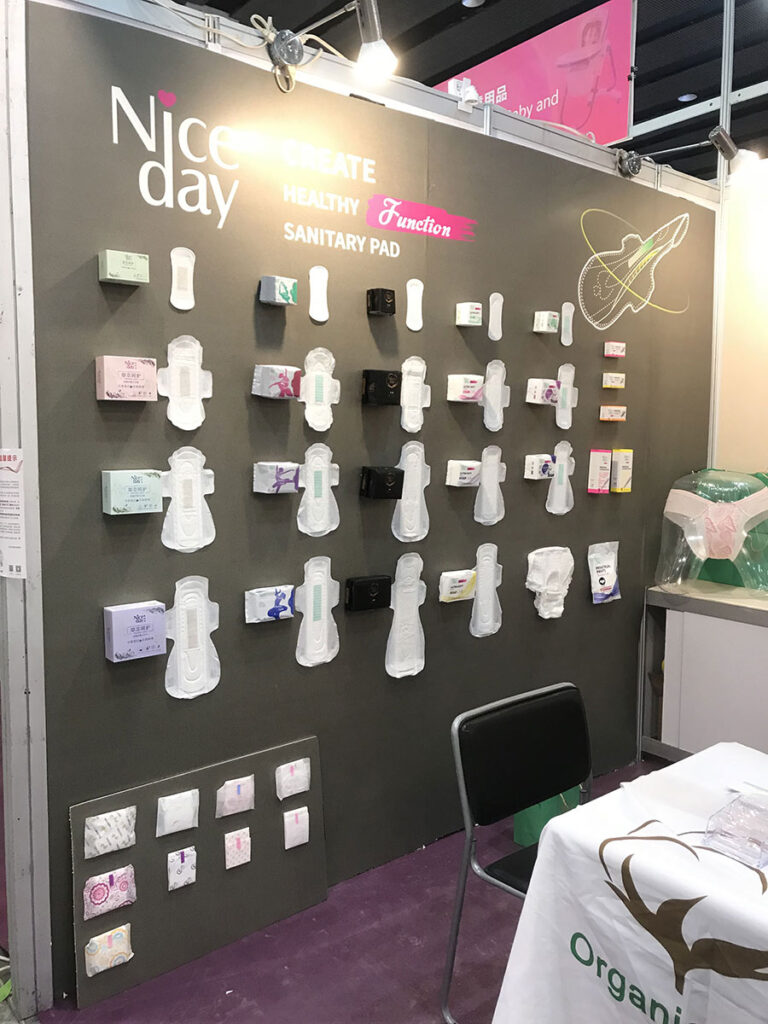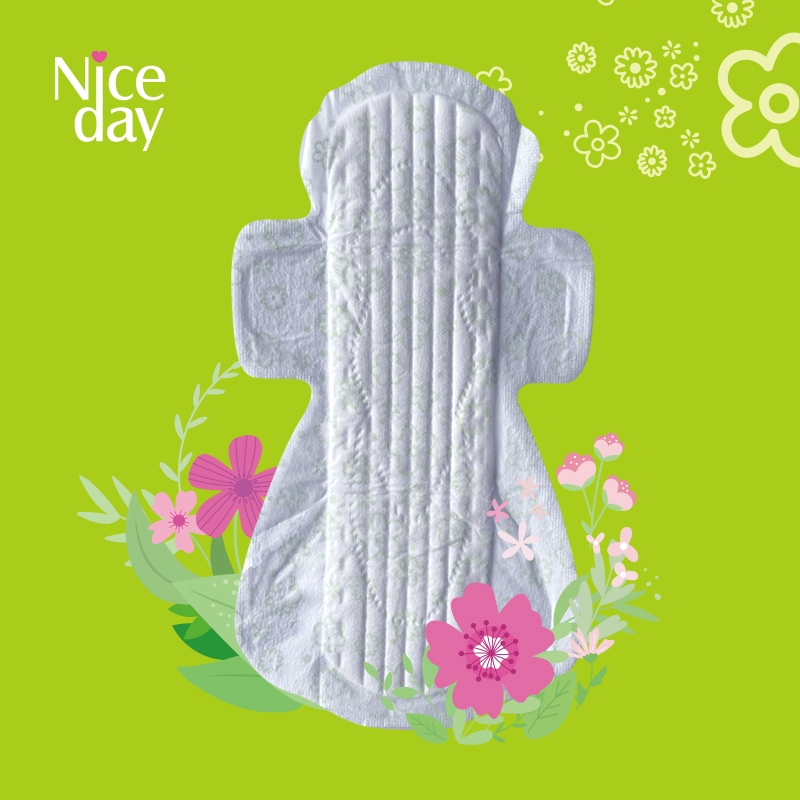

Choosing a private label sanitary pad manufacturer is not only a sourcing decision. For brand owners, distributors, and buyers, it is also a product strategy decision that affects quality consistency, packaging execution, market positioning, and long-term brand trust.
For companies entering or expanding in feminine hygiene, the right manufacturing partner should offer more than production capacity. At Niceday, based in Foshan, China, we see private label cooperation as a combination of product development, packaging coordination, quality control, and market-fit planning. Buyers need to evaluate whether a supplier can support the right product structure, stable quality, clear communication, and a manufacturing process that matches their target market and business model.
In this article
- Why manufacturer selection matters
- What buyers should evaluate
- Questions to ask a supplier
- Signs of a more reliable manufacturing partner
- Common mistakes to avoid
- What to prepare before contacting a manufacturer
Why Manufacturer Selection Matters for Private Label Growth
In feminine hygiene, the manufacturer plays a direct role in how the final product is experienced in the market. Product comfort, absorbency, material feel, packaging quality, and delivery consistency are all linked to manufacturing capability.
For private label brands, the right manufacturing partner can support:
- better product quality control
- more flexible product customization
- stronger packaging execution
- improved launch efficiency
- more reliable long-term cooperation
Because of this, choosing a manufacturer should be treated as a strategic business decision rather than a simple purchasing comparison.
What Buyers Should Evaluate Before Choosing a Manufacture
1. Product Category Experience
Not all manufacturers have the same category strengths. Buyers should confirm whether the supplier has real experience in sanitary pads, pantyliners, tampons, or related feminine hygiene products. A supplier with stronger category focus is usually better equipped to support product positioning and quality expectations.
2. Product Customization Capability
Private label projects often require more than basic OEM production. Buyers should evaluate whether the manufacturer can support customization in areas such as:
- size and absorbency
- top sheet and core structure
- product feel and material direction
- packaging format
- brand-specific positioning needs
A stronger customization capability gives buyers more room to build differentiated products.
3. Quality Control Process
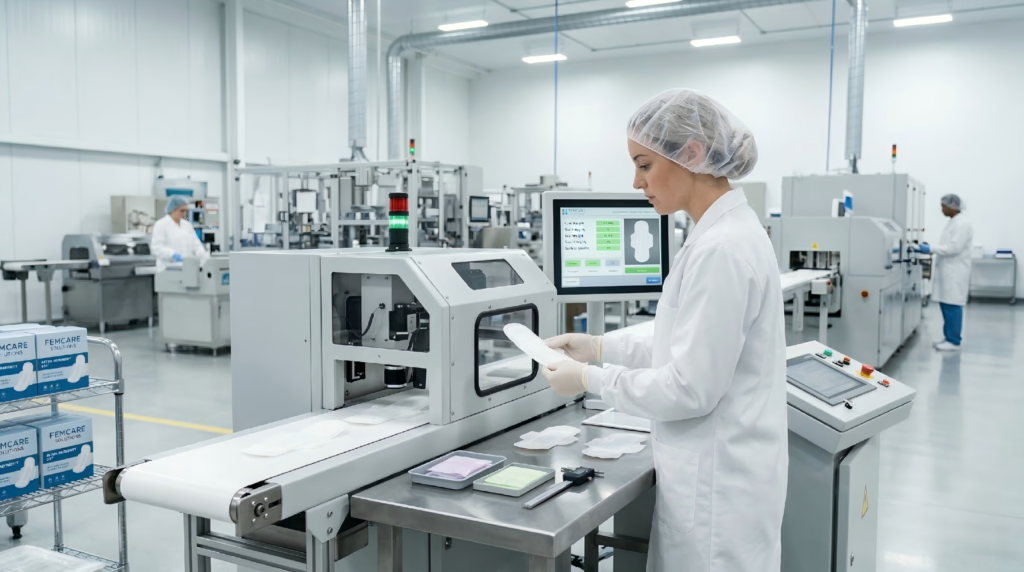
Quality control is one of the most important factors in manufacturer selection. Buyers should look for suppliers that can explain how they manage production control, inspections, material consistency, and finished product standards.
This is especially important in feminine hygiene, where product trust and repeat purchase are closely tied to product stability.
Buyers should also evaluate whether the manufacturer can support quality-system communication, testing references, and market-facing documentation for export projects. At Niceday, public certification references and quality-related records are available to support buyer evaluation for different market requirements.
4. Packaging Development Support
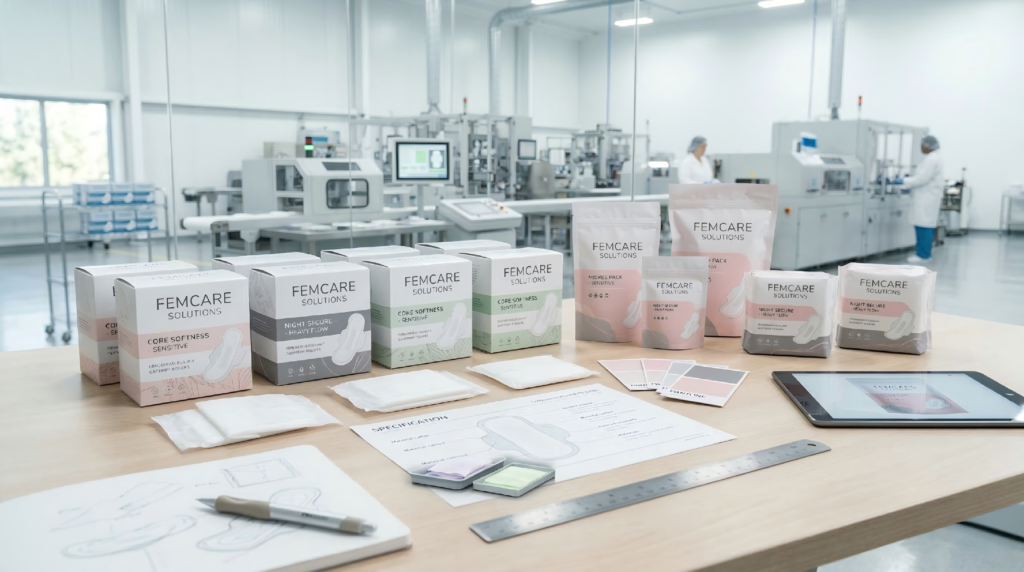
In many private label projects, packaging is just as important as the product itself. Buyers should assess whether the manufacturer can support packaging adaptation, artwork coordination, format planning, and practical execution across different SKUs.
A supplier that can support both product and packaging development can reduce communication delays and help bring products to market more efficiently.
5. Communication Efficiency
Even a technically capable manufacturer can become difficult to work with if communication is slow or unclear. Buyers should evaluate whether the supplier is responsive, organized, and able to communicate clearly during product discussion, sampling, revision, and production follow-through.
In private label cooperation, strong communication often reduces errors and speeds up development.
6. Market Fit and Business Flexibility
Different buyers have different launch needs. Some require low-risk product development for a new market. Others need more structured OEM support for an established brand. Buyers should consider whether the manufacturer can match their stage, scale, and market direction rather than offering only one fixed cooperation model.
Questions Buyers Should Ask a Private Label Sanitary Pad Manufacturer
Before choosing a supplier, buyers should ask practical questions such as:
- What sanitary pad categories do you already produce?
- What product elements can be customized?
- How do you manage quality inspection and production consistency?
- Can you support custom packaging development?
- What information do you need before sampling?
- How do you handle revisions during development?
- What is your typical lead time for new projects?
These questions help move the discussion from a simple quotation request to a more useful evaluation of supplier suitability.
Signs of a More Reliable Manufacturing Partner
A stronger manufacturing partner usually shows a combination of product understanding, process clarity, and structured cooperation support.
Positive signs often include:
- clear product category knowledge
- realistic and consistent communication
- defined quality control process
- ability to explain customization options
- packaging support
- readiness to discuss market needs instead of only price
At Niceday, we believe buyers should look for a partner that can connect product development, packaging execution, and manufacturing follow-through instead of treating them as separate steps. In private label projects, that kind of coordination often makes the difference between a smooth launch and a delayed one.
Common Mistakes Buyers Make When Choosing a Manufacturer
Choosing only by price
Low pricing may seem attractive at first, but it does not always reflect long-term product quality, communication efficiency, or delivery reliability.
Ignoring packaging execution
Some buyers focus heavily on the product but underestimate how much packaging quality affects market readiness and brand perception.
Starting without a clear product brief
If buyers do not define category, positioning, target market, and packaging expectations early, the development process becomes slower and less efficient.
Treating all manufacturers as interchangeable
Manufacturers vary widely in category strength, process control, and cooperation style. Comparing them only on quotation can lead to poor partner selection.
Frequently Asked Questions
What is the most important factor when choosing a private label sanitary pad manufacturer?
There is no single factor, but product quality control, customization capability, and communication efficiency are usually the most important areas to evaluate first.
Should buyers prioritize price or product stability?
For private label growth, product stability is usually more important in the long term. Pricing matters, but inconsistent quality can damage brand trust and repeat purchase.
Is packaging support really necessary?
Yes. In many feminine hygiene categories, packaging strongly affects product positioning, shelf presentation, and buyer confidence. It should be treated as part of the product development process.
Can a manufacturer help with market-specific product direction?
A more experienced manufacturer often can. While the buyer should define market strategy, a capable OEM / ODM partner can usually support product and packaging recommendations based on practical development experience.
What Buyers Should Prepare Before Contacting a Manufacturer
To make discussions more productive, buyers should prepare the following:
- target market
- product category
- expected positioning
- preferred size or absorbency direction
- packaging needs
- brand stage or launch plan
- estimated order scope
This helps the manufacturer understand the project more clearly and improves the quality of the initial response.
Conclusion
Choosing a private label sanitary pad manufacturer requires more than comparing quotations. Buyers should evaluate product capability, customization support, quality control, packaging execution, and communication quality together.
A stronger manufacturing partner can help turn a product idea into a more reliable, market-ready private label line. For brands and distributors planning to grow in feminine hygiene, the right supplier relationship is an important part of long-term success.
Looking for Private Label Sanitary Pad OEM / ODM Support?
At Niceday, based in Foshan, China, we support brand owners, distributors, and private label buyers with sanitary pad product customization, packaging development, and manufacturing coordination for different market needs.