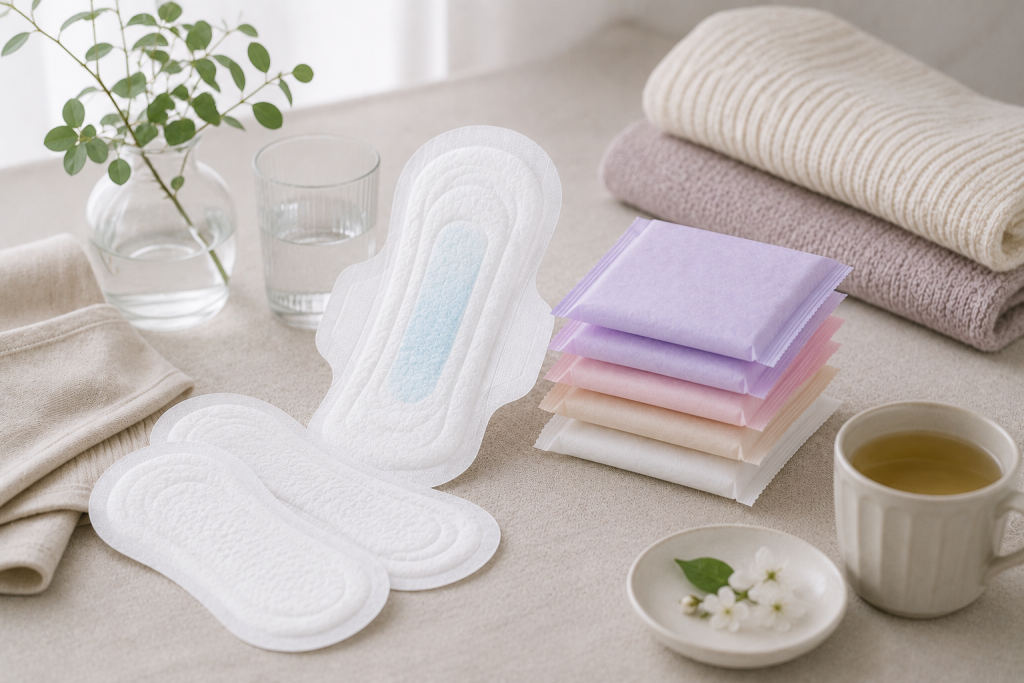
The choice between disposable postpartum underwear and maternity pads is driven mainly by handling convenience, not absorbency. Some users avoid pads because of positioning, adhesive and repeated adjustment rather than capacity. For a private label brand, this means the two formats serve different preferences and can be sold as a range rather than as competing options.
Where this signal comes from: user discussions in postpartum communities include buyers who state clearly that they dislike pads and liners as a product form and want to minimise using them, independent of absorbency performance.
The preference is about product form, not capacity
This is a distinction worth understanding before planning a range. When a user says they dislike pads, the reasons given are usually:
- dislike of the adhesive and the way it interacts with underwear
- the need to position and reposition the pad
- pad shifting or bunching during movement
- the feel of a separate product against the body
- the amount of handling involved in each change
None of these are solved by a higher-absorbency pad. They are solved by a different product format. This is the case for offering disposable postpartum underwear alongside maternity pads rather than instead of them.
Comparing the two routes
| Factor | Disposable postpartum underwear | Maternity pads |
|---|---|---|
| Wear method | Worn alone, built-in absorbent protection | Worn with the user's own underwear |
| Positioning | No pad positioning required | Requires alignment and occasional adjustment |
| Removal | Easy-tear sides for faster removal | Peel and replace |
| Typical use period | Often early postpartum days, shorter-term use | Often used across a longer recovery period |
| Unit cost per change | Higher per piece | Lower per piece |
| Suitable pack format | Starter pack plus refill pack | Standard count packs |
| Packaging information needed | Hip range, weight range, fit position, change guidance | Absorbency level, length, change guidance |
Who each route suits
Postpartum underwear suits buyers who prioritise
- fewer steps per change
- no adhesive and no positioning
- simplicity in the first days after birth
- a gift or starter-pack purchase
Maternity pads suit buyers who prioritise
- lower cost across a longer period
- familiar product format
- flexibility to combine with their own underwear
- higher change frequency at lower unit cost
Pack structure for a postpartum underwear SKU
Current evidence does not support building large bundled recovery kits. A simpler structure performs better and carries less inventory risk:
- Starter pack: around 8 pieces, for the early postpartum days
- Refill pack: around 16 pieces, for buyers who continue
- Simple instruction card: wear position, change guidance, removal
- No heavy bundling with other recovery items, which often go unused
Packaging copy that works
Recommended and compliant:
- Wear alone for simple postpartum protection
- No pad positioning required
- Built-in absorbent protection
- Change according to your flow
- Easy side opening for faster removal
Avoid wording that suggests recovery, healing or medical benefit, and avoid stating that pads are not needed — flow levels, care guidance and personal preference vary. Also avoid implying that one format is more hygienic than another.
What this means for private label buyers
A postpartum range does not need to choose one format. Offering both, with clear packaging that explains wear method and change guidance, covers two genuinely different buyer preferences without adding claim risk.
Niceday manufactures disposable postpartum underwear, maternity pads and other feminine hygiene products from a 50,000 square meter facility in Foshan, China, with 14 intelligent production lines and a daily capacity of 9.8 million pieces, exporting to 54+ countries. Certifications include ISO 9001, ISO 14001, CE, FDA registration and SGS testing, and products are made without fluorescent brightening agents. Standard MOQ is 300,000 pieces per SKU with a 35–40 day lead time.
Plan your postpartum product range
Send your target market and preferred pack structure, and our team will prepare a proposal covering both formats.
Email: winnie@everyniceday.com
Request a Product ProposalFrequently Asked Questions
Why do some users prefer postpartum underwear over maternity pads?
The reasons are usually about handling rather than absorbency: no adhesive, no positioning, fewer steps per change, and no separate product to keep in place.
Should a private label brand offer both formats?
In most cases yes. The two formats serve different preferences, and offering both covers more of the market without additional claim risk.
What pack counts work for disposable postpartum underwear?
A starter pack of around 8 pieces plus a refill pack of around 16 pieces is a practical structure for a first launch.
Are large postpartum recovery kits a good idea?
They carry more inventory risk, and buyers frequently report not using every item in a bundled kit. A simple starter and refill structure is generally safer.
What should postpartum underwear packaging state?
Wear alone with built-in absorbent protection, hip range and weight range for sizing, easy side opening for removal, and guidance to change according to flow.