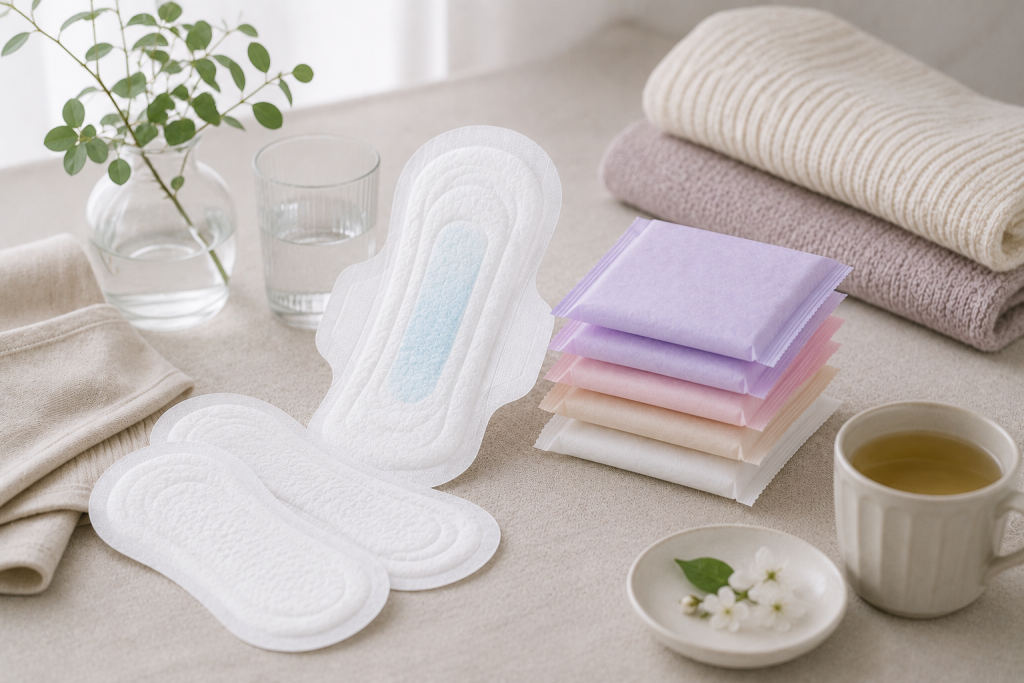
Menstrual cup and disc users are not a lost audience for disposable products. Many of them buy liners, light pads or menstrual pants alongside their cup — for backup during the day, for cup-free sleep at night, and for travel or public bathroom situations. For a private label brand this is a defined product line with three clear positioning routes, not an overlap problem.
Where this signal comes from: user discussions in menstrual product communities describe using a cup during the day while looking for a different option at night, and separately describe difficulty managing a cup away from home. Both point to complementary disposable products rather than replacement.
Why cup and disc users buy disposable products
The reasons are practical, and none of them involve dissatisfaction with the cup itself:
- Night preference. Some users do not want to wear a cup while sleeping, but still want coverage.
- Away from home. Emptying a cup in a public bathroom is difficult, so a disposable option covers the gap.
- Heavier days. On the heaviest day, the interval between emptying becomes short, and backup reduces the pressure to find a bathroom.
- Travel. Rinsing and drying are not always possible, so single-use products fit certain trips better.
Positioning should reflect this. Do not frame the product as a replacement for cups or discs, and do not suggest cups or discs are unsafe or unhygienic. The commercial opportunity is in complement, not comparison.
Three positioning routes for a backup line
| Route | Use situation | Product formats that fit |
|---|---|---|
| Cup and disc backup | Worn together with a cup during the day, for reassurance | Light-absorbency liners, thin regular pads |
| Overnight, cup-free | Used instead of a cup during sleep | Disposable menstrual pants, overnight pads |
| Travel and away from home | Used when rinsing or changing is inconvenient | Individually wrapped liners and pads, small-count travel packs |
What each route needs from the product
Cup and disc backup
Low profile matters more than capacity. The product is worn alongside another product, so thickness and edge feel decide whether it is comfortable enough to keep using. Individually wrapped units support carrying a few at a time.
Overnight, cup-free
Coverage matters more than thinness. Disposable menstrual pants suit this route because there is no pad to position or adjust while lying down. Rear and side coverage should be described clearly, since sleep position affects where coverage is needed.
Travel and away from home
Packaging carries the value. Individually wrapped units, discreet pack sizes, and a small-count format that fits a bag are the deciding features. A 4 to 8 piece travel pack alongside a standard pack is often enough to open this route.
Packaging and copy suggestions
Useful, compliant wording for this line:
- Extra peace of mind for cup and disc days
- Nighttime coverage without a cup
- Individually wrapped for travel and daily carry
- Wear alone or as backup
- Change according to your flow
Avoid any wording that implies cups or discs are less safe, less hygienic or less reliable. It creates unnecessary risk and alienates the exact audience the line is built for.
What this means for private label buyers
A backup line can often be built from existing product formats with new packaging and positioning rather than new tooling. Liners, thin pads, overnight pads and disposable menstrual pants already cover the three routes; the differentiation is in pack format, count and copy.
Niceday manufactures sanitary pads, panty liners, disposable menstrual pants and tampon products from a 50,000 square meter facility in Foshan, China, with 14 intelligent production lines, 9.8 million pieces daily capacity, and export experience in 54+ countries. Packaging customization includes individually wrapped units and small-count travel formats. Standard MOQ is 300,000 pieces per SKU with a 35–40 day lead time.
Plan a backup protection line
Tell us which of the three routes fits your brand and we will propose product formats, pack counts and packaging options.
Email: winnie@everyniceday.com
Discuss Your Product RangeFrequently Asked Questions
Do menstrual cup users still buy disposable products?
Many do. Common reasons are overnight use without a cup, backup during heavier days, and situations away from home where emptying a cup is inconvenient.
Which product format suits cup backup best?
Light-absorbency liners and thin pads generally suit daytime backup, because they are worn alongside another product and low profile matters more than capacity.
What format suits overnight cup-free use?
Disposable menstrual pants and overnight pads both fit. Pants remove the need to position or adjust a pad while lying down, which is often the deciding factor.
Does a backup line require new production tooling?
Usually not. Existing liner, pad and pants formats can cover the three routes, with differentiation coming from packaging, pack count and product copy.
What is a suitable pack count for a travel format?
Small counts of roughly 4 to 8 individually wrapped units work well alongside a standard pack, since the purpose is carrying rather than a full cycle.