Why Organic Cotton Sanitary Pads Are Growing Globally
Organic cotton sanitary pads have moved from a niche product to a fast-growing category in the global feminine hygiene market. Across Europe, the Middle East, Russia, and emerging markets, distributors and retailers are seeing stronger demand for cleaner, gentler, and more transparent period care products.
This shift is not only a marketing trend. It reflects changes in consumer awareness, retail shelf strategy, and long-term private label planning. For B2B buyers, organic cotton sanitary pads offer a practical way to upgrade a feminine hygiene range without moving into a luxury-only price segment.
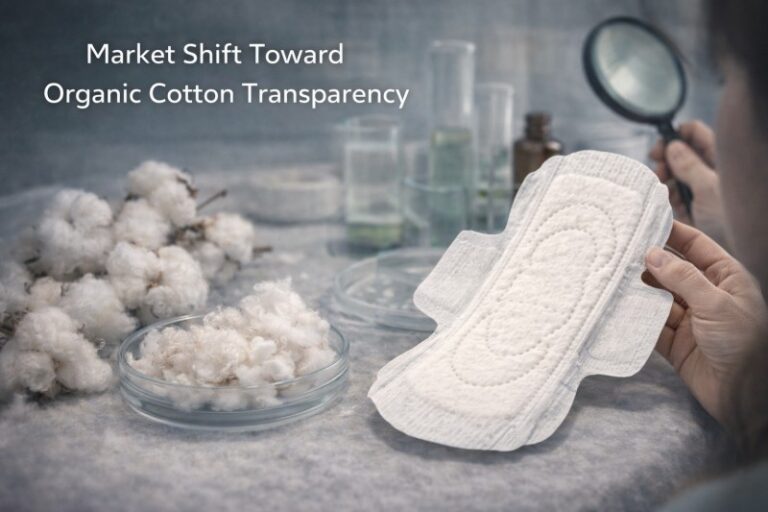
Consumer Demand Is Moving Toward Material Transparency
One of the main reasons organic cotton sanitary pads are gaining attention is the rise of material-conscious consumers. Women are paying closer attention to what comes into direct contact with intimate skin, especially during menstruation when comfort and irritation risk matter more.
Conventional sanitary pads can use synthetic topsheets or heavily processed surface materials. Organic cotton topsheets are widely perceived as softer, more breathable, and more trustworthy. This perception helps brands communicate product value clearly at shelf level.
Organic Cotton Pads vs Conventional Pads
| Comparison Point | Organic Cotton Sanitary Pads | Conventional Sanitary Pads | B2B Meaning |
|---|---|---|---|
| Surface material | Organic cotton topsheet or organic cotton-based surface | Often nonwoven or synthetic surface materials | Clearer premium selling point |
| Consumer perception | Gentle, clean, skin-friendly, breathable | Functional, affordable, widely available | Organic cotton supports brand upgrading |
| Retail positioning | Mid- to high-tier feminine hygiene shelf | Mass-market daily necessity shelf | Useful for margin and differentiation |
| Best-fit channels | Supermarkets, pharmacies, beauty retail, premium private label | General retail, wholesale, price-driven channels | Helps buyers plan channel-specific SKUs |
| Packaging focus | Material, softness, breathability, certification, skin comfort | Absorbency, price, quantity, basic protection | Requires clearer claim management |
Sensitive Skin Products Are Becoming Core Shelf SKUs
Skin-friendly and hypoallergenic sanitary pads are no longer secondary products in many markets. They are becoming part of the core feminine hygiene shelf, especially in channels where consumers compare materials, ingredients, and safety claims before purchase.
For distributors and private label brands, organic cotton sanitary pads fit this direction naturally. Products positioned around sensitivity, comfort, and reduced irritation concerns often create stronger repeat-purchase potential because the consumer can feel the difference during use.
Breathability and Comfort Support Repeat Purchases
Beyond the material story, comfort is a major reason consumers repurchase organic cotton sanitary pads. Organic cotton surfaces are valued for softness and breathability, helping reduce stuffiness during daytime or extended wear.
When combined with a well-designed absorbent core, leakage protection, and a soft breathable backsheet, organic cotton pads can offer both comfort and reliable protection. This balance is important: buyers should not choose organic cotton only for the surface material, but for the full product structure.
Organic Cotton Fits Premium-Yet-Accessible Positioning
In many markets, organic cotton sanitary pads sit in the affordable premium segment. They offer a visible value upgrade through material choice, but they do not need to be positioned as luxury products.
This makes them suitable for supermarket chains, pharmacy channels, local feminine care brands, and private label programs targeting mid- to high-tier consumers. For brand owners, organic cotton can also help create a stronger product ladder: regular pads for volume, organic cotton pads for upgrade, and functional pads for specialized needs.
B2B Product Planning Guide for Organic Cotton Pads
| Planning Area | Recommended Direction | Why It Matters |
|---|---|---|
| Core sizes | Regular daytime, maxi/long, and overnight | Covers normal, heavy, and night-use demand |
| Surface claim | Clearly define organic cotton topsheet or organic cotton surface | Avoids unclear or exaggerated material claims |
| Certification support | Use relevant certifications where available, such as GOTS and SGS testing | Improves buyer confidence and retail acceptance |
| Packaging message | Focus on softness, breathability, skin comfort, and material transparency | Helps consumers understand the price difference |
| Launch strategy | Start with 2–3 high-demand sizes before expanding | Controls inventory risk while testing market response |
How Manufacturers Are Responding to This Trend
To meet growing demand, manufacturers are adjusting product development toward cleaner materials, stable supply, scalable production, and better claim management. Organic cotton sanitary pads require more than a different topsheet — they require stable material sourcing, consistent product quality, and packaging that communicates the benefit clearly.
Niceday has expanded its organic cotton portfolio with Organic Pure Sanitary Pads, focusing on breathable structure, consistent material quality, and compatibility with OEM and private label programs. Buyers can also combine organic cotton positioning with custom packaging to localize claims, language, and shelf communication for different markets.
Flow-Based Assortment for Organic Cotton Sanitary Pads
Organic cotton sanitary pads should still follow the same practical assortment logic as other sanitary pad ranges: different flow levels need different sizes and structures. A single organic cotton SKU is rarely enough for a complete retail launch.
- Regular organic cotton pads: suitable as the core daytime SKU.
- Maxi or long organic cotton pads: useful for heavier daytime flow and stronger protection needs.
- Overnight organic cotton pads: suitable for premium night protection and higher consumer trust.
- Organic cotton panty liners: useful for daily hygiene and light-flow positioning.
For buyers building a full sanitary pad range, organic cotton products can be planned together with standard disposable sanitary napkins to create a clearer good-better-best shelf structure.
Niceday OEM/ODM Support for Organic Cotton Sanitary Pads
Niceday supports OEM and private label organic cotton sanitary pad projects for distributors, agents, supermarkets, and brand owners. Products are manufactured on 14 intelligent production lines at a 50,000 m² facility, with about 9.8 million pieces of daily capacity.
Our certification system includes ISO 9001, CE, FDA, Intertek, SGS eco, and GOTS, supporting different market and product requirements. For private label projects, the typical MOQ is 300,000 pieces per SKU, with a 35–40 day lead time after order confirmation. More details are available on our OEM/ODM service page.
Frequently Asked Questions
Are organic cotton sanitary pads fully made of cotton?
Not always. In many commercial products, “organic cotton sanitary pads” refers to an organic cotton topsheet or organic cotton surface layer, while the absorbent core and backsheet use other functional materials. Buyers should confirm the exact material structure before approving packaging claims.
Why do consumers choose organic cotton sanitary pads?
Consumers often choose organic cotton sanitary pads because they want a softer, more breathable, and more transparent material in direct contact with intimate skin. This is especially important for users who care about sensitivity, comfort, and clean-label period care.
Which markets are suitable for organic cotton sanitary pads?
Organic cotton sanitary pads are suitable for markets where consumers pay attention to material safety, skin comfort, and premium daily care. They are especially useful for supermarkets, pharmacies, beauty retail, online channels, and private label programs targeting mid- to high-tier consumers.
What sizes should an organic cotton sanitary pad range include?
A practical launch range usually includes regular daytime pads, maxi or long pads, and overnight pads. Panty liners can be added for daily hygiene and light-flow use. This gives the brand coverage across normal, heavy, night-time, and daily-use scenarios.
What is the MOQ for private label organic cotton sanitary pads?
For Niceday private label projects, the typical MOQ is 300,000 pieces per SKU. Each size or variant counts as a separate SKU, so a three-size launch range usually starts from around 900,000 pieces total.
Build Your Organic Cotton Pad Range
Discuss organic cotton pad sizes, material structure, certifications, packaging claims, and private label planning with the Niceday team.
Explore OEM/ODM Service Chat on WhatsApp