What Does “Organic Pure” Mean in Sanitary Pads?
As global consumers become more ingredient-conscious, “Organic Pure” has become a high-value positioning in the feminine hygiene market. For brands, distributors, and private label partners, the real question is not only what the phrase means, but how to define it correctly, document it properly, and use it responsibly on packaging.
From a manufacturing and OEM perspective, Organic Pure sanitary pads should not be treated as a vague natural claim. A credible Organic Pure product should connect material selection, certification documents, quality control, and market-ready packaging into one clear product system.
Organic Pure from a Manufacturing Perspective
In B2B and OEM contexts, Organic Pure usually refers to sanitary pads that use certified organic cotton materials, follow auditable production processes, and meet the documentation requirements of the target market. The exact claim depends on the product structure: some pads use an organic cotton topsheet, while others may use organic cotton in a broader material system.
This distinction matters because buyers need to know exactly which part of the pad supports the organic claim. A professional OEM supplier should be able to explain the topsheet, absorbent core, backsheet, adhesive, packaging, and available test documents before the claim is printed.
Organic vs Natural: Why Precision Matters
“Organic” and “natural” are often used together in consumer marketing, but they do not mean the same thing. For private label brands, using these terms without precision can create compliance risk and weaken consumer trust.
| Term | Meaning in B2B Product Development | Documentation Needed | Claim Risk |
|---|---|---|---|
| Organic | Usually refers to certified organic raw material or certified organic content within a defined product scope | Organic cotton certificate, GOTS or OCS documents where applicable, supplier traceability | High if used without proof or outside certification scope |
| Organic Pure | A premium positioning that should combine organic cotton material, clean product design, and transparent documentation | Material specification, test reports, certification references, approved packaging wording | Medium to high if the phrase is not clearly defined |
| Natural | A broader marketing term that may suggest plant-based or less processed materials | Material list and claim review | Medium, because the term can be interpreted differently by market |
| Cotton soft | May describe the touch or feel of the surface, not necessarily real cotton content | Surface material specification | Medium if consumers may misunderstand it as cotton content |
| Conventional | Standard sanitary pad structure, often using nonwoven or synthetic topsheets | Basic product specification and QC reports | Low if claims remain functional and accurate |
Certifications and Documents Commonly Required
Organic Pure sanitary pad projects should be built around documentation, not only product wording. Buyers should ask suppliers which certificates apply to the material, which apply to the factory, and which apply to market access.
| Document / Certification | What It Supports | Why B2B Buyers Need It |
|---|---|---|
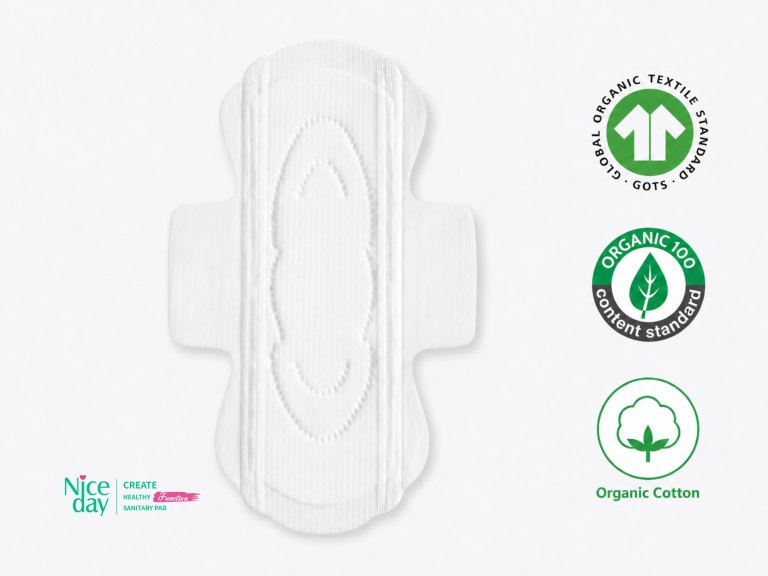
| GOTS | Organic textile processing, manufacturing, labelling, trading, and distribution under a defined certification scope | Helps support organic textile claims when the product and supply chain meet the applicable scope |
| OCS | Chain-of-custody verification for organic materials from certified sources through the supply chain | Useful for verifying organic material content and traceability claims |
| ISO 9001 | Quality management system for consistent production and process control | Shows the factory has a structured quality management process |
| SGS / Intertek testing | Third-party product testing, material safety, or performance verification depending on test scope | Supports distributor confidence and retailer review |
| FDA / CE / market documents | Market-specific compliance support where applicable | Helps importers prepare documents for target-market requirements |
| Material specification sheet | Defines topsheet, core, SAP, backsheet, adhesive, fragrance, and packaging materials | Prevents unclear claims before artwork approval |
For global reference, buyers often review official frameworks such as GOTS and the Organic Content Standard when evaluating organic textile and chain-of-custody claims.
Packaging Claims: What Brands Should Confirm Before Printing
Organic Pure positioning performs best when the claim is clear, specific, and easy for consumers to understand. The packaging should not overstate the product structure. For example, “organic cotton topsheet” is usually clearer than a broad phrase that may imply the whole pad is fully organic.
- Confirm whether the organic cotton claim applies to the topsheet, surface layer, or wider product structure.
- Check whether certification documents cover the exact material and supplier chain used in production.
- Avoid unclear claims such as “100% organic pad” unless the full product structure and certification scope support it.
- Use simple consumer-facing language: organic cotton surface, soft touch, breathable comfort, skin-friendly design.
- Localize claims for each market through compliant custom packaging review.
Why Organic Pure Positioning Performs Well Globally
Organic Pure sanitary pads perform well because they connect three consumer needs: material confidence, comfort, and premium value. In many markets, consumers are moving beyond basic absorbency and asking what the product is made from, how it feels on sensitive skin, and whether the brand is transparent.
For distributors, Organic Pure products create a clear shelf story. For retailers, they support premium category development. For private label brands, they offer a practical upgrade path from standard sanitary pads into higher-value feminine care.
OEM Product Planning for Organic Pure Sanitary Pads
A strong Organic Pure private label range should not rely on one single SKU. Buyers should plan sizes, absorbency, packaging claims, and price positioning together.
| Planning Area | Recommended Direction | B2B Value |
|---|---|---|
| Core SKUs | Regular daytime, maxi/long, overnight, and optional panty liner | Covers daily, heavy-flow, night-use, and light-flow scenarios |
| Material claim | Define organic cotton topsheet or organic cotton surface clearly | Reduces claim risk and improves buyer trust |
| Absorbent core | Match organic positioning with reliable absorbency and leakage control | Prevents the product from being only a “material story” |
| Packaging design | Use premium but clean visuals, with simple material and comfort claims | Improves shelf recognition and consumer understanding |
| Launch plan | Start with 2–3 high-demand sizes, then expand by sales data | Controls inventory risk while testing market response |
How Niceday Supports Organic Pure OEM Projects
Niceday supports Organic Pure sanitary pad projects for distributors, agents, supermarkets, and private label brands. Our OEM/ODM support covers organic cotton sourcing, material structure planning, packaging customization, QC documentation, and export-ready production.
Niceday manufactures feminine hygiene products on 14 intelligent production lines at a 50,000 m2 facility, with about 9.8 million pieces of daily capacity. Products are free of fluorescent brightening agents and can be supported with ISO 9001, CE, FDA, Intertek, SGS eco, and GOTS-related documentation depending on the project requirements.
For private label projects, the typical MOQ is 300,000 pieces per SKU, with a 35–40 day lead time after order confirmation. More details are available on the OEM/ODM service page.
Who Should Consider Organic Pure for Private Label?
Organic Pure sanitary pads are suitable for brands and distributors that want to upgrade from basic sanitary pads into a more premium, material-led product range. This positioning is especially useful for:
- Distributors entering the organic or skin-friendly feminine care segment
- Retailers developing private label sanitary pads for supermarket or pharmacy shelves
- Local brands upgrading from standard sanitary pads to premium lines
- Importers that need clearer material documentation for retailer review
- Brands targeting consumers who care about sensitivity, breathability, and transparent ingredients
Organic Pure products can also be planned together with standard disposable sanitary napkins to create a good-better-best product ladder.
Frequently Asked Questions
Is Organic Pure a certification?
No. Organic Pure is best understood as a product positioning, not a single universal certification. The credibility of the claim depends on the actual material structure, certification scope, supplier documents, test reports, and packaging wording.
Is Organic Pure the same as GOTS certified?
Not automatically. GOTS is a recognized organic textile standard with its own certification scope. A sanitary pad brand should only use GOTS-related claims when the material, supplier chain, and product documentation support that specific claim.
What documents should buyers request for Organic Pure sanitary pads?
Buyers should request the material specification sheet, organic cotton documentation, relevant GOTS or OCS documents where applicable, third-party test reports, factory quality certificates, packaging claim review, and market-specific compliance documents.
Can a brand print “organic” on sanitary pad packaging?
Yes, but only when the claim matches the real product structure and available documents. The safest approach is to define the claim precisely, such as “organic cotton topsheet,” instead of using broad wording that may imply the entire pad is fully organic.
What is the difference between Organic Pure and natural sanitary pads?
Organic Pure should be backed by specific organic cotton materials and traceable documentation. Natural is a broader marketing term and may not require the same level of certification or chain-of-custody support.
What is the MOQ for Organic Pure private label sanitary pads?
For Niceday private label projects, the typical MOQ is 300,000 pieces per SKU. Each size, absorbency, or packaging version counts as a separate SKU, so a three-SKU launch usually starts from around 900,000 pieces total.
Develop Your Organic Pure Pad Range
Discuss organic cotton materials, certification documents, packaging claims, MOQ, and OEM/ODM production planning with the Niceday team.
Explore OEM/ODM Service Chat on WhatsApp