How to Specify Softness in Sanitary Pad Development: Five Measurable Properties
Softness is the property users remember, but "soft" written on a specification sheet means nothing to a production line. To make softness a repeatable product asset, break it into five measurable properties: dry softness, wet softness, surface friction, pressure comfort, and skin-contact panel material. Each can be defined, sampled and checked. A softness icon on packaging cannot.
Where this signal comes from: user discussions in menstrual product communities regularly feature buyers trying to identify a pad they found unusually comfortable, without recalling the brand. What is remembered is how it felt in wear, not any technical feature listed on the pack.
Why users remember softness and forget everything else
Consumers do not retain the details brands invest most in communicating. Superabsorbent ratio, acquisition layer construction, core basis weight — these are almost never part of how a product is remembered or recommended.
What is remembered is a single impression: this one felt comfortable to wear. That impression drives repurchase, drives recommendation, and in some cases drives buyers to actively search for a product whose name they never noted.
There is a second reason softness matters commercially. Multi-day wear discomfort is a common reason for buyers to switch product category entirely rather than switch brand. If a pad becomes uncomfortable by the third or fourth day, the buyer may not look for a better pad — they may leave the pad category. That is a harder loss to recover than a competitive one.
The five properties to define
| Property | What it describes | What it depends on |
|---|---|---|
| Dry softness | How the surface feels before use | Top sheet fibre type, fibre fineness, embossing pattern, bonding method |
| Wet softness | How the surface feels once partially loaded | Acquisition layer, rewet performance, top sheet recovery after wetting |
| Surface friction | Resistance against skin during movement | Surface texture, embossing depth, top sheet finish |
| Pressure comfort | How the product feels under body weight when sitting or lying | Core density, core flexibility, edge construction, overall thickness profile |
| Skin-contact panel | The material actually touching the body | Top sheet material choice, including organic cotton or soft nonwoven options |
Dry softness and wet softness are different specifications
This is the most common gap in softness development. A pad can feel excellent in a dry hand test and feel different in use, because wetting changes the surface.
Specify both separately:
- Dry softness is what a buyer judges at first contact and in retail handling
- Wet softness is what determines the wear experience, and it depends heavily on how quickly liquid moves away from the surface and how well the top sheet recovers
Testing only the dry condition produces a product that samples well and disappoints in use. Both conditions should be in the test plan, with the wet condition tested at more than one loading level.
Friction during multi-day wear
Friction is not usually assessed over a realistic duration. A single-wear test will not surface the problem that appears after several consecutive days of use, which is exactly when buyers report discomfort and consider changing product type.
A more useful test plan includes:
- consecutive multi-day wear rather than a single session
- friction assessment in both dry and partially loaded conditions
- movement-based assessment, not static contact only
- attention to edges and embossed areas, where friction concentrates
Pressure comfort and edge feel
Pressure comfort is what a user notices when sitting for long periods or lying down. It is affected less by thickness alone than by how the core distributes and flexes under load.
Points worth specifying:
- core flexibility, so the product follows body movement rather than resisting it
- edge construction, since a firm or raised edge is felt disproportionately
- thickness profile across the product, not a single centre measurement
- whether the core holds shape after compression, or forms a raised ridge
Skin-contact panel and top sheet options
The skin-contact panel is the only part of the product the user physically experiences. It deserves a deliberate decision rather than a default.
Common options and their trade-offs:
- Soft perforated nonwoven: good dry feel and fast surface transfer
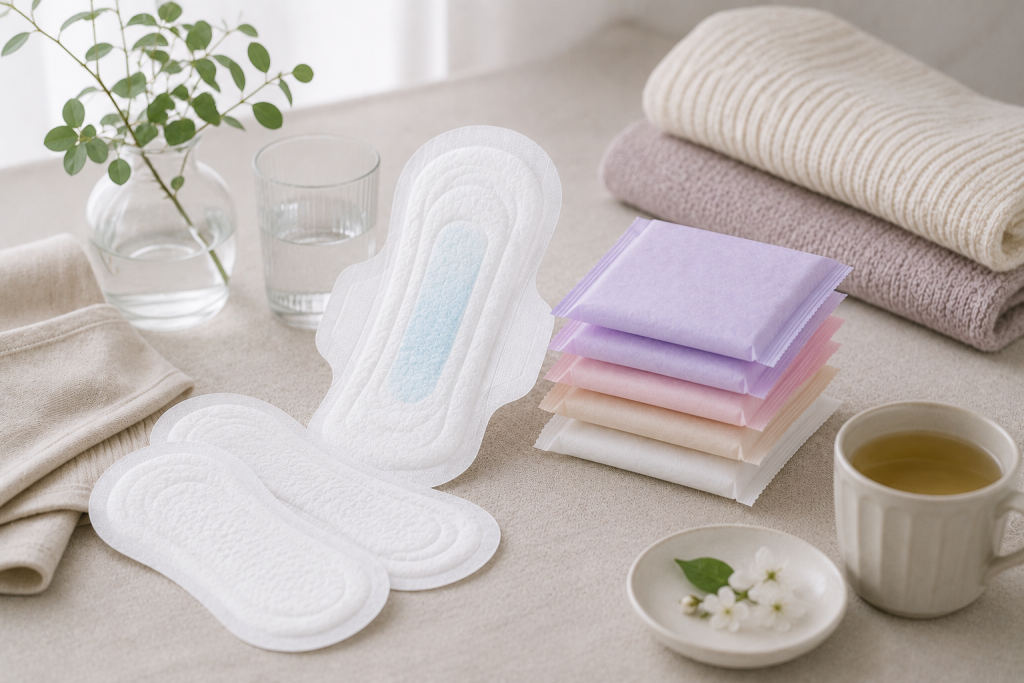
- Organic cotton top sheet: supports comfort positioning with a stated material fact, useful for comfort-focused lines
- Embossed nonwoven: can improve surface transfer, but embossing depth affects friction and should be specified
Whichever is chosen, state the material on pack as a fact rather than as a benefit claim. A named material is verifiable; a softness superlative is not.
Turning softness into a specification line
To move softness from marketing language into a controllable property, the specification should include for each of the five items:
- the target condition, stated in a way the line can act on
- the test method and condition, including wet loading levels where relevant
- an approved reference sample retained by both parties
- a check frequency during production
A retained approved sample matters more here than in most specification areas, because softness is partly a comparative judgement. A physical reference removes the argument.
What this means for private label buyers
If comfort is part of your positioning, it needs to appear in the specification, not only in the artwork. Defining the five properties with test conditions and a retained reference sample makes softness reproducible across production runs — which is what turns it from a launch impression into a repeat-purchase driver.
Niceday manufactures sanitary pads, panty liners, disposable menstrual pants and tampon products from a 50,000 square meter facility in Foshan, China, with 14 intelligent production lines and a daily capacity of 9.8 million pieces, exporting to 54+ countries. Top sheet options include soft nonwoven and organic cotton, and products are manufactured without fluorescent brightening agents. Standard MOQ is 300,000 pieces per SKU with a 35–40 day lead time.
Develop a comfort-focused product line
Share your target positioning and market, and our team will propose top sheet options and a softness test plan for your specification.
Email: winnie@everyniceday.com
Discuss Product DevelopmentFrequently Asked Questions
Why is "soft" not a usable specification?
Because it cannot be checked on a production line. Softness needs to be broken into measurable properties — dry softness, wet softness, surface friction, pressure comfort and skin-contact panel material — each with a test condition and a reference sample.
What is the difference between dry softness and wet softness?
Dry softness is the surface feel before use, driven by top sheet fibre and embossing. Wet softness is the feel once partially loaded, driven by the acquisition layer, rewet performance and how well the top sheet recovers after wetting.
Why should friction be tested over several days?
Because discomfort from friction often appears only after consecutive days of wear. A single-session test will not surface the problem that leads buyers to change product type rather than brand.
What affects pressure comfort in a sanitary pad?
Core flexibility, edge construction, the thickness profile across the whole product, and whether the core holds shape after compression. Overall thickness alone is a weak predictor.
Which top sheet options support a comfort-focused product line?
Soft perforated nonwoven, organic cotton top sheet, and embossed nonwoven are the common options. Embossing depth should be specified, since it affects friction as well as surface transfer.
How should softness be stated on packaging?
State the skin-contact material as a fact, such as the top sheet material used. A named material is verifiable, whereas a softness superlative is not.