About This Guide
This guide compares period underwear and tampons across product construction, usage, comfort, absorbency, and suitability for different situations. It is useful for consumers deciding which product fits their needs, and for brand owners and importers evaluating these two categories as private label product directions.

What Is Period Underwear and How Does It Work?
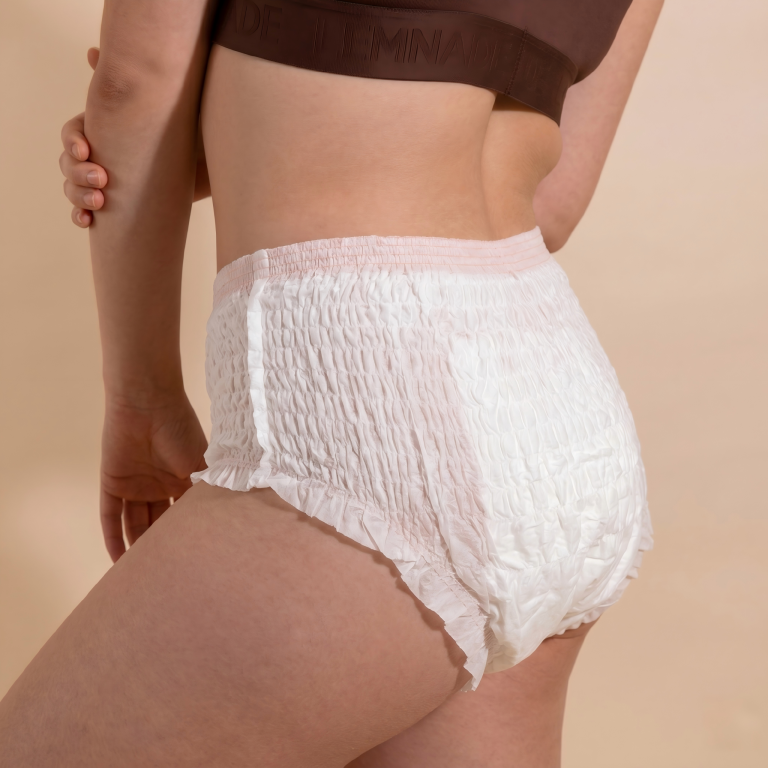
Period underwear — also called menstrual pants or period pants — is absorbent underwear designed to be worn during menstruation without additional protection. The underwear contains a built-in absorbent layer that captures menstrual flow, holds it away from the skin, and prevents leakage through the outer fabric.
Most period underwear uses a multi-layer construction:
- Inner layer — moisture-wicking fabric that keeps the skin feeling dry
- Absorbent middle layer — holds menstrual flow; the thickness and material of this layer determines absorbency capacity
- Outer layer — leak-resistant fabric that prevents fluid from passing through to clothing
Period underwear is available in two main formats: reusable (washed and worn again) and disposable (worn once and discarded). Reusable period underwear is more commonly associated with sustainability positioning. Disposable period underwear — sometimes called menstrual pants in trade contexts — is produced similarly to sanitary pads and is more relevant in OEM manufacturing discussions.
What Are Tampons and How Do They Work?
A tampon is a small absorbent product inserted into the vaginal canal to absorb menstrual flow internally, before it leaves the body. Tampons are made from absorbent material — typically cotton, rayon, or a blend — compressed into a cylindrical shape. They are available with or without an applicator to assist insertion.
Tampons are sized by absorbency level, typically ranging from light to super plus, corresponding to the volume of fluid they can hold. They are designed to be worn for up to 4–8 hours depending on flow level and then removed and replaced.
From a product construction perspective, tampons are significantly different from external protection products like pads and period underwear — they require different manufacturing equipment, different raw materials, and different regulatory compliance pathways in most markets.
Period Underwear vs. Tampons: Direct Comparison
| Factor | Period Underwear | Tampons |
|---|---|---|
| How it works | External — absorbs flow after it leaves the body | Internal — absorbs flow inside the body before it exits |
| Insertion required | No — worn like regular underwear | Yes — inserted into the vaginal canal |
| Suitable for swimming | No — not designed for water activities | Yes — internal protection works during swimming |
| Visibility under clothing | Depends on underwear style — some bulk under fitted clothing | No external bulk — invisible under any clothing |
| Comfort during wear | Comfortable for most users — no insertion required | Comfortable when correctly inserted; some users find insertion uncomfortable |
| Wear duration | Several hours depending on absorbency and flow level | Up to 4–8 hours depending on absorbency level and flow |
| Changing process | Requires changing entire underwear garment | Remove and replace tampon only |
| Reusable option | Yes — reusable versions are widely available | No — tampons are single-use only |
| Environmental impact | Lower for reusable versions; disposable versions similar to pads | Single-use waste per cycle; organic cotton options reduce some impact |
| Market availability | Growing rapidly, especially in Europe and North America | Established globally; lower adoption in some Asian and African markets |
When Period Underwear Works Better
Period underwear tends to be the more practical choice in these situations:
- Overnight use — no risk of forgetting to change, no insertion required before sleep
- Light or unpredictable flow days — comfortable protection without the need to carry supplies
- Users who prefer external protection — some users are not comfortable with internal products for personal, cultural, or physical reasons
- As backup protection — worn alongside a tampon or menstrual cup for added security during heavy flow days or physical activity
- Postpartum recovery — some period underwear formats are also suitable for light postpartum use, though dedicated postpartum underwear is designed specifically for that purpose
When Tampons Work Better
Tampons tend to be the more practical choice in these situations:
- Swimming and water sports — the only mainstream menstrual product that provides protection during water activities
- Fitted clothing and athletic wear — no external bulk, invisible under any garment
- Active lifestyles — some users prefer the freedom of internal protection during exercise or sport
- Situations where changing underwear is inconvenient — replacing a tampon is faster and requires less space than changing period underwear
Can Period Underwear and Tampons Be Used Together?
Yes — using both products together is a common approach for managing heavy flow days or high-activity situations. A tampon provides internal protection during exercise or swimming, while period underwear worn simultaneously provides backup coverage in case of leakage or during the transition between tampon changes.
This combination approach is also relevant for brand owners building a product range — offering both categories to consumers who use them together represents a natural product line extension opportunity.
For Brand Owners: Period Underwear and Tampons as OEM Categories
For private label brands and importers, period underwear and tampons represent two distinct OEM product directions with different manufacturing requirements, compliance pathways, and market positioning opportunities.
Period Underwear OEM
Disposable period underwear (menstrual pants) is produced using similar manufacturing technology to sanitary pads — making it accessible to brand owners already working with a pad manufacturer. The category has strong growth momentum in European and North American markets, and offers effective positioning around comfort, convenience, and overnight protection.
For a full overview of menstrual pants OEM considerations, see our guide on menstrual pants OEM: a sourcing guide for private label brand owners.
Tampon OEM
Tampons require dedicated manufacturing equipment and a different production process from pads and period underwear. Compliance requirements are also more complex in many markets — particularly in the US and Europe, where tampon products face stricter regulatory scrutiny. For brand owners considering tampon OEM, working with a manufacturer that has established tampon production capability and relevant market experience is essential.
For more detail on tampon OEM considerations, see our guide on tampon manufacturer for OEM and private label.
Building a Multi-Category Range
Many established feminine hygiene brands carry both period underwear and tampons as part of a broader product range — alongside sanitary pads and panty liners. For brand owners planning a multi-category launch, the practical starting point is usually sanitary pads or panty liners as the core SKUs, with period underwear and tampons added as the brand and distribution grow. See our guide on how to start a private label feminine hygiene brand for a full overview of product line planning logic.
Frequently Asked Questions
Is period underwear as effective as tampons for heavy flow?
Period underwear and tampons address heavy flow differently. High-absorbency period underwear can manage heavy flow for several hours, but capacity depends on the specific product's absorbency rating. Tampons are often preferred for very heavy flow days because they absorb internally and can be changed more quickly. Many users with heavy flow use both products together for maximum protection.
Are tampons safe to use?
Tampons are safe when used as directed — particularly the guidance to change them every 4–8 hours and to use the lowest absorbency suitable for the current flow level. Leaving a tampon in for longer than recommended is associated with increased risk of bacterial growth. Toxic Shock Syndrome (TSS), while rare, is a serious condition historically associated with tampon use, which is why following usage guidelines matters.
Can period underwear be worn without any other protection?
Yes — period underwear is designed to be worn as standalone protection for most flow levels. High-absorbency versions are suitable for heavy flow days. The key variable is choosing the right absorbency level for the expected flow — the same principle that applies to choosing between pad absorbency levels.
Do tampons work for all body types?
Tampons are suitable for most users, but comfort and ease of insertion vary. Some users find applicator tampons easier to use than non-applicator versions. Users who experience discomfort with tampon insertion may prefer external protection products such as pads or period underwear as a more comfortable alternative.
For brand owners: which category is easier to launch as a first OEM product?
For most new private label brands, sanitary pads or disposable period underwear are more accessible first OEM categories than tampons. Pad and period underwear manufacturing uses related production technology, compliance requirements are generally less complex, and consumer adoption is broader across more markets. Tampons are a strong addition to an established brand range but carry more regulatory and manufacturing complexity as a starting point.
Exploring Period Underwear or Tampon OEM for Your Brand?
Niceday is a feminine hygiene OEM manufacturer based in Foshan, China. We produce sanitary pads, panty liners, menstrual pants, tampons, and related categories across a range of specifications and material directions. Our facility operates 14 intelligent production lines with daily capacity of 9.8 million pieces, supplying private label brands and distributors in 54+ countries.
Tell us your product category, target market, and brand direction — our OEM team will respond with relevant capability information and next steps.
Contact Our OEM Team View OEM Service Details