Heavy-Flow & Overnight Pads for the Perimenopause Segment: An OEM Product Guide
A large, fast-growing group of buyers is looking for protection standard pads don't deliver. Here's how to spec a heavy-flow and overnight line for the perimenopause segment.
- Full OEM/ODM support
- 54+ countries
- 24-hour reply
During perimenopause, periods often become heavier and less predictable, and standard "regular" or even "heavy" pads saturate faster than users expect — especially overnight. This is an underserved, growing product segment: brands that offer credible heavy-flow and overnight protection have a clear opening. This page is a sourcing and product-spec guide for brand owners and importers evaluating a line for this group, not medical advice for end users.
Why standard pads fail this segment
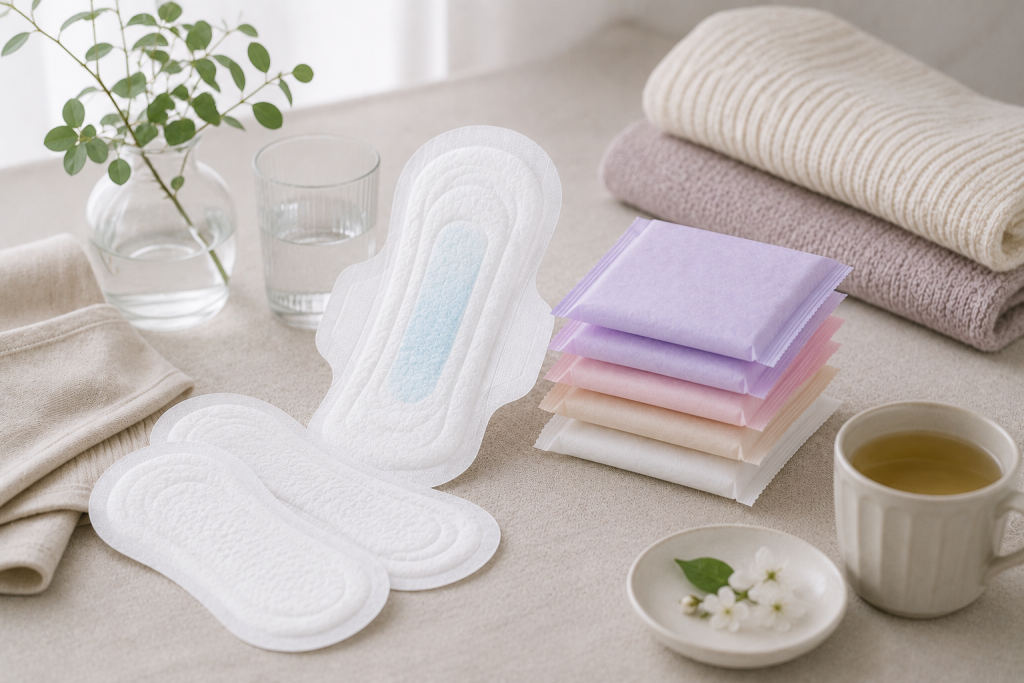
The complaint pattern is consistent: sudden high-volume flow that overwhelms a pad's acquisition speed, leaks overnight because coverage and capacity aren't built for extended wear, and a wet, uncomfortable surface after saturation. Many users end up layering two products (a pad plus period underwear, or a pad plus a cup) because no single standard product holds. That workaround is exactly the gap a well-specced line can fill.
What to spec for a heavy-flow / overnight line
- Fast acquisition speed — the surface must take a sudden gush quickly, not just hold a large total volume slowly.
- High capacity with low rewet — total absorption matters, but the surface must stay dry under body pressure after absorbing. See why rewet matters more than total absorption.
- Front-to-back and overnight coverage — extended length and rear coverage matched to lying-down positions, not just a longer pad. See coverage and shape spec.
- Breathable construction — larger, longer pads trap heat and moisture; breathability protects comfort over long wear.
- Realistic capacity messaging — communicate what the product handles and when to change, without absolute "no-leak" promises.
Who this segment fits — and who should stay cautious
A good fit if your brand
- wants to reach an older, growing demographic underserved by standard lines
- can support a genuine overnight / heavy-flow spec, not just a bigger pad
- is comfortable including responsible medical-referral language
Be cautious if your brand
- wants to make menopause or hormone-related health claims — that's a compliance risk, not a product feature
- plans to market "heavy flow" as a cure or fix rather than protection and comfort
How Niceday supports this segment
We can develop overnight and heavy-flow pads and night pants with fast acquisition, high-capacity low-rewet cores, and coverage built for extended wear, matched to the positioning and market you're targeting. We help you communicate capacity honestly and keep claims within safe, non-medical boundaries — which protects both your customers and your brand.
Frequently asked questions
What makes an overnight pad different from just a longer pad?
Length alone doesn't stop overnight leaks. An overnight product needs fast acquisition for sudden flow, coverage matched to lying-down positions (more rear coverage), high capacity with low surface rewet, and breathability for extended wear. A pad that is only longer often still leaks and feels wet.
Can a pad be marketed specifically for perimenopause?
It can be positioned for the heavy, unpredictable flow common in that stage — framed as comfort and protection. It should not claim to treat, diagnose, or address a medical condition, and responsible messaging includes guidance to see a healthcare professional about abnormal bleeding.
Does Niceday make heavy-flow and overnight products for private label?
Yes. We develop overnight and heavy-flow pads and night pants for OEM/ODM, specced for acquisition speed, capacity, low rewet, and extended-wear coverage, with claims kept within safe boundaries.
Planning a heavy-flow or overnight line?
Let's spec it for the segment you're targeting. Winnie replies within 24 hours.
Request a QuoteFounded in 2016, Niceday operates a 50,000 m² facility with 14 production lines and a daily output of around 9.8 million pieces, exporting to 54+ countries across five product categories.