Market Guide for Importers & Distributors
Sourcing Feminine Hygiene Products for Africa: OEM, Wholesale & Private Label
Africa's feminine hygiene market is growing. Rising urbanization, increased health awareness, and expanding retail and distribution networks are driving demand for quality products across sub-Saharan Africa, West Africa, East Africa, and North Africa. For importers, distributors, and brand owners in these markets, finding a reliable manufacturer and supply partner is one of the most important sourcing decisions.
This guide covers what African buyers should know when sourcing feminine hygiene products — from product options and private label development to certification requirements and choosing the right manufacturing partner.
The African Feminine Hygiene Market: What Importers Should Know
Demand for feminine hygiene products across Africa is driven by several converging factors. Understanding these helps importers and distributors position their product lines more effectively.
Growing urban middle class
Urban growth across Nigeria, Kenya, Ghana, South Africa, Ethiopia, and Egypt is expanding the consumer base for packaged hygiene products, including branded and private label feminine care.
Retail and distribution expansion
Supermarket chains, pharmacy networks, and informal distribution channels are reaching a wider customer base, creating real volume opportunities for importers with reliable bulk supply.
Preference for affordable quality
African consumers increasingly want reliable quality at competitive pricing. This creates a strong opportunity for well-manufactured private label products that undercut expensive imported brands.
For importers and distributors: the opportunity is not just about supplying product volume — it is about helping local markets access consistent, quality feminine hygiene products at realistic price points. Private label development allows you to control margin, positioning, and supply continuity.
Product Options for the African Market
Different product types serve different market segments and price points. Understanding the options helps you build the right product line for your distribution channel.
Core Category
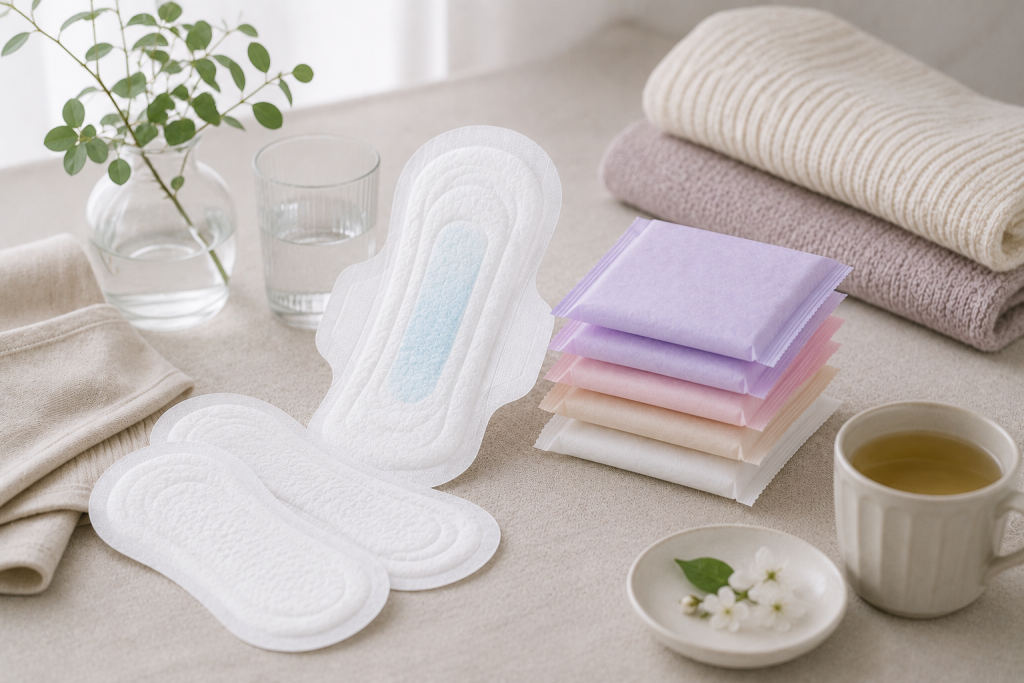
Sanitary Pads / Sanitary Napkins
The highest-volume category across African markets. Day-use and overnight options are the most in-demand. Ultra-thin and comfort-focused variants appeal to urban consumers, while standard absorbency products serve broader price-sensitive markets.
Available directions:
- Standard day-use and overnight
- Ultra-thin with soft topsheet
- Organic cotton surface option
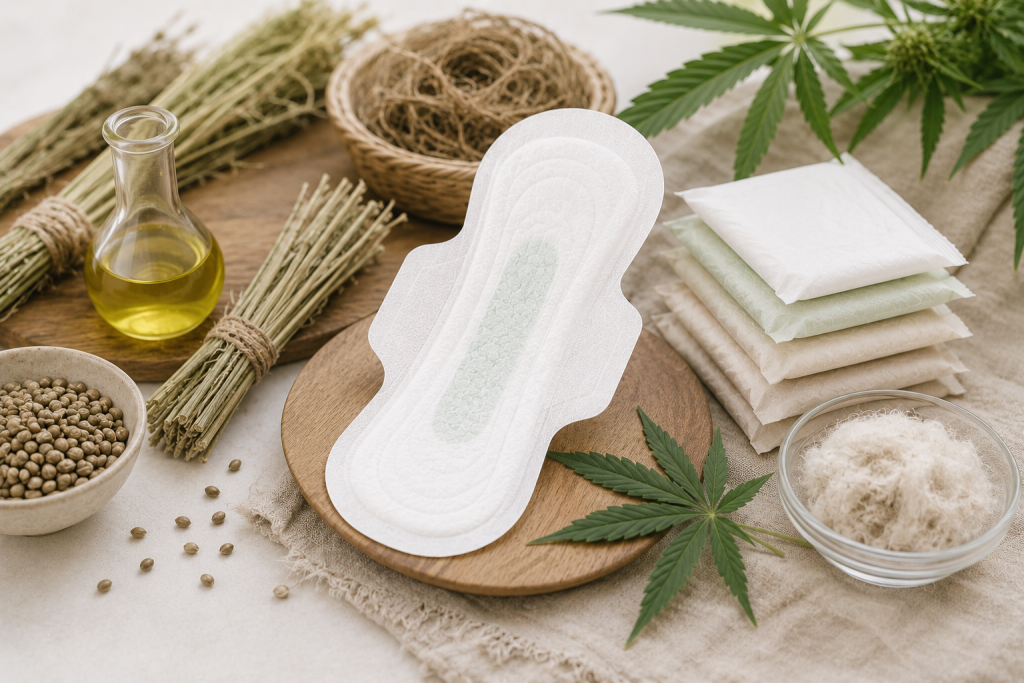
- Herbal-inspired comfort positioning
- Anion / freshness functional concept
Growing Category
Panty Liners
Daily care and post-period use is a growing habit in urban markets. Panty liners offer good margin-to-volume ratios for distributors and work well as complementary SKUs alongside sanitary pads in a product line.
Available directions:
- Standard and long-shape options
- Scented and unscented
- Individually wrapped or flow-pack
Emerging Category
Menstrual Pants / Period Pants
Disposable menstrual pants are gaining traction in higher-income urban segments. They work well as a premium addition to an existing product range and offer strong margin potential for early movers in this category.
Available directions:
- Multiple sizes S to XXL
- Overnight and active-use options
- Retail-ready or bulk packaging
Niche Opportunity
Tampons
Tampon usage is more limited in most African markets but growing among younger urban consumers, especially in coastal cities, South Africa, and North Africa. A small tampon SKU can complement a broader product range.
Available directions:
- Applicator and digital options
- Regular, super absorbency
- Cotton material options
Private Label vs. Wholesale Supply: Which Path Works for Your Market?
Most African importers and distributors face the same question: should they import a branded product or develop their own label? Both paths work — the right choice depends on your distribution channel, investment capacity, and long-term business goals.
Private Label Development
You source manufacturing from a factory like Niceday and sell the product under your own brand name and packaging. This is the fastest path to brand equity and margin control.
Best for:
- Distributors wanting to build a local brand
- Importers with existing retail relationships
- Buyers who want margin control and exclusivity
- Long-term market participants building brand loyalty
Wholesale / Bulk Supply
You source bulk product in standard packaging for redistribution. Faster market entry, lower upfront investment, suitable for testing a new market before committing to brand development.
Best for:
- New importers entering a market for the first time
- Distributors adding volume to existing networks
- Buyers who need speed over branding
- Testing product acceptance before committing to private label
Niceday supports both options for African buyers
Whether you need bulk supply for fast market entry or want to develop a private label product line under your own brand, our Foshan factory supports OEM, ODM, and wholesale supply with export experience across 50+ countries including multiple African markets.
Discuss Your Sourcing NeedsWhat African Importers Should Check Before Choosing a Supplier
Choosing the wrong supplier is expensive — rejected shipments, quality inconsistencies, and failed market entries are common mistakes that come from skipping due diligence. Use this checklist when evaluating a feminine hygiene product supplier for Africa.
Confirm they are a direct factory, not a trading company
Direct manufacturers can offer better pricing, more reliable quality control, and more flexible customization than trading companies. Ask for factory registration documentation and production capacity data.
Check export experience in African markets
A supplier with experience exporting to African markets understands documentation requirements, packaging adaptation, and logistics realities better than one that has only exported to European or US markets.
Request certification documentation
ISO 9001 is the baseline for quality management. CE and FDA registration support market entry into regulated channels. Third-party testing (SGS, Intertek) provides material safety verification that protects you from claims and import rejections.
Understand MOQ and lead time realities
African importers often face longer shipping times and tighter cash flow cycles. Confirm MOQ, production lead time, and shipment timeline before committing. A reliable supplier should give you honest timelines, not just fast quotes.
Request samples before bulk commitment
Always evaluate physical samples before placing a bulk order. Product feel, absorbency, and packaging quality are impossible to assess from photos or specification sheets alone. A trustworthy supplier will accommodate sample requests as standard practice.
Check packaging support for your local language and regulations
Packaging for African markets may require local language labeling, country-specific regulatory statements, or adjusted pack counts. Confirm whether the supplier can support packaging adaptation for your destination market.
How Niceday Supports African Buyers
Niceday is a feminine hygiene manufacturer in Foshan, China, with export experience across 54+ countries. We work with importers, distributors, and brand owners in African markets on both bulk supply and private label product development.
Production capacity for bulk orders
14 production lines and daily capacity of 9.8 million pieces support reliable bulk supply without quality compromise across repeat orders.
Export documentation support
We support the documentation process for export shipments, including product certificates, packing lists, and coordination for destination customs requirements.
Packaging adapted for your market
We support packaging adaptation including language layout, count adjustment, and format selection to fit your target market's retail or distribution channel requirements.
Reference: Niceday supply specifications
Standard MOQ
From 300,000 pcs / SKU
Lead time
35–40 days from confirmation
Certifications
ISO 9001 · FDA · CE · SGS
Export markets
54+ countries worldwide
Frequently Asked Questions
Can I source sanitary pads from China for distribution in Africa? +
Yes. China is one of the main manufacturing sources for feminine hygiene products exported to Africa. Chinese manufacturers offer competitive pricing, high production capacity, and the ability to support both standard bulk supply and private label packaging development. The key is selecting a certified, export-experienced manufacturer rather than an untested trading company.
What certifications should I look for when importing feminine hygiene products into Africa? +
Certification requirements vary by country and importing channel. ISO 9001 demonstrates manufacturing quality management. CE marking and FDA registration are widely recognized for product safety credibility. Third-party testing certificates (SGS, Intertek) covering raw material safety are useful for customs clearance and retail acceptance. Always confirm the specific requirements of your destination country's standards authority.
Is it worthwhile to develop a private label brand for the African market? +
For many African distributors and importers, private label development is one of the most effective strategies for building sustainable margin and brand loyalty. It removes dependence on third-party brand pricing, allows you to control positioning and packaging for your specific market, and gives you a differentiated product in crowded distribution channels. The investment required is manageable — OEM MOQ starts from 300,000 pieces per SKU, which is practical for most established distributors.
How do I get started sourcing from Niceday for my African market? +
Contact our team with details about your target country, product type, approximate quantity, and whether you need bulk supply or private label packaging. We will respond with a product proposal, reference pricing direction, and next steps. Samples can be arranged before bulk order confirmation.
Related Resources
Ready to Source Feminine Hygiene Products for Your African Market?
Tell us about your target country, product requirements, quantity range, and whether you need bulk supply or private label packaging. Our team will get back to you with a practical proposal.
Request Product Samples — Samples of our main product lines are available for evaluation before bulk order confirmation. Contact our team to arrange.