About This Guide
This guide is written for importers, distributors, and private label brand owners evaluating sanitary pads for sensitive skin as a product direction. It covers the key material options available, how to position and claim sensitive-skin attributes correctly, what to check when sourcing, and how to approach OEM development for this product category. It is a B2B sourcing and product development guide.
Why Sanitary Pads for Sensitive Skin Are Growing in Demand
The sensitive skin feminine hygiene segment has expanded across multiple markets, driven by several converging trends:
- Consumer material awareness — more consumers are reading ingredient and material information before purchasing feminine hygiene products, especially for daily-use items with extended skin contact
- Premiumization — in many markets, there is growing willingness to pay more for products positioned around skin comfort, natural materials, and gentler formulations
- E-commerce brand growth — online channels allow niche feminine hygiene brands to reach consumers seeking alternatives to mainstream products, making sensitive skin positioning viable for smaller brand launches
For importers and distributors evaluating product lines, sanitary pads for sensitive skin represent a segment with strong differentiation potential and consistent B2B sourcing demand from brand owners building premium or wellness-oriented product lines.
Key Material Options for Sensitive Skin Sanitary Pads
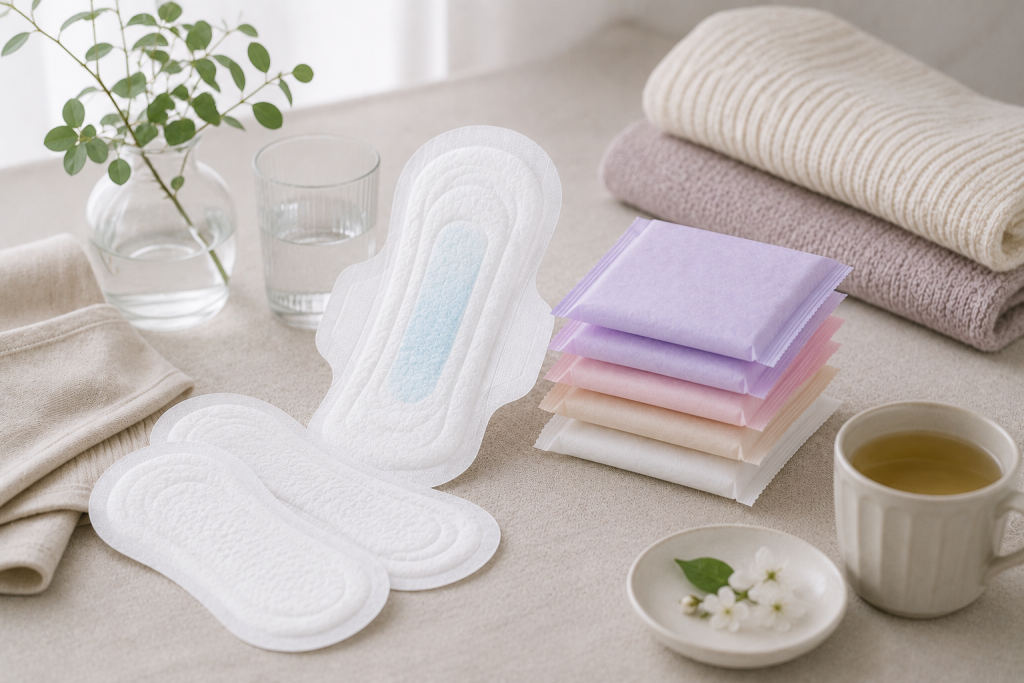
Material choice is the most important decision in sensitive-skin pad development. The topsheet — the layer in direct contact with the skin — is the primary driver of both product feel and positioning credibility. The following table summarizes the main material directions available for private label sourcing.
| Material Direction | Key Characteristics | Best Fit For | Price Tier |
|---|---|---|---|
| Organic cotton topsheet | Grown without synthetic pesticides; softer surface feel; fragrance-free; GOTS/OCS certifiable | Premium retail, e-commerce brands, wellness positioning, ingredient-aware markets | Mid to premium |
| Soft cotton-feel nonwoven | Gentle surface without organic classification; comfortable, accessible price point | Mid-range product lines, value-positioned sensitive skin brands, first-entry launches | Mass market to mid |
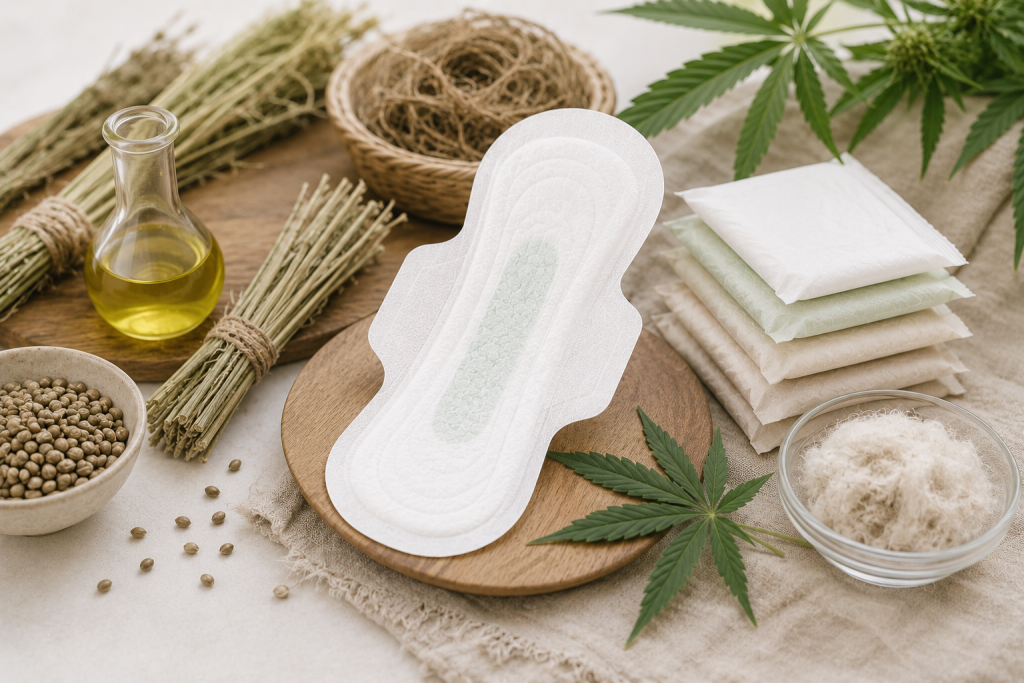
| Herbal-inspired concept | Botanical ingredient direction (herbal chip infusion); differentiated comfort-care positioning | Asian and Middle Eastern markets, differentiated brand concepts, comfort-care positioning | Mid to premium |
| Breathable backsheet | Reduces heat and moisture buildup; typically combined with other topsheet options | Active lifestyle positioning, warm climate markets, complementary to any topsheet tier | Standard addition across tiers |
For a detailed comparison of sensitive-skin material attributes and verification standards, see our guide on sensitive-skin feminine hygiene products for buyers.
Product Claim Guidance for Sensitive Skin Positioning
Product claims for sensitive skin pads should be aligned with actual material specifications and supported by documentation. Claims that cannot be verified create compliance risk and undermine consumer trust.
| Claim | Acceptable Use | Verification Required |
|---|---|---|
| Organic cotton | When topsheet is certified organic cotton | Current GOTS or OCS certificate from manufacturer |
| Fragrance-free | When no fragrances are used in production | Manufacturer confirmation; third-party test report preferred |
| FBA-free | When no fluorescent brightening agents are used | SGS or Intertek test report confirming absence |
| Hypoallergenic | Use carefully — requires supporting evidence | Do not use as a standalone unverified claim |
| Herbal / botanical | When herbal chip or botanical ingredient direction is used | Keep within comfort / freshness framing; avoid therapeutic or medical language |
| Skin-friendly / gentle | When supported by material attributes above | Should be backed by at least one verifiable material attribute |
All product claims in private label projects should reflect actual material specifications. Claims implying medical or therapeutic outcomes — such as "treats irritation," "prevents infection," or "gynecologist-recommended" without supporting evidence — should be avoided. For a full overview of claim guidance, see our compliance reference for what certifications matter for feminine hygiene OEM.
Sourcing Checklist for Sensitive Skin Sanitary Pads
| Checklist Item | What to Confirm | Why It Matters |
|---|---|---|
| Topsheet material specification | Ask for the specific material — organic cotton, soft cotton-feel, bamboo, or standard nonwoven | Material descriptions in marketing copy must match actual product specification |
| Third-party testing reports | Request SGS, Intertek, or equivalent reports covering raw material safety | Supports market-entry compliance and packaging claim verification |
| Claim and certification alignment | Confirm that packaging claims are supported by actual materials and current certification documents | Avoids compliance risk and protects brand credibility |
| Physical samples | Always evaluate physical samples before bulk order commitment | Surface softness, absorbency, and wearing comfort cannot be assessed from descriptions alone |
| Batch-to-batch consistency | Ask about the manufacturer's process for maintaining material specifications across repeat orders | Sensitive skin consumers have higher expectations for consistency — variation in feel or material is more noticeable |
Frequently Asked Questions
What materials are used in sanitary pads for sensitive skin?
The most common material direction for sensitive skin positioning is organic cotton topsheet — soft, breathable, and free from synthetic pesticides. Other options include soft cotton-feel nonwoven for mid-range positioning and herbal-inspired chip infusion for differentiated comfort concepts. Across all material directions, fragrance-free and FBA-free construction are the most important baseline attributes for genuine sensitive skin suitability.
Are organic cotton sanitary pads better for sensitive skin?
For users who experience irritation from conventional pads, organic cotton pads are generally a better option. The organic cotton topsheet removes synthetic pesticide residues, and organic pads are typically produced fragrance-free and FBA-free — eliminating the most common chemical irritants. Absorbency is not affected; it is determined by the core construction independently of the topsheet material.
Can I source organic cotton sanitary pads for private label?
Yes — organic cotton sanitary pads are well-suited to OEM and private label development. The key requirements are confirming the manufacturer holds current GOTS or OCS certification, produces FBA-free with supporting test reports, and can support custom packaging with appropriate certification claim language. At Niceday, we support full private label customization for organic cotton pad projects across day, overnight, and liner formats.
What is the difference between organic cotton and regular cotton topsheets?
Organic cotton is grown without synthetic pesticides or fertilizers and processed with fewer chemical treatments than conventional cotton. Regular cotton topsheets in sanitary pads may use conventionally grown cotton that has been processed with bleaching agents. For sensitive skin positioning, the key practical differences are surface softness, breathability, and the absence of synthetic chemical residues — all of which are attributes of certified organic cotton when combined with fragrance-free and FBA-free production.
How do I market sanitary pads for sensitive skin without making medical claims?
Use material and product attribute language rather than therapeutic outcome language. Acceptable directions include: "made with organic cotton," "fragrance-free," "FBA-free," "designed for gentle daily wear," "soft-touch surface," and "breathable construction." Avoid language implying the product treats, prevents, or cures any skin condition — this crosses into medical claim territory that requires clinical substantiation in most markets. The product's sensitive-skin credibility comes from verifiable material attributes, not from health outcome promises.
Sourcing Sensitive Skin Sanitary Pads for Your Brand?
Niceday supports private label brand owners and importers developing organic cotton, herbal-inspired, and comfort-focused feminine hygiene product lines. We manufacture FBA-free and fragrance-free as standard, with GOTS and OCS certification support and third-party tested raw materials. Our facility in Foshan, China operates 14 intelligent production lines with daily capacity of 9.8 million pieces, supplying brands and distributors in 54+ countries.
Tell us your target market, material direction, and product category — our OEM team will respond with relevant options and documentation.
Contact Our OEM Team View OEM Service Details