Entering a new market is not just about shipping products. It requires retail visibility, consumer education, and coordinated local execution. This case study shows how Niceday worked with a distributor partner in Myanmar to build brand presence, drive product trial, and establish a foundation for long-term growth.
Background
Myanmar represents a growing market for feminine hygiene products, with increasing consumer awareness and expanding modern retail channels. Niceday’s distributor partner in this market needed more than product supply — they needed support in building brand awareness, getting products onto shelves, and creating consumer touchpoints that could drive trial and repeat purchase.
The goal was to help the distributor move from initial product import to active market presence within a defined launch period.
Market Challenges
The distributor faced several common challenges when introducing a new feminine care brand into the market:
Low brand awareness: Niceday was new to Myanmar consumers. Without existing recognition, the brand needed visible and repeated exposure to build familiarity.
Competitive shelf space: Retail shelves in Myanmar’s modern trade channels are contested by both local and international brands. Gaining and maintaining shelf presence required active trade support.
Consumer trust barrier: In feminine hygiene, consumers tend to stick with familiar brands. Switching requires direct product experience, not just advertising.
What Niceday Provided
Niceday supported the distributor across multiple dimensions of market execution, going beyond standard supply:
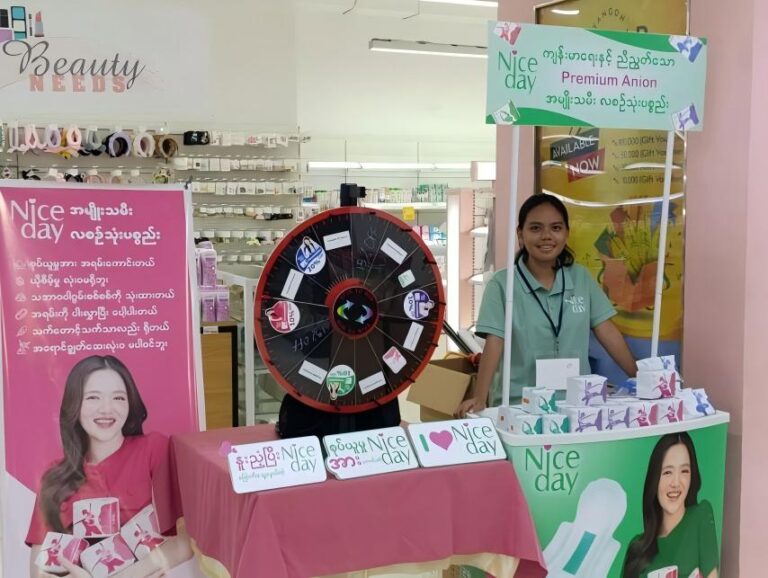
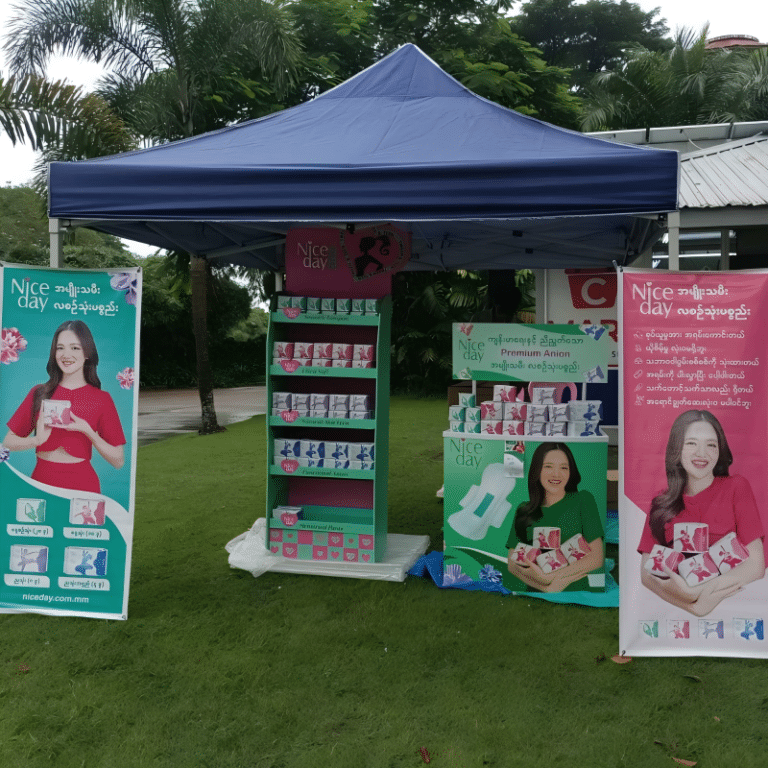
Retail visibility: Rented gondola shelving in key retail locations, branded product listing areas, and in-store signage to ensure the product was visible and well-presented on shelves.
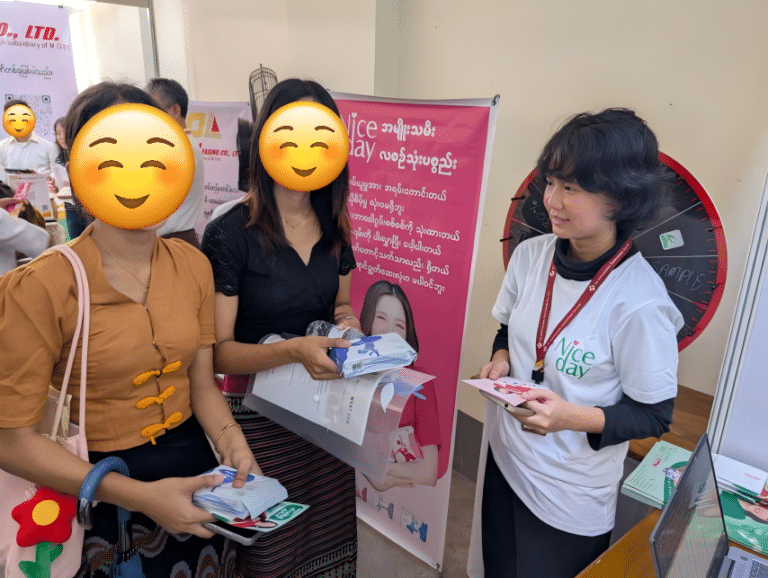
Promotional staffing: Sales promoters deployed in retail locations to introduce the product to shoppers, explain product features, and encourage first-time trial.
Product sampling: Targeted sampling campaigns to put the product directly into consumers’ hands, allowing them to experience quality before committing to purchase.
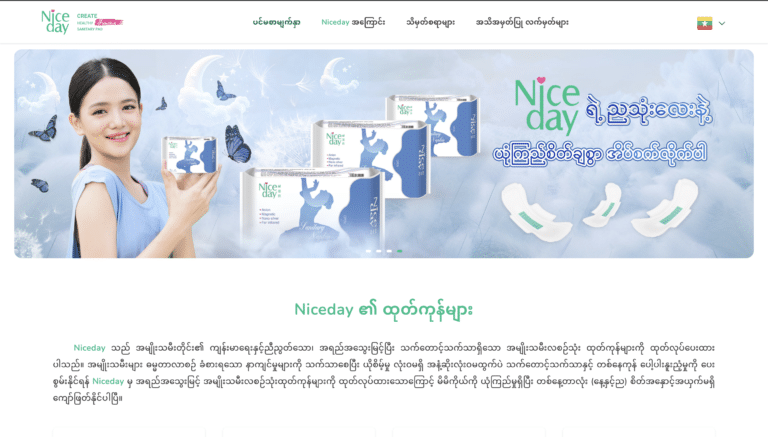
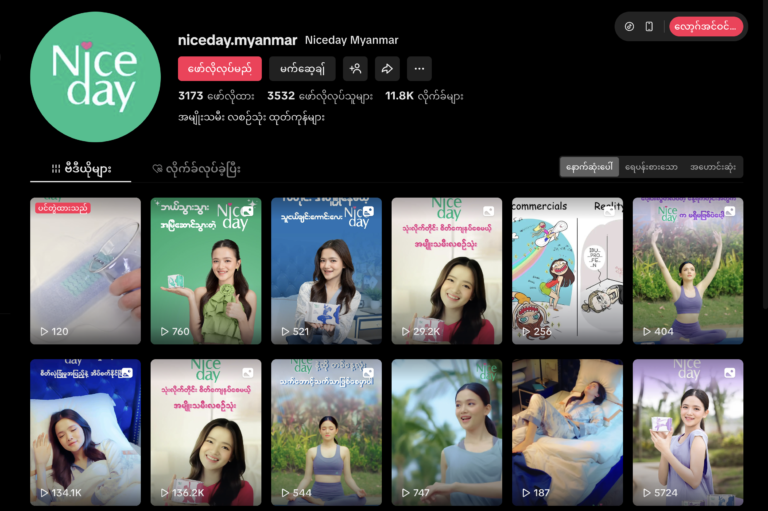
Social media branding: Content support across Facebook, TikTok, and YouTube — the primary social platforms in Myanmar — to build brand awareness and drive online-to-offline interest.
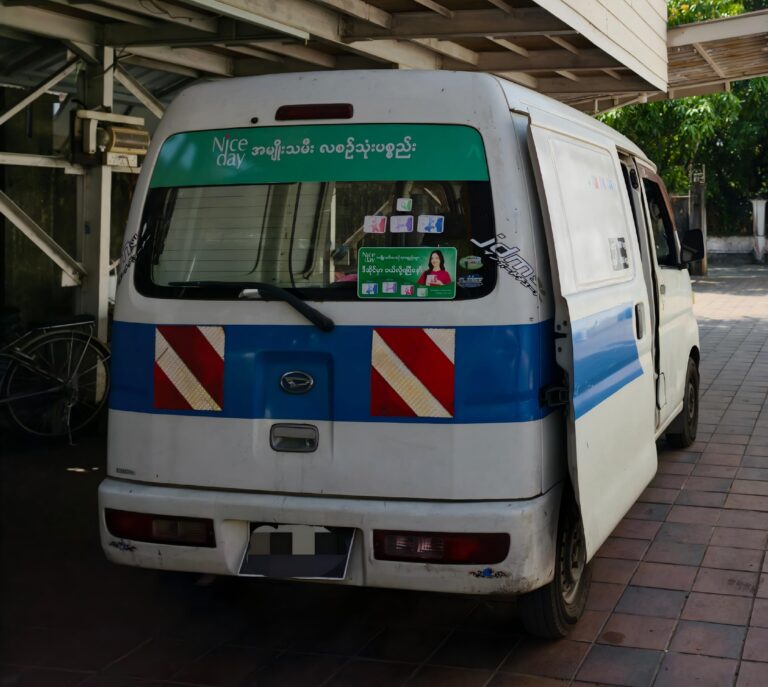
Outdoor advertising: Taxi branding and public-facing promotional placements to extend brand visibility beyond retail environments.
Channel layout planning: Support in structuring the product’s retail presence across multiple store locations and distribution points.
Results and Market Feedback
The coordinated launch activities produced measurable progress across several dimensions:
Retail presence established: Products were placed and maintained in multiple modern trade retail locations with branded shelf displays.
Consumer trial generated: Sampling and promoter activities created direct product experience among target consumers, with generally positive quality feedback.
Brand visibility expanded: The combination of in-store presence, social media content, and outdoor advertising created repeated consumer touchpoints across both online and offline channels.
Market intelligence collected: Direct consumer feedback during the launch period provided actionable insights for product line planning and positioning adjustments in subsequent phases.
The launch phase confirmed that the product was well-received by consumers who tried it, and that the distributor had a viable foundation for continued growth in the market.
Key Takeaways for Distributors
This case illustrates several principles that apply beyond Myanmar to any new market entry:
- Product quality is necessary but not sufficient. A good product still needs visibility, trial, and trust-building to succeed in a new market. Supply alone does not create demand.
- Retail visibility creates momentum. Shelf presence, branded displays, and promoter activity help a new brand get noticed faster and convert awareness into trial.
- Sampling reduces the trust barrier. In feminine hygiene, direct product experience is often more effective than price competition. Consumers who try the product are more likely to repurchase.
- A manufacturer that understands distribution adds real value. When a manufacturing partner can support not just production but also market presentation, channel planning, and promotional execution, the distributor’s path to growth becomes shorter and less risky.
Interested in Distributor Cooperation?
If you are an importer, wholesaler, or distributor exploring feminine hygiene products for your market, Niceday offers both product supply and practical market development support.