What this page is: A record of what European buyers asked about at our January 2025 trade show in Italy, and how those questions shape an OEM enquiry.
Who it is for: Private label brand owners, importers and distributors evaluating a feminine hygiene supplier for the European market.
Main takeaway: European buyers move to documentation and specification detail faster than buyers in most other regions. Preparing for that shortens the enquiry cycle.
In January 2025 the Niceday team exhibited at [EXHIBITION NAME] in Italy, showing product samples from our herbal and functional pad lines alongside our organic cotton and menstrual pants ranges. Most conversations at the stand were with private label buyers and importers rather than end consumers, and the questions followed a consistent pattern worth documenting.
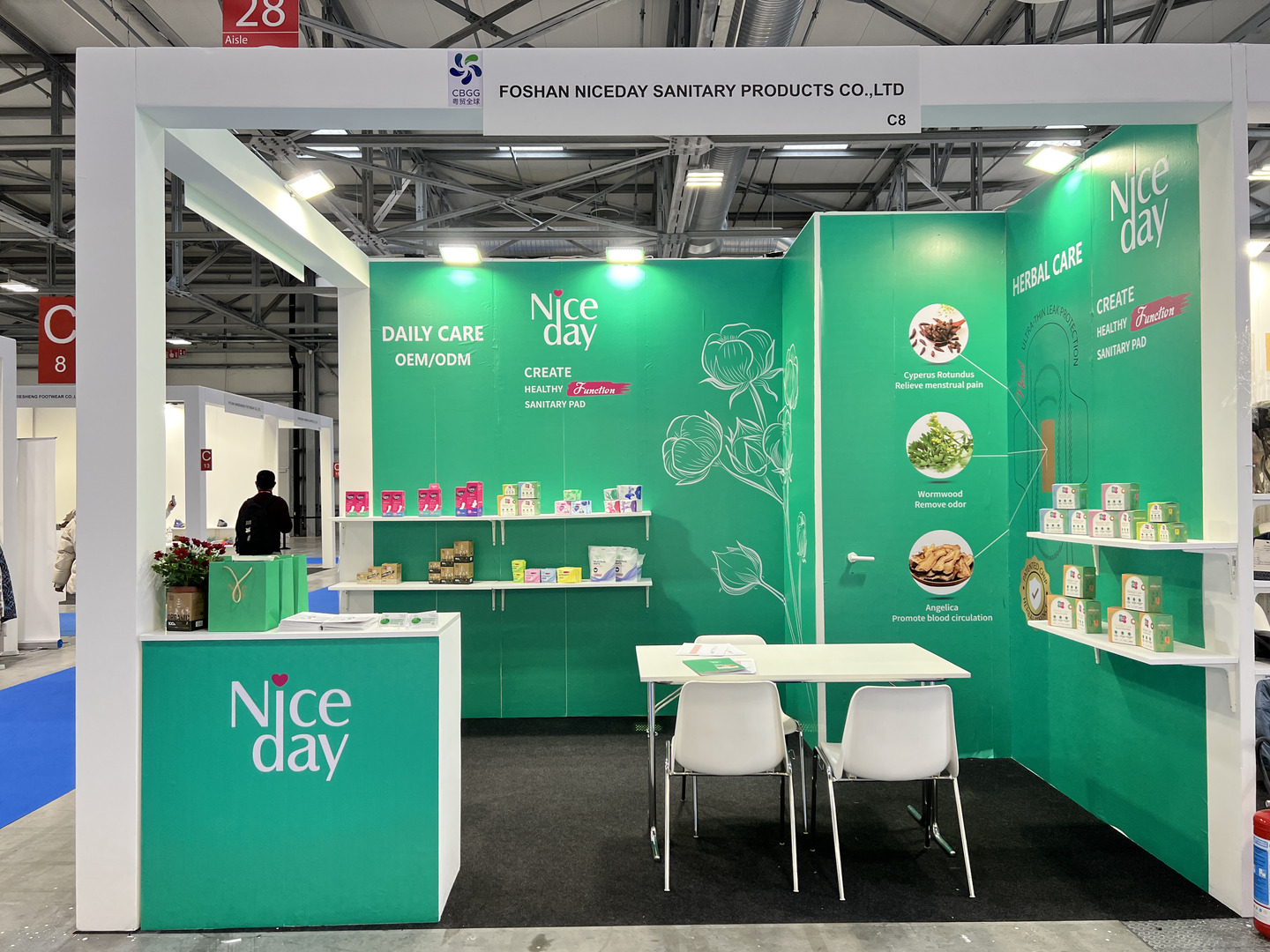
What buyers asked about first
The herbal pad line drew the most attention at the stand, but the questions were rarely about the concept itself. They were about what could legally be printed on a pack sold in the EU.
- Ingredient declaration. What exactly is in the herbal layer, and how is it listed on pack.
- Claim boundaries. Which wording is available for a herbal line, and which wording moves a product into medical device territory under EU MDR.
- Test documentation. Which reports exist, from which laboratory, and how recent they are.
- Material sourcing. Top sheet composition, absence of fluorescent brightening agents, and whether an unbleached or organic cotton variant is available.
- Packaging and labelling. Language requirements, environmental packaging marking, and artwork lead time.
This is a different starting point from buyers in many other regions, who often begin with price and MOQ. European buyers tend to confirm that a product can be sold compliantly before discussing commercial terms at all.
Feedback on the herbal pad samples
Buyers who evaluated the herbal samples commented on the surface feel and the breathability of the top sheet, and several noted that the line gives a recognisable shelf difference in a category where most private label products look similar.
One point came up more than once, and it is worth repeating here. Niceday positions the herbal line as a comfort-focused product concept with a botanical ingredient direction. We do not describe it as a treatment, and we advise brand partners not to either. In the EU, claims relating to pain, inflammation or circulation can bring a product under EU MDR 2017/745, which changes the entire compliance pathway. The commercial strength of a herbal line comes from a clear, consistent material story, not from a stronger claim. See the HerbalCool mint and aloe pad for how the line is specified.

One enquiry that progressed to a supply agreement
One Italian buyer who evaluated samples at the stand went on to confirm a supply arrangement with Niceday after the show. The sequence is typical of how European projects run, and useful to know if you are planning your own timeline:
- Sample evaluation at the show
- Follow-up sample set against a defined specification
- Review of certification and test documentation
- Packaging artwork and labelling confirmation for the target market
- Specification lock, then production
The documentation review step is where most European projects lose time. Requesting the certification pack early, in parallel with sampling rather than after it, is the single change that shortens the cycle most.
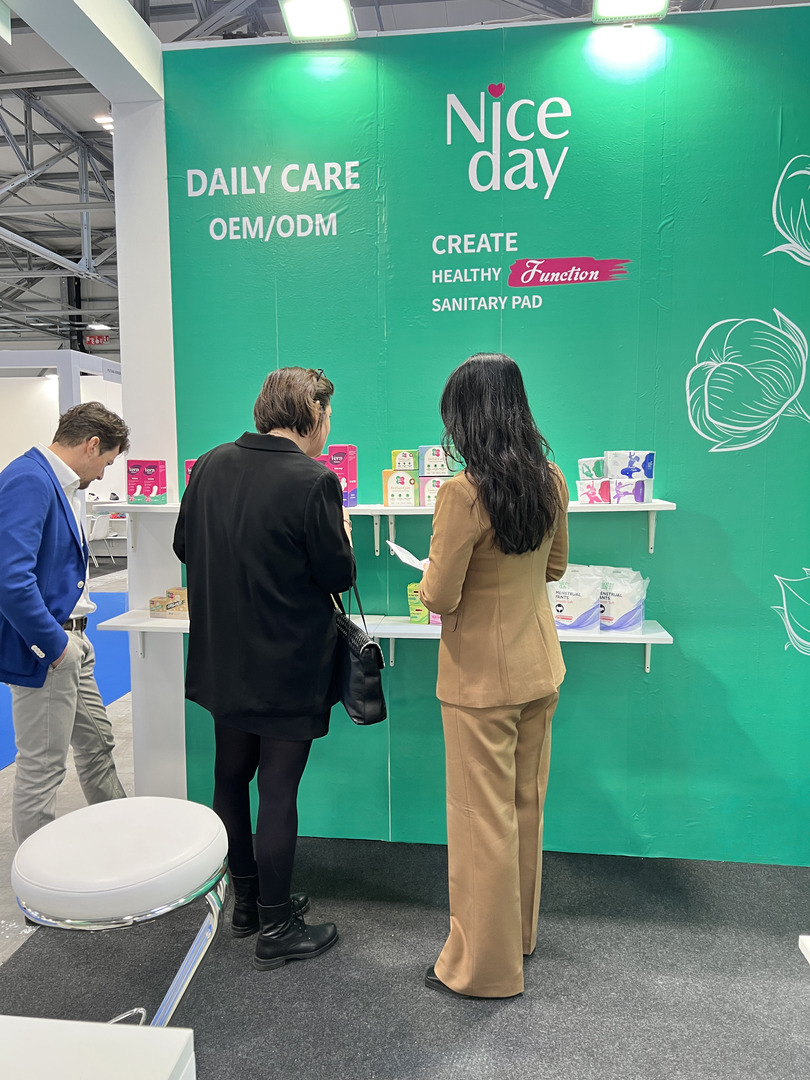
What Niceday brings to a European project
- 50,000 sqm facility in Foshan, China with 14 intelligent production lines
- Daily capacity of 9.8 million pieces; exports to 54+ countries
- ISO 9001, ISO 14001, CE, FDA registered, SGS tested; no fluorescent brightening agents
- MOQ 300,000 pieces per SKU; lead time 35–40 days after specification and artwork confirmation
- Product range covering sanitary pads, panty liners, menstrual pants, tampons and wet wipes
Documentation is listed on our certificates page. For project structure, see private label sanitary pads, custom packaging, and our sanitary pad manufacturing overview.
Frequently asked questions
What do European private label buyers usually ask a supplier first?
European buyers typically start with ingredient declaration, permitted claim wording, test documentation and material sourcing, before moving to price and MOQ. Confirming compliance ahead of commercial terms is the normal sequence in this market.
Can herbal sanitary pads be sold in the EU?
Herbal pads can be sold in the EU when positioned as comfort and product-concept products with accurate ingredient declaration. Claims relating to pain, inflammation or circulation can bring a product under EU MDR 2017/745, so the claim set should be confirmed with the importer before artwork is finalised.
How long does a European private label project take?
Production lead time is 35 to 40 days after specification and artwork are confirmed. The stages before that — sampling, documentation review and labelling confirmation — usually take longer, so requesting the certification pack in parallel with sampling shortens the overall timeline.
What certifications does Niceday hold?
Niceday manufactures under ISO 9001 and ISO 14001, with CE, FDA registration and SGS testing, and produces without fluorescent brightening agents. Certification does not cover every product in every market, so requirements should be confirmed per project and destination.
Sourcing feminine hygiene products for a European market?
Tell us your target market and product direction. We will send the specification options and the documentation pack together, so your compliance review can start immediately.
Request a Quote Private Label Sanitary Pads