Why Choosing the Right Sanitary Napkin Matters
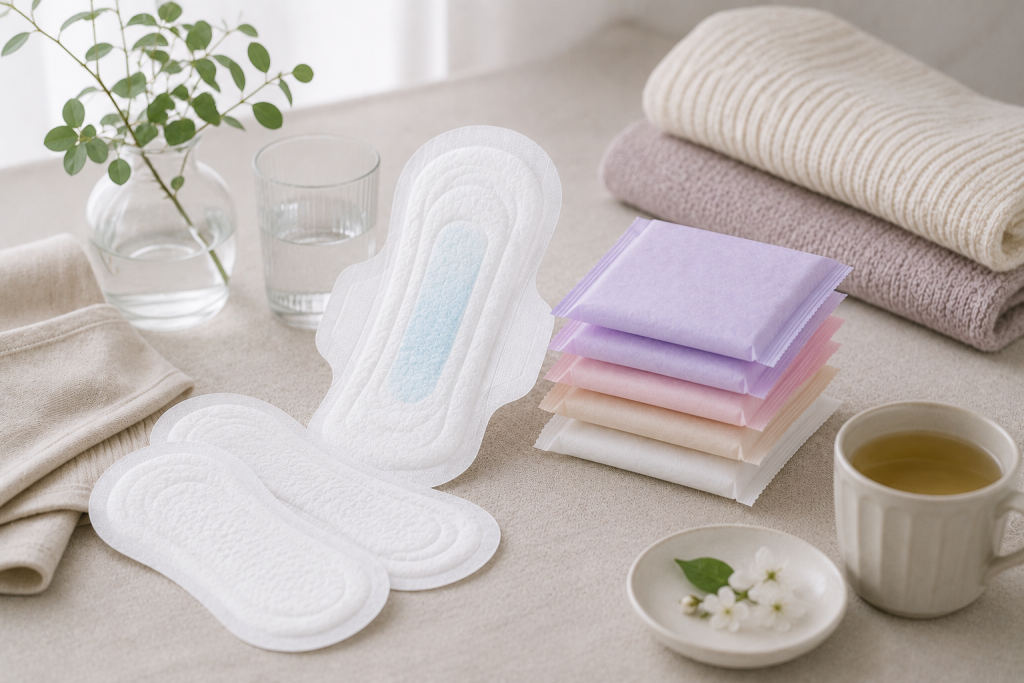
Sanitary napkins are essential feminine care products, but not every pad is suitable for every user or market. Consumers may choose based on comfort, dryness, absorbency, softness, breathability, size, skin sensitivity, price and brand trust.
For distributors, retailers and private label buyers, understanding how sanitary napkins are structured helps build a stronger product range. A good selection plan should match material, flow level, usage scenario and local market demand.
Main Types of Sanitary Napkin Topsheets
The topsheet is the layer that directly touches the skin. It strongly affects how the product feels during use, including softness, dryness, breathability and comfort. Different markets may prefer different topsheet types.
| Topsheet Type | Common Material | Main Feeling | Best-Fit Positioning |
|---|---|---|---|
| Dry mesh topsheet | Perforated film, often PE-based | Dry, quick-transfer surface feel | Dryness-focused and fast-absorption pads |
| Soft cotton topsheet | Nonwoven material, often PP-based | Soft, smooth and gentle touch | Daily comfort and mass-market sanitary pads |
| Pure cotton topsheet | Cotton nonwoven or cotton-based surface | Natural, soft and breathable feel | Premium, sensitive-skin or clean-material positioning |
| Organic cotton topsheet | Certified organic cotton surface where applicable | Premium soft skin-contact feel | Organic, premium and private label upgrade lines |
| Cooling or functional topsheet | Cooling, herbal or treated surface depending on design | Fresh-feel or functional comfort | Hot climates, herbal, cooling or differentiated SKUs |
How a Sanitary Napkin Is Structured
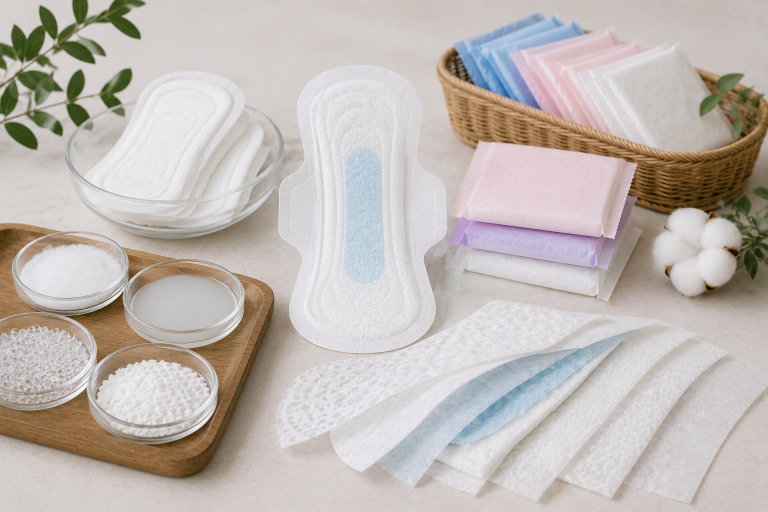
Most sanitary napkins include three main layers: the surface layer, the absorbent layer and the bottom layer. Each layer has a different job, and all three must work together to create comfort and protection.
| Pad Layer | What It Does | What Buyers Should Check |
|---|---|---|
| Surface layer | Touches the skin and transfers liquid into the pad | Softness, dryness, breathability, skin-contact material |
| Absorbent layer | Absorbs and locks menstrual fluid | SAP ratio, fluff pulp, airlaid paper, absorption speed, capacity, rewet value |
| Bottom layer | Prevents leakage and supports breathability | Breathable film, leakage control, comfort during long wear |
| Wings and side guards | Help keep the pad in place and reduce side leakage | Wing shape, adhesive stability, 3D guard option |
| Individual wrapper | Keeps each pad clean and portable | Wrapper material, print, opening feel, retail presentation |
1. Choose the Right Surface Layer
The surface layer affects the first feeling of the sanitary napkin. Dry mesh surfaces are often chosen when consumers want a drier surface feel. Soft cotton and pure cotton surfaces are often chosen when comfort and skin-contact softness are more important.
For private label brands, the topsheet should match the product promise. If the packaging says “soft comfort,” the topsheet should feel gentle. If the packaging says “dry protection,” the surface should support fast liquid transfer and low rewet.
2. Check the Absorbent Core
The absorbent core determines how quickly the pad absorbs fluid and how well it locks liquid inside. A strong absorbent core usually combines SAP, fluff pulp, airlaid paper or other core materials depending on the product design.
For B2B buyers, core design should match the target SKU. A regular daytime pad does not need the same absorbency as an overnight pad. Heavy-flow and night-use products need stronger capacity, faster absorption and better rewet control.
3. Look for a Breathable Backsheet
The bottom layer should prevent leakage while supporting comfort. Breathable films help reduce stuffiness during longer wear by allowing moisture vapor to pass through while keeping liquid inside the pad.
This is especially important in hot climates, long workdays, school use, travel and overnight products. For comfort-focused sanitary napkins, breathable backsheets can be an important packaging message.
4. Match Pad Size to Menstrual Flow
Sanitary napkin size should match menstrual flow and wearing time. Choosing only one length is rarely enough for a complete product range.
| Product Type | Typical Length | Flow Level | Typical Use |
|---|---|---|---|
| Panty liner | 155-180 mm | Light flow | Daily freshness, very light days, end-of-period use |
| Regular pad | About 245 mm | Normal flow | Everyday daytime protection |
| Long or maxi pad | 285-330 mm | Moderate to heavy flow | Longer daytime wear, commuting, school, work |
| Overnight pad | 330-420 mm | Heavy flow or night use | Extended wear, sleep, stronger back coverage |
For a deeper size breakdown, buyers can review Niceday’s disposable sanitary napkin product range and plan sizes according to market needs.
5. Choose Special Functions Carefully
Special functions can help a brand stand out, but they should match the real product structure and available documents. Popular directions include herbal chips, cooling pads, organic cotton surfaces, 3D side guards, antibacterial positioning and high-absorbency overnight pads.
| Function Direction | Consumer Benefit | B2B Claim Reminder |
|---|---|---|
| 3D side guards | Helps reduce side leakage during movement | Avoid absolute “100% leak-proof” claims unless supported by testing |
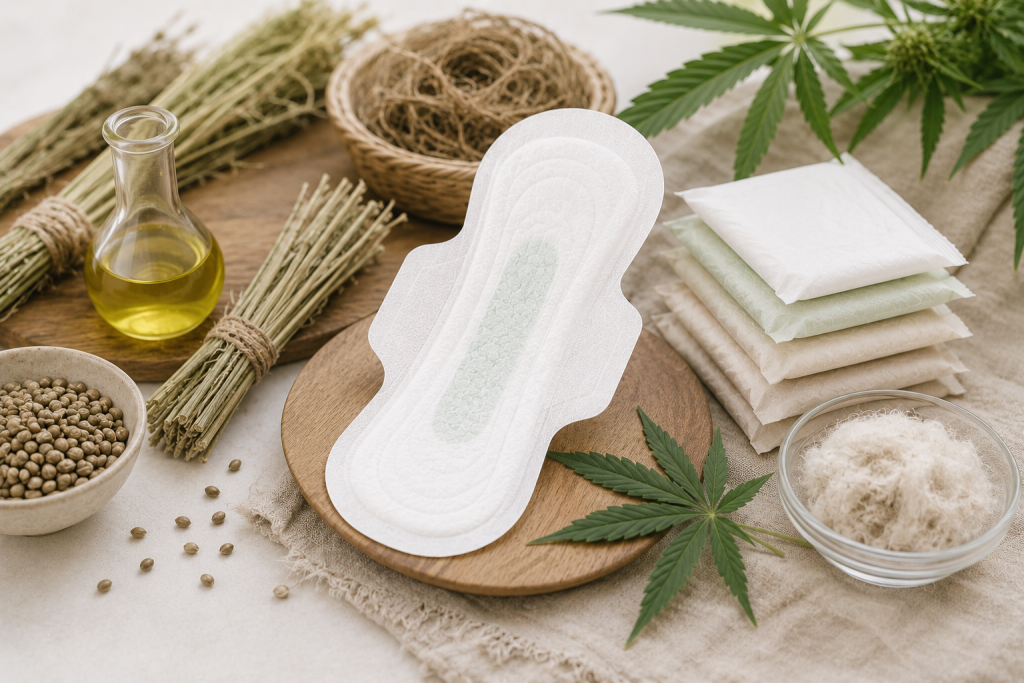
| Herbal chip | Fresh-feel and botanical comfort positioning | Avoid medical claims such as treating pain or infection |
| Cooling pad | Fresh and cooling comfort in hot climates | Check ingredient safety and sensitivity |
| Organic cotton topsheet | Premium skin-contact material story | Define whether organic cotton is used on the topsheet or full structure |
| High absorbency core | Better protection for heavy flow or night use | Support claims with absorption and rewet test data where possible |
Sanitary Napkin Selection Checklist for B2B Buyers
- Define the target market: mass retail, supermarket, pharmacy, online, wholesale or premium channel.
- Choose the topsheet: dry mesh, soft cotton, pure cotton, organic cotton or functional surface.
- Confirm pad sizes: liner, regular, long/maxi and overnight.
- Match absorbency to flow level and wearing time.
- Check SAP ratio, rewet value, leakage protection and breathability.
- Confirm packaging language, pack count, individual wrapper and carton format.
- Ask for test reports, material documents and factory quality certificates.
- Plan MOQ by SKU: each size, material, function or packaging version counts separately.
Niceday Sanitary Napkin Manufacturing Support
Niceday has been manufacturing feminine hygiene products since 2006, supporting global distributors, retailers, agents and private label brands with sanitary napkin OEM/ODM solutions.
Niceday supports dry mesh, soft cotton, pure cotton, organic cotton, 3D guard, herbal, cooling, high-absorbency and overnight sanitary napkin concepts. Buyers can customize pad length, topsheet, absorbent core, SAP ratio, wings, backsheet, individual wrapper and packaging design.
Niceday manufactures feminine hygiene products on 14 intelligent production lines at a 50,000 m2 facility, with about 9.8 million pieces of daily capacity. Products are free of fluorescent brightening agents and can be supported with ISO 9001, FDA, CE, Intertek, SGS eco and GOTS-related documentation depending on project and market requirements.
For private label projects, the typical MOQ is 300,000 pieces per SKU, with a 35-40 day lead time after order confirmation. Buyers can discuss specifications through our OEM/ODM service and develop localized custom packaging.
Frequently Asked Questions
How do I choose the best sanitary napkin?
Choose sanitary napkins based on flow level, pad length, topsheet material, absorbent core, breathable backsheet and comfort needs. For heavy flow or night use, longer pads with stronger absorbency are usually more suitable.
What is the difference between dry mesh and soft cotton sanitary pads?
Dry mesh pads usually use a perforated film surface that gives a drier feel. Soft cotton pads use a soft nonwoven surface that feels gentler against the skin. The better choice depends on the user’s comfort preference and market positioning.
Are pure cotton sanitary napkins better?
Pure cotton or organic cotton topsheets can be suitable for premium and sensitive-skin positioning because they offer a soft skin-contact feel. However, the full pad structure, absorbent core and leakage protection are also important.
What sanitary napkin sizes should a brand launch first?
A practical launch range usually includes regular pads, long or maxi pads and overnight pads. Panty liners can be added for daily freshness and light-flow use.
Can Niceday customize sanitary napkins for private label brands?
Yes. Niceday supports OEM/ODM customization, including topsheet material, pad length, SAP ratio, absorbent core, 3D guards, herbal chips, cooling options, packaging design and market-specific documentation.
What is the MOQ for private label sanitary napkins?
For Niceday private label projects, the typical MOQ is 300,000 pieces per SKU. Each size, material, absorbency level, function or packaging version counts as a separate SKU, with a typical lead time of 35-40 days after order confirmation.
Choose the Right Sanitary Napkin Structure
Discuss dry mesh, soft cotton, pure cotton, organic cotton, 3D guard, herbal, cooling, overnight and private label sanitary napkin options with Niceday.
Explore OEM/ODM Service Chat on WhatsApp Email Niceday