
Becoming a Niceday distributor means more than selling products. It means building a sustainable feminine care business with long-term potential in your local market.
Today, the global feminine hygiene category keeps growing steadily. Consumer expectations are also changing. Buyers want better quality, more comfort, and stronger trust in the brands they choose. For feminine hygiene products distributors, this creates a real opportunity.
Success does not come from inventory alone. It comes from the right product mix, local market education, and a clear brand strategy. With the right plan, distributors can turn Niceday into a strong local brand instead of simply another item on the shelf.
If you are exploring a long-term partnership, you can first learn more about how to become a distributor.
1. Understand the Niceday brand before entering the market
Before launching sales, wholesale sanitary pad distributors need to understand what Niceday stands for. Niceday focuses on safe, healthy, and functional feminine care solutions. The brand combines product innovation with state-of-the-art manufacturing capability.
That gives distributors a stronger story to tell in local markets. Instead of promoting only price, you can present Niceday as a brand built on product quality, comfort, and category understanding. This is critical because modern consumers want more than basic protection. They also care about materials, design, comfort, and daily experience.
For a quick brand introduction, you can visit our company overview.
2. Start with the right product mix
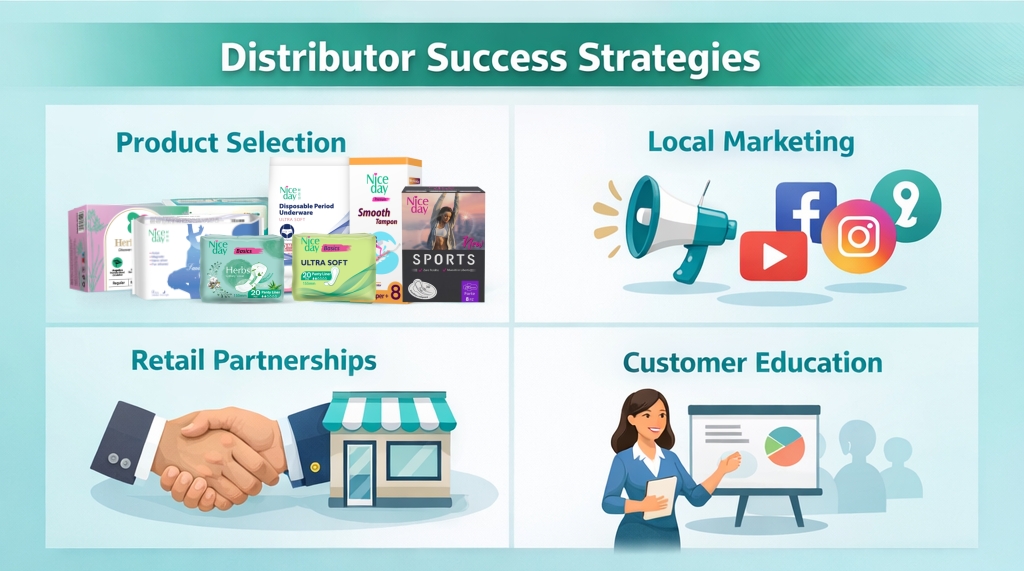
Many distributors make one common mistake: they launch too many SKUs at the beginning. A better approach is to start with a focused product mix.
Choose products based on your market’s price level, sales channels, customer habits, and demand structure. Some markets respond better to practical daily protection. Others prefer premium features, herbal concepts, or organic materials.
- Pharmacy Channels: Functional communication often works well.
- Modern Retail: Packaging and brand positioning may matter more.
- Social Media: Unique product concepts can attract stronger interest.
That is why product selection should never be random; it should match the market. If you want to explore the product category in more detail, see our disposable sanitary napkin solutions.
3. Educate the market, not just the buyer
Feminine care is a trust-based category. Consumers do not choose only by price. They also care deeply about safety, comfort, absorbency, breathability, and skin feel.
For that reason, distributors should not focus only on selling. Market education is just as important. You can create simple and useful content around topics such as:
- How to choose the right pad size
- The difference between day and night protection
- How herbal concepts fit different users
- What women should look for in sports or travel use
- And why breathable materials matter
Educational content helps consumers understand the product. It also helps retailers understand why the brand deserves premium shelf space. In many markets, the brand that explains better earns trust faster.
4. Use content to build brand recognition
Promotions can bring first-time orders, but high-quality content helps build long-term brand value. Distributors often have products ready for sale, but they do not always have enough content to support local promotion.
That is where brand materials become important. Good visuals, product explanations, short videos, and simple comparisons can all make the brand easier to understand. A clear content strategy can support:
- Social media posting
- Retailer presentations
- Local advertising
- E-commerce product pages
- Exhibition materials
Over time, repeated content creates brand memory. That memory helps consumers recognize the brand more quickly and makes local channel partners more confident in cooperation.
5. Build the brand step by step in local channels
Strong brands are rarely built all at once. They grow through consistent local execution.
- Start with visibility: Make the brand visible in the channels that matter most. That may include local distributors’ social media pages, retail displays, pharmacy networks, or e-commerce platforms.
- Focus on trust: Once people start noticing the brand, you need product education, reviews, trial feedback, and clear in-store communication.
- Aim for repeat sales: At this stage, consistency becomes critical. Product quality, delivery stability, and clear communication all affect whether customers buy again.
Brand building is not a one-time campaign. It is a repeatable market process.
6. Why local branding matters for distributors
In many markets, distribution is becoming more competitive. More products are available, and consumers have more choices than before.
That is exactly why local branding matters. A distributor with a clear market identity has a better chance to stand out. A distributor with only products and no brand story is easier to replace.
When you build the Niceday brand locally, you are creating more than short-term sales. You are building recognition, trust, and repeat demand. That gives your business stronger long-term value.
The most successful distributors usually do three things well:
- they stay consistent in the market
- They choose the right products
- They explain the products clearly
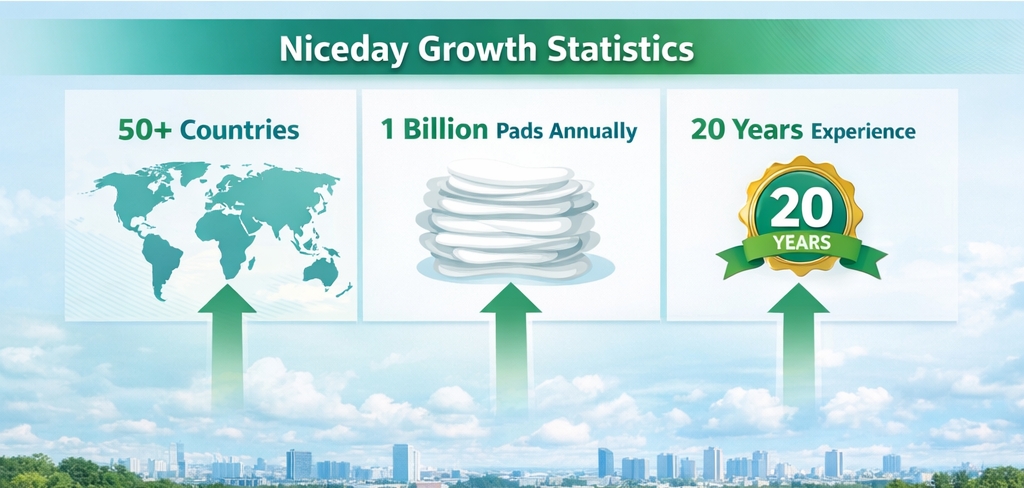
7. Think beyond supply
A good distributor partnership needs more than product supply. It also needs stable support behind the business. When evaluating a feminine care partner, distributors should look at several practical areas:
- Production stability
- Product consistency
- Response speed
- Marketing support
- Long-term cooperation potential
These factors influence daily operations more than many buyers expect. Fast communication can solve market issues earlier. Stable supply can protect retail relationships. Strong service support can help local partners move faster.
If you want to discuss your market plan directly with our team, please contact us.
8. A practical action plan for new distributors
Select your first core products: Start with a focused range. Avoid launching too many SKUs too early.
Define your priority channels: Choose where you want to win first. This could be retail, pharmacy, e-commerce, wholesale, or maternity channels.
Prepare local content: Use local language materials to explain product value clearly and simply.
Test, collect feedback, and improve: Launch, observe, and adjust. Let real market response guide your next move.
Build consistently: Do not wait for promotions to start branding. Consistent visibility creates stronger long-term growth.
Start with a focused range. Avoid launching too many SKUs too early.
Conclusion
Building the Niceday brand as a distributor is a practical long-term opportunity. The market is growing, consumer expectations are rising, and competition is also becoming stronger.
Distributors who move early and build local trust will be in a better position to grow. The key is simple: Choose the right products. Educate the market. Stay visible. Build trust over time.
With the right strategy, Niceday can become more than a product line in your market. It can become a brand with lasting value.
FAQ
What should a distributor do first after getting Niceday agency rights?
Start by selecting the right core products for your market, defining your target channels, and preparing localized educational content.
Is Niceday only suitable for one type of market?
No. Niceday offers functional, herbal, organic, and daily-use feminine care products. That allows distributors to serve multiple market segments
Why is content important for sanitary pad distributors?
Because feminine care is a trust-based category. Educational and lifestyle content helps consumers understand product value and helps retailers believe in the brand.