Why Herbal Sanitary Pads Are Gaining Global Attention
As consumers become more selective about feminine hygiene products, brands are looking for sanitary pads that offer more than basic absorption. Herbal sanitary pads answer this demand by combining everyday protection with botanical-inspired comfort and freshness positioning.
For distributors, retailers, and private label buyers, herbal sanitary pads can create a clear product difference on shelf. They are especially useful for brands that want to build a natural-care, wellness-inspired, or premium feminine hygiene line without relying only on price competition.
What Are Herbal Sanitary Pads?
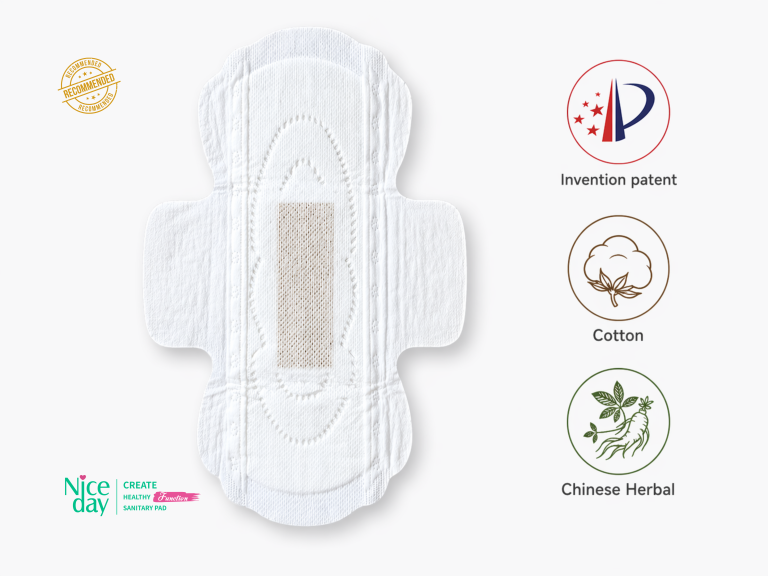
Herbal sanitary pads are sanitary pads that include a botanical chip, herbal essence layer, or plant-inspired functional insert within the product structure. The main product still needs to perform as a sanitary pad: absorb quickly, reduce rewet, fit securely, and provide reliable leakage protection.
The herbal element adds product storytelling and sensory value. In B2B development, buyers should define the herbal ingredient direction, chip placement, scent level, material safety, test documents, and packaging wording before confirming production.
Common Herbal Ingredient Directions
| Herbal Direction | Traditional Positioning | Recommended Packaging Language | Claim Caution |
|---|---|---|---|
| Wormwood | Often associated with freshness and traditional herbal care | Herbal freshness, clean-feel comfort, botanical care | Avoid disease-treatment or infection-prevention claims |
| Angelica | Often used in traditional wellness storytelling | Traditional herbal comfort, premium botanical concept | Avoid claims such as promoting blood circulation unless legally supported |
| Cyperus rotundus | Often associated with soothing-style traditional care positioning | Soothing comfort concept, herbal care inspiration | Avoid claims such as relieving period cramps unless approved and substantiated |
| Mint or cooling botanical | Fresh-feel and cooling comfort positioning | Cooling comfort, fresh feeling, breathable freshness | Check sensitivity, dosage, and local claim rules |
Herbal Chip Technology: What B2B Buyers Should Check
Herbal chip technology is not only about adding a plant ingredient. Buyers should confirm how the chip is placed, how it interacts with the pad structure, whether it affects absorbency, and whether the final product remains comfortable for skin-contact use.
| Technical Area | What to Confirm | Why It Matters |
|---|---|---|
| Chip placement | Position of herbal chip or essence layer within the pad | Helps balance sensory effect, comfort, and absorbency |
| Ingredient source | Herbal material specification and supplier documents | Supports traceability and packaging review |
| Scent level | Light, medium, fragrance-free base, or market-specific adjustment | Different markets have different tolerance for scent |
| Absorbent core | SAP ratio, core thickness, absorption speed, rewet performance | Ensures the herbal story does not weaken pad performance |
| Safety testing | Microbiology, formaldehyde, fluorescent substances, heavy metals, pH where applicable | Supports buyer confidence and retailer review |
Why Herbal Sanitary Pads Work for Private Label Brands
Herbal sanitary pads give brands a stronger story than standard pads. They can support natural-care positioning, premium packaging, pharmacy-channel differentiation, and online product storytelling.
- Clear shelf differentiation: herbal chip or botanical care positioning makes the product easier to explain.
- Premium value perception: consumers can understand why the product is different from a basic sanitary pad.
- Flexible market adaptation: herbal direction, scent level, packaging color, and claim wording can be localized.
- Useful product ladder: herbal pads can sit above standard pads and alongside organic cotton or cooling pads.
- Better content potential: herbal ingredients create stronger product pages, social content, and distributor stories.
Recommended Herbal Sanitary Pad SKU Structure
A private label herbal sanitary pad range should usually start with 2-3 practical SKUs. Too many variants at launch can increase inventory pressure, while too few products may not cover enough usage scenarios.
| SKU Type | Suggested Length | Best Use Case | B2B Role |
|---|---|---|---|
| Herbal Daily Pad | 245-290 mm | Normal daytime flow, work, school, daily use | Core herbal volume SKU |
| Herbal Long Pad | 290-330 mm | Moderate flow, commuting, longer wear | Protection upgrade SKU |
| Herbal Overnight Pad | 330-420 mm | Night use, heavy flow, extended protection | High-trust SKU |
| Herbal Panty Liner | 155-180 mm | Daily freshness, light flow, end-of-period use | Repeat-purchase add-on SKU |
Herbal products can also be combined with standard disposable sanitary napkins, organic cotton pads, cooling pads, and 3D guard pads to create a complete good-better-best product range.
Packaging Claims: Safer Wording for Global Markets
Packaging is where herbal sanitary pad projects most often face risk. Strong medical-style claims may look attractive in marketing, but they can create regulatory problems if not properly supported. A safer approach is to use clear, sensory, and comfort-based wording.
| Avoid This Wording | Use Safer Wording Instead | Reason |
|---|---|---|
| Relieves period cramps | Soothing comfort concept | Cramp relief may be treated as a medical claim |
| Promotes blood circulation | Traditional herbal care inspiration | Body-function claims may trigger regulatory review |
| Therapeutic sanitary pad | Herbal comfort sanitary pad | Therapeutic implies treatment or medical effect |
| Prevents infection | Clean-feel daily freshness | Infection prevention is a high-risk medical claim |
| 100% cures odor | Fresh-feel herbal care | Absolute performance claims need strong substantiation |
Niceday supports custom packaging for herbal sanitary pads, including localized language, ingredient storytelling, pack count, claim review, individual wrappers, and retail-ready design direction.
Niceday Herbal Sanitary Pad OEM/ODM Support
Niceday supports herbal sanitary pad development for distributors, retailers, agents, and private label brands. Our OEM/ODM support covers herbal chip concept planning, material selection, pad size development, SAP ratio adjustment, sample preparation, packaging customization, quality documentation, and export-ready production.
Niceday manufactures feminine hygiene products on 14 intelligent production lines at a 50,000 m2 facility, with about 9.8 million pieces of daily capacity. Products are free of fluorescent brightening agents and can be supported with ISO 9001, FDA, CE, Intertek, SGS eco, and GOTS-related documentation depending on project and market requirements.
For private label projects, the typical MOQ is 300,000 pieces per SKU, with a 35-40 day lead time after order confirmation. Buyers can discuss specifications through our OEM/ODM service.
Who Should Consider Herbal Sanitary Pads?
Herbal sanitary pads are suitable for buyers who want to build a differentiated feminine hygiene line with a natural-care or comfort-focused story. They are especially useful for:
- Distributors entering natural or wellness-inspired feminine care categories
- Private label brands upgrading from basic sanitary pads
- Retailers looking for premium shelf differentiation
- Pharmacy and beauty retail channels that need stronger product storytelling
- Online brands that need ingredient-led content for product pages and social campaigns
Frequently Asked Questions
What are herbal sanitary pads?
Herbal sanitary pads are sanitary pads that include a botanical chip, herbal essence layer, or plant-inspired insert. They are usually positioned around freshness, comfort, botanical care, and product differentiation rather than medical treatment.
Can herbal sanitary pads claim to relieve cramps?
Buyers should be careful with cramp relief claims. In many markets, claims related to pain relief, treatment, blood circulation, or body function may require stronger evidence or regulatory approval. Safer packaging usually focuses on comfort and freshness.
What herbal ingredients can be used in sanitary pads?
Common herbal directions include wormwood, angelica, Cyperus rotundus, mint, or other botanical comfort concepts. The final ingredient choice should follow target-market requirements, material safety review, and packaging claim approval.
What sizes should a herbal sanitary pad range include?
A practical launch range can include 245-290 mm daily pads, 290-330 mm long pads, and 330-420 mm overnight pads. Panty liners can be added for daily freshness and repeat-purchase potential.
What documents should buyers request for herbal sanitary pads?
Buyers should request material specifications, herbal ingredient documents, SGS or Intertek test reports where applicable, microbiology and chemical safety checks, factory quality certificates, and packaging claim review before printing.
What is the MOQ for private label herbal sanitary pads?
For Niceday private label projects, the typical MOQ is 300,000 pieces per SKU. Each size, absorbency level, herbal direction, or packaging version counts as a separate SKU, with a typical lead time of 35-40 days after order confirmation.
Develop Your Herbal Sanitary Pad Line
Discuss herbal chip concepts, ingredient direction, pad sizes, SAP ratio, packaging claims, MOQ, and OEM/ODM production planning with Niceday.
Explore OEM/ODM Service Chat on WhatsApp Email NicedayReference notes: Health-related claims should be substantiated and reviewed for each target market. For U.S. context, see FDA guidance on cosmetic vs drug claims, FDA information on menstrual product performance and labeling, and FTC guidance on health claims substantiation.