
Niceday India Market Inspection: Delhi and Mumbai
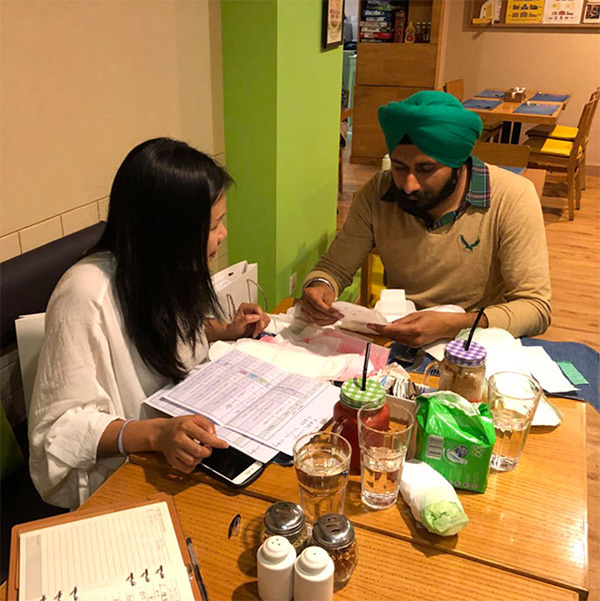
From April 4 to 11, 2018, Niceday General Manager Yana and her team visited India for a sanitary napkin market inspection. The team focused mainly on two key cities: Delhi and Mumbai.
The purpose of the visit was to understand local retail channels, distributor expectations, product selection habits, and opportunities for sanitary napkin brands entering the Indian market. Although this was a field inspection rather than a full statistical market report, it provided practical insight into how Indian buyers evaluate feminine hygiene products.
Why the India Sanitary Napkin Market Matters
India remains one of the most important feminine hygiene markets for global manufacturers and private label brands. Demand is supported by rising menstrual hygiene awareness, wider retail access, government hygiene initiatives, and a growing shift from traditional methods toward hygienic period products.
According to NFHS-5 related public data, the percentage of young women aged 15-24 using hygienic methods of menstrual protection increased from 57.6% in NFHS-4 to 77.3% in NFHS-5, while sanitary napkin usage increased from 42% to 64%. This shows that India is not only a large market, but also a market still moving through category education and product upgrading.
Main Retail Channels Observed in India
During the market inspection, Niceday observed that sanitary napkin sales in India were mainly concentrated in supermarkets, small chain stores, and local small supermarkets. These channels remain important because they combine daily necessity purchasing with local consumer trust.
| Channel Type | Market Role | Recommended Product Direction | B2B Opportunity |
|---|---|---|---|
| Supermarkets | Higher product visibility and brand comparison | Regular pads, overnight pads, premium comfort pads | Good for branded or private label launches |
| Small chain stores | Fast-moving local retail channel | Affordable regular pads, value packs, popular sizes | Strong for distributor turnover |
| Local small supermarkets | Community-based daily purchase point | Simple SKU range with clear packaging | Useful for market entry and repeat purchase |
| Pharmacies | Trust-focused feminine care channel | Skin-friendly, herbal, antibacterial or sensitive-care positioning | Suitable for functional and premium SKUs |
| Online retail | Growing channel for comparison and trial packs | Bundles, premium packs, trial kits, clear benefit storytelling | Useful for new brands and niche positioning |
What Indian Buyers Need from Sanitary Napkin Suppliers
Many emerging buyers are interested in entering the sanitary napkin industry, but they may not yet have deep product knowledge. This creates a strong need for suppliers who can provide product education, SKU planning, packaging guidance, and realistic MOQ support.
For new distributors, the challenge is not only buying sanitary pads. It is choosing the right product structure for their first launch, controlling inventory risk, and building a product range that can be explained easily to retailers and consumers.
Recommended Product Selection for the Indian Market
| Product Type | Typical Use | Why It Fits India | Launch Role |
|---|---|---|---|
| Regular sanitary pads | Normal daytime flow | Core daily-use product with wide consumer demand | Main volume SKU |
| Maxi or long pads | Moderate to heavy flow, longer wear | Useful for work, school, commuting and busy routines | Protection upgrade SKU |
| Overnight pads | Night use and heavy flow | Helps solve leakage concern and build consumer trust | High-trust SKU |
| Breathable comfort pads | Hot climate and long daytime wear | Supports comfort in warm and humid conditions | Differentiation SKU |
| Herbal or functional pads | Fresh-feel or botanical comfort positioning | Useful for channels that need stronger product storytelling | Premium or pharmacy-channel SKU |
Buyers can review Niceday’s broader disposable sanitary napkin product structures when planning a market-entry range.
How to Reduce Inventory Risk for New Indian Buyers
For buyers entering the sanitary napkin category for the first time, small and focused assortment planning is usually safer than launching too many variants. The first goal should be to validate channel response and repeat purchase.
- Start with 2-3 core sizes: regular, long/maxi, and overnight.
- Use clear packaging: flow level, length, absorbency and usage scenario should be easy to understand.
- Choose practical pack counts: adapt pack size to supermarket, local retail or wholesale needs.
- Add one differentiated SKU: breathable, herbal, organic cotton or 3D guard pads can support premium positioning.
- Plan MOQ by SKU: each size, material, absorbency or packaging version should be treated as a separate SKU.
Private Label and OEM Opportunities in India
India offers strong opportunities for distributors, local brands, supermarket private labels, pharmacy chains, and online sellers. The most successful private label projects usually combine the right product structure with localized packaging and reliable supply.
| Buyer Type | Best Starting Point | OEM Support Needed |
|---|---|---|
| New distributor | Regular + long + overnight pads | SKU selection, MOQ planning, packaging guidance |
| Supermarket private label | Core pads plus premium comfort line | Retail-ready packaging, barcode, carton planning |
| Pharmacy buyer | Sensitive-care, herbal or functional pads | Claim review, test reports, material documents |
| Online brand | Bundle packs and differentiated product stories | Custom packaging, product content, sample support |
| Wholesale buyer | Value packs and fast-moving SKUs | Stable supply, competitive cost, simple SKU structure |
How Niceday Supports Indian Market Buyers
After the India market inspection, many Indian customers contacted Niceday to discuss sanitary napkin sourcing and market entry. Niceday supports these buyers by recommending products that match their channels, price positioning and local consumer needs.
Niceday offers OEM/ODM support for sanitary napkin buyers, including product selection, size planning, SAP ratio adjustment, material options, private label packaging, sample development, and export-ready production. Buyers can also develop localized custom packaging for Indian retail channels.
Niceday manufactures feminine hygiene products on 14 intelligent production lines at a 50,000 m2 facility, with about 9.8 million pieces of daily capacity. Products are free of fluorescent brightening agents and can be supported with ISO 9001, FDA, CE, Intertek, SGS eco, and GOTS-related documentation depending on project and market requirements.
For private label projects, the typical MOQ is 300,000 pieces per SKU, with a 35-40 day lead time after order confirmation. More details are available through Niceday’s OEM/ODM service.
Frequently Asked Questions
What are the main sanitary napkin sales channels in India?
Common channels include supermarkets, small chain stores, local small supermarkets, pharmacies and online retail. The right product mix depends on channel type, price point, pack count and local consumer habits.
What sanitary pads should new Indian distributors start with?
A practical starting range usually includes regular pads for daily use, long or maxi pads for heavier daytime flow, and overnight pads for night protection. One differentiated SKU, such as breathable or herbal pads, can be added after channel testing.
Is India suitable for private label sanitary napkins?
Yes. India has strong potential for private label sanitary napkins, especially for distributors, supermarket chains, pharmacy channels and online brands. The key is localized packaging, realistic pricing and a focused launch range.
How can buyers reduce sanitary napkin inventory risk in India?
Buyers can reduce risk by starting with fewer SKUs, choosing proven sizes, using clear packaging, testing locally, and planning MOQ carefully. Each size, absorbency level or packaging version should be treated as a separate SKU.
Can Niceday customize packaging for the Indian market?
Yes. Niceday supports private label packaging customization, including localized language, pack count, product claims, individual wrappers, retail cartons and channel-specific design direction.
What is the MOQ for private label sanitary napkins?
For Niceday private label projects, the typical MOQ is 300,000 pieces per SKU. Each size, material, absorbency level or packaging version counts as a separate SKU, with a typical lead time of 35-40 days after order confirmation.
Source Sanitary Napkins for the Indian Market
Discuss product selection, regular pads, overnight pads, breathable comfort pads, herbal options, packaging customization, MOQ and OEM/ODM production planning with Niceday.
Explore OEM/ODM Service Chat on WhatsApp Email NicedayReference notes: India menstrual hygiene data and public programme context were checked against Government of India PIB information on the Menstrual Hygiene Scheme, UNFPA’s NFHS-5 menstrual hygiene insights, and DHS/NFHS-related summaries. Sources: PIB India, UNFPA India NFHS-5 insights, DHS Program.