What Is a Golden Sample and BOM Lock in OEM Manufacturing?
The two mechanisms that stop a factory from quietly changing your product's materials — explained for brand owners and buyers evaluating a manufacturer.
- Full OEM/ODM support
- 54+ countries
- 24-hour reply
A Golden Sample is a signed-off physical reference of the exact product you approved — the benchmark every production run is measured against. A BOM lock fixes the bill of materials (every nonwoven, adhesive, absorbent core, and embossing) to that approved version, so a factory can't substitute a cheaper input without your sign-off. Together they stop the single most damaging thing that can happen to a private-label product: a change you didn't authorize and didn't find out about until customers complained.
Golden Sample: the reference everything is checked against
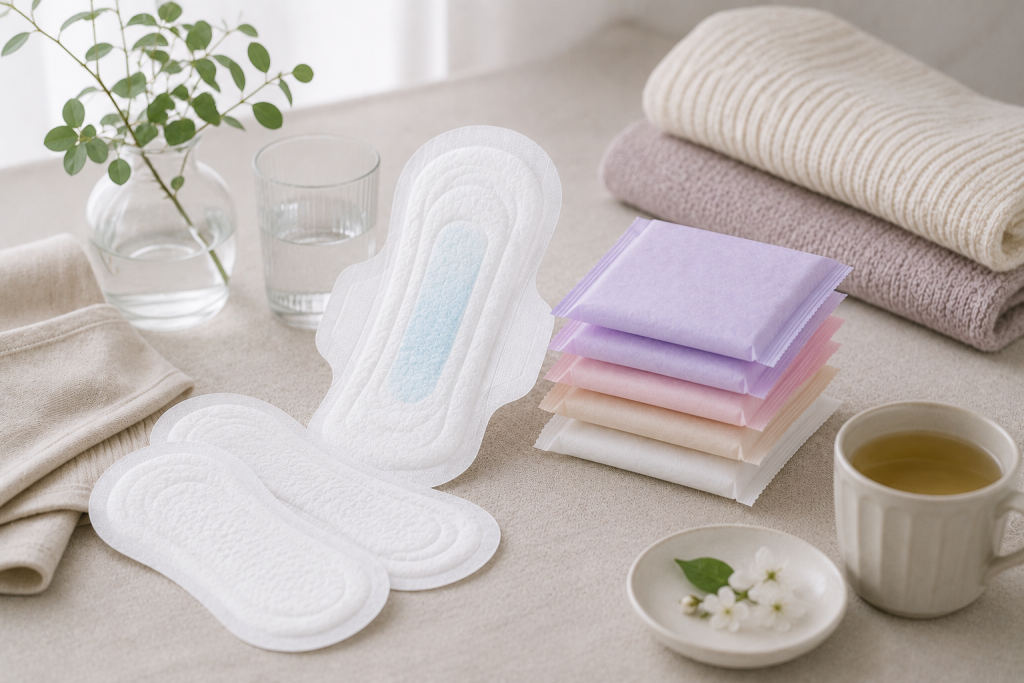
Once you approve a product, one unit (or a small set) is designated the Golden Sample. It is documented, signed by both sides, and retained. From then on it answers one question at every stage: does what we're shipping still match what you approved? The Golden Sample captures what spec sheets miss — the feel of the top sheet, the softness, the thickness, the way the wings fold, the adhesive strength on removal. These are the exact attributes an end user notices first, and the exact attributes a spec sheet full of numbers can fail to protect.
BOM lock: fixing what the product is made of
The bill of materials is the full recipe: top sheet nonwoven, acquisition/distribution layer, absorbent core and SAP, back film, adhesive, release paper, embossing pattern. A BOM lock means each is fixed to the approved grade and supplier. Most "the product changed" complaints don't come from a redesign — they come from a silent input substitution made to protect the factory's margin. A locked BOM removes that possibility by default.
Material Change Notification: the exception, handled properly
Who needs this — and who can skip it
You need Golden Sample + BOM lock if
- your product has repeat buyers whose trust depends on consistency
- you're paying for a specific feel or material and need it protected run to run
- you've been burned before by a batch that "felt different"
You can treat it lightly if
- you're running a single promotional batch with no repeat-purchase expectation
- you don't mind input substitution as long as it passes basic function
Most feminine-care brands fall firmly in the first group, because consistency is the product.
How this differs from a normal spec sheet
A spec sheet lists target values — grammage, absorption, dimensions. Necessary, but not sufficient: two pads can hit the same numbers and feel completely different against skin. The Golden Sample protects the felt experience; the BOM lock protects the inputs that create it; the MCN protects you from silent change. A spec sheet alone protects none of those.
Frequently asked questions
What is the difference between a Golden Sample and a control sample?
A Golden Sample is the master reference approved at the start and retained for the life of the product. Control samples are pulled during production and compared against the Golden Sample to confirm the run still matches.
How do I stop a manufacturer from changing materials to cut cost?
Lock the BOM to approved grades and suppliers, retain a signed Golden Sample, and require a Material Change Notification with samples before any substitution reaches the line. Ask a prospective manufacturer whether they operate all three before you place an order.
Does Niceday offer Golden Sample and BOM lock as standard?
Yes. A signed Golden Sample, a locked BOM, and MCN-gated changes are the baseline for OEM and ODM production, not an add-on.
Want your product's feel protected run to run?
Ask us how we set up Golden Sample and BOM lock. Winnie replies within 24 hours.
Request a QuoteFounded in 2016, Niceday operates a 50,000 m² facility with 14 production lines and a daily output of around 9.8 million pieces, exporting to 54+ countries across five product categories.