What this page is: Field observations from a Niceday product activation in Myanmar, reviewed from a manufacturing and sourcing point of view.
Who it is for: Private label buyers, importers and distributors planning a feminine hygiene range for Southeast Asian or other emerging markets.
Why it matters: The specification choices that work in these markets are different from Europe or North America, and they affect cost, packaging and SKU planning.
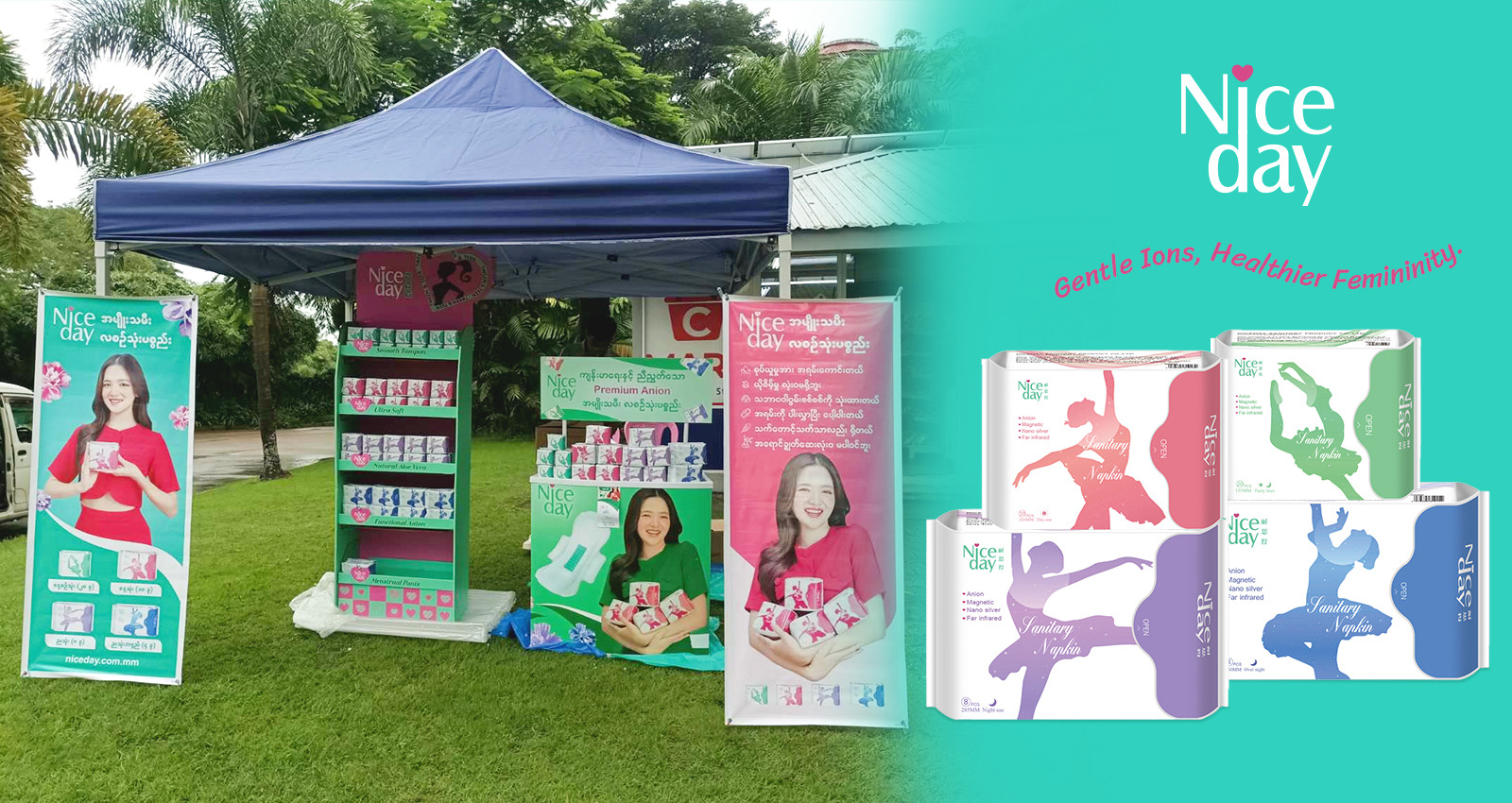
In 2025 Niceday ran a series of street-level product activations in Myanmar, across parks, shopping centres and residential areas. The purpose was practical: put samples in front of real users and record what they asked about. For OEM buyers, the useful part is not the event itself but the pattern in the questions.
What users tested first
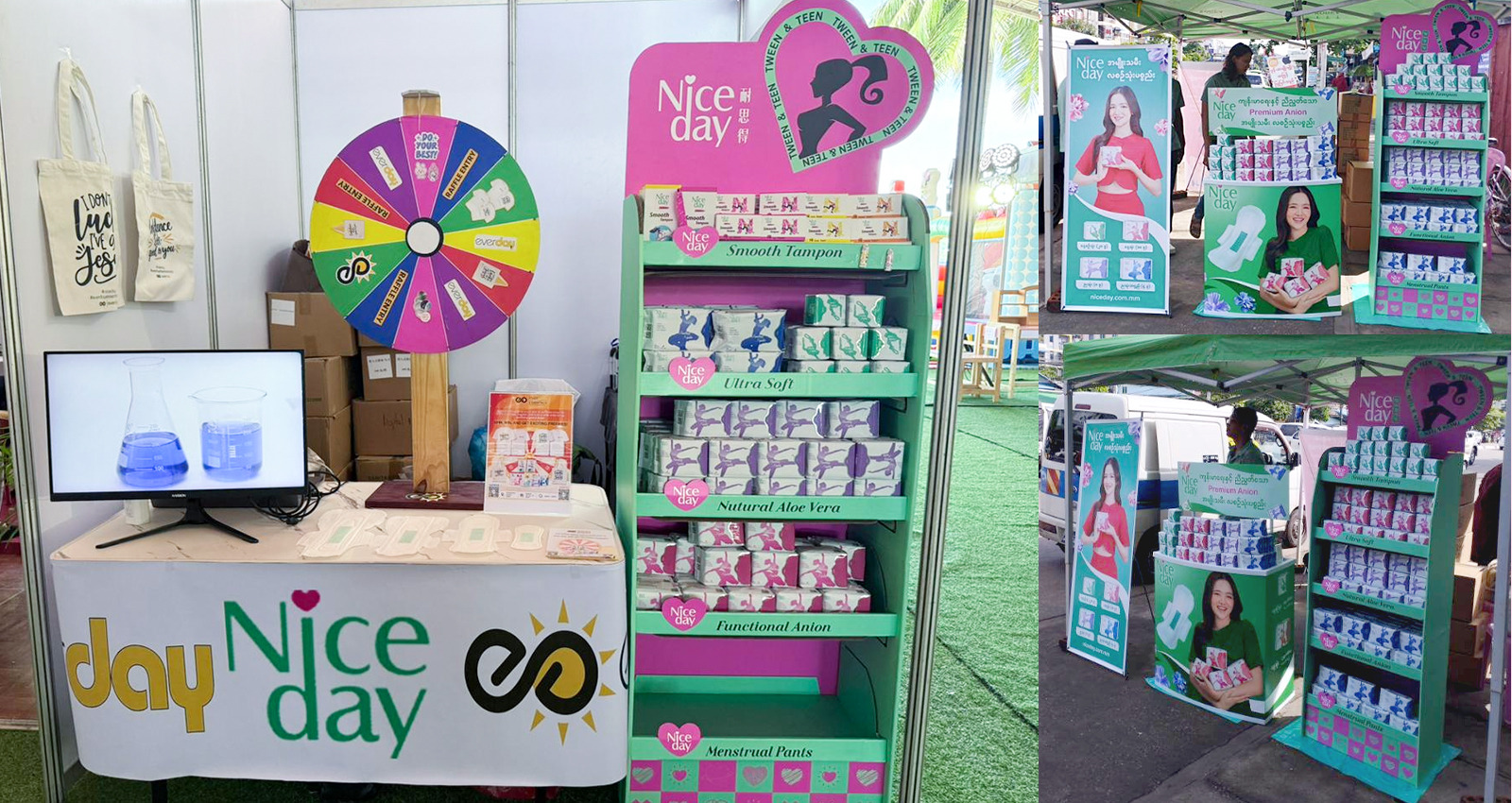
At every location, the first thing visitors wanted to see was an absorbency demonstration. Liquid was poured onto a pad, then pressure was applied to the surface to check for rewet — how much liquid comes back to the top sheet after absorption.
This is worth noting because it tells you what buyers in these markets actually judge a pad on. Not thickness, not brand design, but two visible things:
- Absorption speed — how fast the surface clears
- Surface rewet — whether the top sheet stays dry under pressure
Both are core-construction properties, decided by SAP distribution and top sheet selection at the specification stage. A brand cannot fix them later with packaging.
Why the anion pad line performs well in these markets
The pads used in the activation came from the anion (negative-ion) product line. In markets like Myanmar, this line usually works for a commercial reason rather than a technical one: it gives a distributor a visible, explainable product difference at an accessible price point.
Niceday positions this line as a freshness-oriented product concept. It is not presented as a medical, antibacterial or hygiene-protection product, and distributor materials should not describe it that way either — several markets restrict that kind of claim regardless of what a supplier is willing to print.
For product-mix planning, the anion line is normally used as a mid-tier differentiator, sitting between an economy pad and an organic cotton line. See the disposable sanitary napkin range and the HerbalCool functional pad for reference specifications.
Specification patterns for emerging Southeast Asian markets
| Pack size | Smaller counts per pack are common; unit price at shelf matters more than value per piece |
| Wrapping | Individual wrapping is expected, as products are often carried loose |
| Length mix | Day and night lengths lead volume; ultra-thin has narrower demand |
| Packaging print | High-contrast artwork performs better in open-air and small-shop retail |
| Sampling | Trial packs are used heavily at launch; plan them as a separate SKU |
Packaging format and artwork are handled at the OEM stage. See custom packaging support for available formats.
What this means for a private label project
- Decide the core specification before the packaging. Absorption and rewet are what users test; artwork does not compensate for a weak core.
- Keep the claim set conservative. Freshness and comfort positioning travels across markets. Antibacterial or hygiene-protection wording does not.
- Plan the trial pack as a real SKU. It has its own MOQ, artwork and lead time.
- Confirm pack count against target shelf price before locking the specification, not after.
Niceday produces these lines at a 50,000 sqm facility in Foshan, China with 14 intelligent production lines and a daily capacity of 9.8 million pieces, and exports to 54+ countries. MOQ is 300,000 pieces per SKU, with a standard lead time of 35–40 days after specification and artwork confirmation. Full details are on the private label sanitary pads page and the OEM & ODM service page.
Frequently asked questions
What is an anion sanitary pad?
An anion sanitary pad is a pad that includes an additional negative-ion layer in its construction. Niceday positions this line as a freshness-oriented product concept and does not present it as a medical or antibacterial product.
What is rewet, and why do buyers test it?
Rewet is the amount of liquid that returns to the top sheet after absorption when pressure is applied. It is one of the most visible differences between pads and is determined by core construction and top sheet material at the specification stage.
Can Niceday supply anion pads under a private label?
Yes. The anion line is available for OEM and private label projects, with packaging format, pack count and artwork confirmed per project. MOQ is 300,000 pieces per SKU.
Do trial packs count as a separate SKU?
Yes. A trial or sample pack has its own packaging artwork and pack count, so it is planned as a separate SKU with its own MOQ and lead time.
Planning a pad range for an emerging market?
Tell us your target shelf price, pack format and market, and we will come back with a specification and packaging proposal.
Discuss Your Product Needs Private Label Options